Biblical tools and “sharing”

In July, I’m going to try something I have never tried before.  I am going to try to begin a Bible study based on a scholarly examination of the Bible with fellow residents at Holladay Park Plaza, where we live.  I have new sense of daring about it.  Suddenly, it seems like a big deal

Just how precarious it is was brought into focus by my friend, Steve.  We met on a Road Scholar tour of the Scottish Highlands and on a bus tour there are lots of in between times.  In one of those, I was telling him about this forthcoming study.  Steve has been a teacher for most of his life and he went right to a question I had never considered adequately, “What are you trying to do?”  He asked another good one later, but let’s deal with them one at a time.

Here was my first answer.

“I am trying to make available to my students a richer and more satisfying reading of the Bible than they currently have available by focusing on the interpretive tools they will need to read the Bible in a new way.”

I have lived with that answer for a week now.  It has led me to some uncharted territory, for which I am grateful, but I am not sure it says what I really want to say.

The first hurdle I ran into [1] was “make available.”  Here in Scotland, they make haggis available at nearly every meal. [2]  Americans, by and large, on finding out what haggis is, say “No, thanks.”  That does not mean that the haggis was not made available. 

Here are three scenarios.   It might mean that the whole notion of eating sheep’s haggis 1intestines for breakfast is not a natural thing for Americans.  It is a concept that comes from so far away that the first barrier is just imagining the possibility.  On the other hand, it might mean that they had haggis pushed on them as children—in the school cafeteria, let’s say—and have acquired an aversion to it that amounts almost to anger.  And finally, it might mean that they are really committed to something else, say tomatoes and boiled red potatoes, to meet that particular part of the breakfast menu.

Those are three challenges to the expression, “make available.”  Let’s say that I wanted to begin this Bible study with the story of Tamar. [3]  Tamar is declared to have made the right decision in a difficult time.  Her solution was to seduce her father-in-law so that her dead husband’s lineage could be preserved. [4]  The declared goal of my approach is to offer the students a way to understand the story the way the storyteller understood it.  In this case, it means that preserving her husband’s progeny is crucially important (also commanded by God) and “sexual fidelity” is not—or at least is less so in this circumstance.  And I am making this point to people who have never heard of levirate marriage and who, on having it explained to them, find it bizarre.  There may also be, in my group of students, people who have had traumatic experiences with the failure of marital fidelity and they will feel somehow complicit by treating it as a minor matter in Tamar’s case.

What does “make available” mean for these students?  For some, it means that they will have to get really interested, quickly, in a social practice they have never heard of before on no better grounds than my promise that they will understand the story better if they do that.  For the others, it means that they will have to deal intellectually with a topic that is viscerally powerful for them. 

Both of those sound unlikely to me as I consider it from Steve’s standpoint, but I began with the notion that I am “making available” something that is really worth their while.

Steve’s second question was, “How will you know when you are done?” [5]  There is a sense in which you are never “done” with a fundamental part of your life, and that is what Bible study has been for me once I got the rebellion out of my system.  But in terms of the “goal” as I formulated it, I think there really is an answer.  When these students, who, when they leave the room are colleagues and friends, understand what I am offering them and make a thoughtful choice about whether they prefer it to what they are currently using, I will be “done.”

There is no question that I have my own experience with biblical scholarship as a measuring stick.  I don’t really know how that could be otherwise.  Ever since I threw away the kind of Bible study I learned as a boy [6] I have had one experience after another of discovering new meanings with real delight.  Whatever I decide to say to the class, the truth is that I would like for them to have the experience I have had.  I know that is not realistic, but down in my gut, it is really what I desire.  And I know that if I try to use it as a standard for “when are we done,” I will fail.  

haggis 2So I need something more reasonable.  Let’s try Tamar once more.  If there is a lesson is the story of Tamar, it is that you might have to exercise considerable ingenuity and dare the wrath of important people if you are really committed to doing the right thing.  When I formulate it as an “outcome” of the study of Tamar it seems tinny to me.  A little cheap.  What I really want is for the students to marinate their minds in that world, the world where those options confronted Tamar.  I want them to give their imaginations to it.  To do that, they will have to understand a few things, some of them taught by the story, many more presupposed by the story.  Of the things presupposed, some are persistent and intrusive.

Take the experience of Onan, the second brother, for instance.  The only word I know from the story of Tamar that has become an English word, is “onanism,” which refers to masturbation.  How on earth did that come to be a featured meaning in the story of Tamar?  Well first, you have to take Onan’s action out of context.  The story says that he “spilled his seed on the ground.”  [7]  How, of all the many ways Onan could have managed that, my early teachers decided on “masturbation,” is a puzzle, but the storyteller shows no interest at all in “how:” only in “why.”  And the answer to “why” is that he wanted to defraud his brother of what he owed him.

Nothing in the story that matters to the storyteller has anything to do with masturbation.  The idea that someone thought that should be ripped out of the story and presented as God’s Commandment would be abhorrent if it were not so silly.

For anyone who was taught what I was taught about “Onanism,” this return of the narrative to its rightful course can be a relief, it can be funny, it can be a downpayment on other, more important, thingshaggis 4 a scholarly approach to the Bible can offer.  So what I will actually be looking for—my “when will we know when we are done question”—will almost certainly be related to those realizations and the feelings that go with them.  Relief.  Incredulity.  Maybe anger for a little while.  Hilarity.  

Those are all good and they are all ways of tracking my success in offering the kind of course I want to offer.  So…thanks, Steve.

[1]  I’d like for you to think of that in the most literal way.  You’ve all watched the 400 meter hurdles and you know that running into hurdles is not the way to victory as a rule.

[2]  I have seen deep-fried haggis patties on a menu.

[3]  Which is currently scheduled for week two.

[4]  This requires a more thorough consideration of levirate marriage than I want to try here, but you can get the rudiments in Deuteronomy 25:5-10.

[5]  He raised it as an appropriate “exit question” but the form of the question I am using is biographically significant to me so I changed the form a little.

[6]  And had confirmed in college by some very bright conservative professors.  I didn’t actually come to the crisis of rejecting it until I was nearly 30 years old.

[7]  That’s the King James Version as I remember it.  The New Jerusalem Bible has it as “let it go to waste whenever he joined with his brother’s wife.”

Posted in Uncategorized | Leave a comment

Clan Donald

It is not possible to spend time in the Scottish highlands without coming across Clan Donald. And for an American, traveling in Scotland in 2019, it is unnerving to think that I have been living in an area dominated by “Clan Donald” since the election of 2016.

Of course, there are clans and then there are clans, just as there are Donalds and then there are Donalds. Still, the more I learned about the Scottish clans, the more I thought there might be some merit is just reflecting a little on how President Trump’s behavior can be seen as the Chief of Clan Donald. [1]

“Each class would be ruled by a powerful chief.” That’s the way the Lochcarron essayDonald 1 begins. My mind went immediately to the geometry embedded in the U. S. Constitution: the separation of powers and the system of checks and balances, for instance. There is none of that in a clan. There is no more of it in the clan than there is in the mob. The head of the clan is the absolute ruler.

If you listen, you hear that attitude in the casual dismissal of a judge’s ruling on the grounds that “he’s an Obama judge.” You hear it in the denial that the House of Representatives has the right to subpoena testimony from “one of my guys.”. The governance of clan is unitary beyond the fantasies of monarchs.

The second element of clan governance is loyalty. In a clan war, my serfs go to war with your serfs. These highlanders who work their land by gift of the clan chief go to war when they are told to go to war and are protected from attack by other clans because that is what the chief owes them. That’s the deal. No one asks whose cause is “just.”

When President Trump praised Paul Manafort as “a stand up guy,” he was relying on “clan loyalty” rather than on law. In the U. S., it was once a commonplace to say “No man is above the law,” but in the clan setting, loyalty is everything and the chief of the clan is the focus of loyalty and also the source of the law. Loyalty is as highly prized in the Trump administration as it was in the Nixon administration and for the same reason.

This commitment to the law is enacted by the pledge to uphold the Constitution of the United States. That is what officeholders promise. There is, in fact, an eerie parallel to the clan loyalty in Tolkien’s Lord of the Rings in which Pippin pledges his loyalty to Denethor and Merry to Théoden. The contrast shows what is good about clans and what is bad.

Pippin pledges “fealty and service to Denthor. This is Denethor’s response.

And this do I hear, Denethor, son of Ecthelion…and I will not forget it, nor fail to reward that which is given: fealty with love, valor with honor, oath-breaking with vengeance. [2]

There is a sweet side to the clan system also when there are personal relationships of honor and respect involved, as illustrated by Merry’s service to Théoden.

When Théoden accepts Merry’s service, it looks like this.

Merry, filled suddenly with love for the king, knelt on one knee and took his hand and kissed it. “May I lay the sword of Meriadoc of the Shire on your lap, Théoden King?” he cried. “Receive my service if you will.” Théoden responds, “Gladly will I take it. Rise now, Meriadoc, esquire of Rohan…” Take your sword and bear it unto good fortune.”

Those feel entirely opposite each other but both are based on personal loyalty and neither is compatible with the rule of law.

Donald 2The clan system is a system of perpetual war. Nothing prevents a strong clan from going to war against a weaker one and taking the land and its resources. That makes the clan system unstable in the larger setting—one clan attacks another as opportunity is afforded—but it is the basis of stability within the clan. The chief can go to war whenever he wants because he has strong family leaders—insiders and advisors to the clan—to support him and because he can command the wartime service of the serfs.

The rewards of war and then distributed among the supporters to assure continued loyalty. Clan chiefs give out land and castles and perhaps slaves. Modern arbitrary rulers hand out policy victories. The “spoils of war” to be distributed in the U. S have included tax breaks, the violation of environmental protections, policy victories for subordinates such as the religious right. Loyalty is expected and is rewarded. It is only the losers who pay the price in the short run, but all the clans pay the price in the long run. The chief’s castle is inundated by rising oceans just like everyone else’s castle.

The realization that the Trump administration is like a 15th century clan is many ways is not entirely new to me. Before I came to Scotland, I had already noticed that Al Capone played that role in his gang. Loyalty was everything to a gang boss and like Denethor, he repaid “oath-breaking with vengeance.”

Capone was undone by the rule of law. The clan system disintegrated first into the crofts and then into a desperate sharecropping and then it, too, was overtaken by the rule of law. [2] I have every hope that the current “clan of Donald” will meet the same fate in the U. S.

[1] I am indebted to a blog on the site of Lochcarron of Scotland for the information on clans. See lochcarron.co.uk—blog, especially the article “Uncovering the Scottish Clan System.”
[2] The rule of law can be predatory and disastrous as it was in Scotland, but it is capable of being rationalized across large areas and large populations, which the clan system is not.

Posted in Politics | Tagged , , , , | Leave a comment

Old and Active

If you get far enough away from these two notions, it is possible to imagine them as binary. You are old or not; you are active or not. When you get closer, it seems more reasonable to ask things like “how old” (not numerically) and “how active.” In this essay, I would like to take one further step in.

“Old age,” it is often said, is a matter of attitude. I think there is a small truth buried in there, but it isn’t very big and it is deeply buried. Attitude can be important if you use it as an excuse for not doing what you are capable of. Of course, anything can be used as that kind of excuse, but “I’m old, you know” [1] is particularly vulnerable to misuse. On the other hand, “old age” can be seen as a motivation. When you see old people living with abandon, utterly unconcerned about their calendar age and not even entirely prudent about their physical condition, you might be genuinely attracted to it and say, “I could do that.”

But mostly, when I think of old age as an attitude, I think of people who have givenold 1 up on living and are just putting in the time until they die, the way we used to put in school time until we were allowed to go home. Those people, of whatever age or physical condition, are old.

And most often, not always, they are inactive.

But there are old people who drive themselves to a lot of physical activity, taking no joy in it at all. Their activity might better be called a way of dying than a way of living. It is just another way to fill up time.

It doesn’t have to be that way, at least it doesn’t for most of us. I began, some years ago to distinguish between “me,” myself, and “it,” my body,[2] or, more concisely, between “myself” and “my self.” Again, for practical purposes only, I will say that “it” will die and “I” will not. What you get for being willing to make a distinction of this kind is “rising above decline.” [3]

This means that “it” will decline. Period. I, watching from the stands, can be alternately amused, disheartened, encouraged, and so on. That means I can be as active as my body will allow and to do it as a way of living, not as a way of putting in time until I die. “Old and active” is that kind of combination.

old 2Of course, it is true that the more your body will do for you, the more active you can be. I sorely miss running on the trails in Forest Park, but the fact is that I can’t run anymore. I have taking to bicycling, which I enjoy (but not as much as running) but there will be a time when bicycling is no longer safe for me. If I am old and active, as I propose here, I will take the next activity down, whatever it turns out to be, and do it as fully and with as much enjoyment as I can.

The alternative, of course, is not refusing to age. “It,” my body, is going to continue to decline, but if I am getting out of it all it is capable of giving, then I am doing it right. And if I live with appreciation and satisfaction and maybe just a little daring, then I am doing that part right too.

It’s a challenge, but it’s too good a chance to pass up.

[1] I devised a category of such people, IOYKers, in a previous essay
[2] I know that sounds like the very worst kind of dualism (I mean the Cartesian kind), but I mean it kindly. I do understand that we are, in fact, a single psychosomatic unity.
[3] Which I came across as a report on unused school space in Boston. I didn’t find a use for the report, but I fell instantly in love with the title.

Posted in Getting Old | Tagged , , , , | Leave a comment

Cultural Backlash

Today’s reflection concerns the ‘backlash” that is a familiar part of every news medium.  If you could divide news sources cleanly into liberal and conservative (you can’t) you could say that conservative sources emphasize the “back” and liberal sources, the “lash.

Let me offer an example from my years of teaching at Portland State University. [1]  During some of those years, I used a text in which the chapter on U. S. foreign policy began with an account of the attack of 9/11.  I asked the students, just as an exercise, to substitute the word “reprisal” for “attack.”  Then we would talk about it a little.

backlash 7One result of this discussion was the open amazement expressed by some students that Arab nations had grievances against the U. S., and yet “reprisal” clearly presupposed that.  The word requires that we had done (at least as they saw things) something bad to them and this was the bad thing they were doing to us in return.  “What did we ever do to them?” was the first question to come off the pile.  It wasn’t an objection; it was an honest question based on near-total ignorance.

A backlash is like a retaliation is one way.  It imagines that  some offense has been committed to which this action is the response.  In the political setting, which is of interest to me here, there is the further supposition that some burden had been placed on a particular population, then another burden, then yet another.  And finally, it is just too much.  There was once an expression “the straw that broke the camel’s back;” now often shortened to “the last straw.”

When Joseph Welch rebuked Senator Joe McCarthy with, “At long last, sir, have you no decency?”—it was the “at long last” that suggested the addition of one offense to many others.  In considering “backlash,” we are in the “at long last” area.

But if you ask people today just what offense the practitioners of the cultural backlash are protesting, the room goes suddenly quiet.  Why is that?  I think the reason is that people today are as clueless about what conservatives have lost as my students were about what Arab nations had lost.  So let’s look at that.

What has been lost?

The chart below, the source of which I no longer remember, shows the correlations between “traditional” and “secular-rational” values.  If I wanted to emphasize the findings, I would provide a good deal more information about the study, but I want only to borrow the category names.  These statements are phrased so as to be compatible with “traditional” values. [2]  If you look at the prompts (forgetting the actual numbers) you see an emphasis on God, on obedience, on patriotism, and respect for authority.  Abortion is clearly opposed.

Survival:Traditional.png

If you asked conservative voters why they were participating in the great cultural backlash represented by the Trump administration, they would say that they want “back” these precious values that had been taken away from them. 

All the readers of this blog I know personally are decidedly liberal, so I will ask you to stop and take a breath and note that all these numbers establish is the there are voters with grievances and it suggests what some of those grievances are.  There is no need at this point to argue about whether we think these people have a right to feel aggrieved.

The lower part of the chart does the same thing using a different value dichotomy.  Herebacklash the categories are “survival values” and “self-expression values.”  Again, the prompts are phrased so as to be acceptable to “survival values.”  Again, I am interested only in the category names.  This is “liberal backlash.”  After 9/11, “we” chose a Muslim woman as Miss America as quickly as we could.

You can see here that economic and physical security are highly valued.  Trust is hard to come by, as is participation in public affairs (the petition).  These people are both less happy and less gay. [3]  If these people have seen their own economic status decline (they have), have withdrawn from public affairs, and are untrusting in general—trusted people are drawn from face to face settings–you can see that things are not going well for them.  Homosexuality is widely accepted—they would probably say “flaunted”—where earlier in their lives is was silenced and opposed.  And they are not not happy.  At least, they are not as happy as the people who emphasize self-expression, who also make a good deal more money than they do.

These (Traditional/Survival) are people who highly value economic security but have lost it.  That helps to explain their relative disinterest in “self-expression values” and very probably their opposition to those who believe self-expression is very important.  The world used to be a much more welcoming place for people with “survival values” and now it is not.  It is not hard to see why they think that something valuable has been “taken away” from them.

Who took it?

If that were a serious question, it would be vexingly complex, but it is not a serious question.  The question of whether you are now without something you value and deserve and the question of “who took it?” are really the same question and are answered at the same time.  “They” took it away from you, although they had no right to.

Culturally, “they” is “Hollywood liberals.” [4]  Socially, it is the “professional/managerial class.” [5]  Politically, it is the Democratic Party.  Ordinarily, you don’t have to distinguish; you just gesture and everyone in your tribe gets the idea.

The major message of the Republican party in recent years is that invaluable ordinary backlash 4people, the left-behinds, have been defrauded of what they are due by the Democrats and their allies.  For that reason, the question of “Who took it?” seldom comes up.  Who took it and that it was unfairly taken from you are part of the same message.

That brings us back to backlash, understanding, on this pass, not only the “lash” which has always been clear to liberals, but the “back” which is not nearly as clear as it should be.  Knowing what the problem is is still a long way from solving it, but it is better than trying to solve it without knowing what it is.

[1]  It isn’t that I don’t teach there anymore.  I still substitute for class sessions when old friends are out of town.  My official title at PSU since my retirement is “adjunct professor emeritus.”  Really.  

[2]  The “secular-rational” phrasings reverse the values, e.g. the second would would read “It is more important for a child to learn independence and determination than obedience and religious faith.”

[3]  It’s an old joke, but I was so close I stopped by just to say hello.

[4]  Vice President Pense made a special detour in his address to the graduating class at Liberty University, just to blame “Hollywood liberals” for meddling in state affairs in the south.

[5]Many thanks to Joan Williams, Reshaping the Work-Family Debate: Why Men and Class Matter, for her clarity on that matter.

Posted in Communication, Political Psychology, Politics | Tagged , , , | Leave a comment

Pence shilling at Liberty University

“ As bleak as Pence’s remarks at Liberty University may sound, his words could very well strike a chord with these Christians who feel isolated.”

That’s the concluding line of Catherine Kim’s report on Vice President Mike Pence’s commencement speech to the graduating class at Liberty University.  I think that “strike a chord” may be Ms. Kim’s attempt at humor or possibly at straight-faced journalism, but lines like that are often called “red meat.”  Picture throwing a steak into a kennel of hungry dogs and saying that the arrival of the steak “struck a chord” with the dogs.

pence 1You wouldn’t know it by reading the speech [1] but there is a serious policy issue embedded in the Vice President’s remarks.  It is religious liberty.  If you have liberty on the basis of your religious faith, what is it you are free to do?  Well, let’s see.  You are free to “follow the dictates of your conscience.”
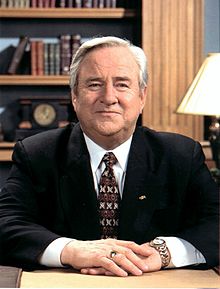
Let me just illustrate where that leads.  In the immediate aftermath of 9/11, Balbir Singh Sodhi was shot and killed outside of his Mesa, Arizona, gas station by Frank Roque, who said he wanted “to kill a Muslim” because of the 9/11 attacks.  Mr. Sodhi was “a Muslim” because he was wearing a turban.  Mr. Sodhi is a Sikh.  No one thinks Mr. Roque should be allowed to do such things just because his conscience told him to.

The consciences of Jehovah’s Witness school children in the Minersville School District told them that the “salute to the flag” at school was actually idolatry and therefore forbidden by conscience. [2]  The Supreme Court said that “freedom of conscience” didn’t extend that far.

On the other hand, the Board of Regents of the State of New York composed a prayer to be recited by students as part of the opening exercises.  The Supreme Court in Engel v. Vitale (1962) said they couldn’t do that.  That doesn’t mean, as conservatives are fond of saying that “prayer in schools is illegal. [3] It means that forcing students to pray is illegal.  A line I once heard and have cherished for years is that there will be prayer in schools so long as there are tests is schools.

This business of being guided simultaneously by one’s conscience, on the one hand, and pence 2by the laws of the state on the other is a dicey business.  The law says that motels are not allowed to discriminate on the basis of race whom they will accommodate and whom they will not.  What happens if my conscience tells me that contact with black Americans is contaminating and sinful?  Gay couples?  Transgendered customers?  Jews?  What happens if your pharmacist’s conscience will not allow him to fill a prescription your doctor has written for your contraceptives?  Jerry Falwell, founder of Liberty University, here.

It is a dicey business as I said.  Everyone agrees that there are some actions you should be able to take on the basis of your conscience and others you should not be required to take on the basis of your conscience.  Everyone agrees that the laws of the land apply equally to those who disagree with them—I don’t personally believe in traffic lights—and those who agree.  Where is the line?

No line but a crusade

Vice President Pence is not looking for a line.  He is building a crusade.  He is “trying to strike a chord with these Christians who feel isolated.”  In doing so, he is also doing three things that bother me a great deal.

The first is that he is taking the name “Christian,” which is a very important name to me, and saying that it refers exclusively to that very small slice of Christians represented by Liberty University.  It is because of the strategy Pence is using, in line with his conservative forebears, that people look at me with disgust on learning that I use that name to refer to my own faith. [4]

The second is that he refers to all kinds of opposition to the kind of “Christianity” taught at Liberty University as “persecution.”  In saying that, he is not wholly wrong.  There are secular people to whom the language of religion sounds like an attack on them and they reply in kind.  There are people who get tired of being lectured at by religious conservatives and reply in kind.  Those things do happen and I can see why Pence would want to call them “persecution.”[5]

On the other hand, some very aggressive political actions are being taken by people who call themselves Christians and the people who oppose those actions sometimes have good public policy reasons for their opposition.  These ought to be seen as policy struggles where these people want more and those people want less.  Situations like that used to result in compromise.  But if they are “persecution,” then not only are the conservatives morally right so matter what their stand, but all opposition to them is morally wrong.  It is “persecution.”  I don’t like that either.

Finally, Vice President Pence said this:

“Throughout most of American history, it’s been pretty easy to call yourself Christian  It didn’t even occur to people that you might be shunned or ridiculed for defending the teachings of the Bible.

As someone who takes expressions like “the teachings of the Bible” seriously, I don’t like that kind of language at all.  I have to assume that he means those teachings he approves of.  There are many others I am sure he would not approve of and he doesn’t mean those.  There are many such teachings, for instance, that will not help the students at Liberty University feel like a persecuted minority as they try to use their new political power to take rights away from other Americans.

I skipped the middle part of the speech where the Vice President loyally pitched President Trump’s invaluable contributions to the welfare of America.  They don’t bear directly on this essay, but they did suggest the title, “Pence Shilling at Liberty U.”

 [1]  Available at whitehouse.gov

[2] Minersville School District v. Gobitis, 310 U.S. 586 (1940), was a decision by the Supreme Court of the United States involving the religious rights of public school students under the First Amendment to the United States Constitution. … This decision led to increased persecution of Witnesses in the United States.

[3]  Or sometimes that they are “throwing God out of the schools.”

[4]  I let go of the historical symbol of the fish representing Christianity since the 1st Century A. D. when it came to represent not Christianity, but only “creationism.”  Having it on my car’s bumper said something about me that I did not want to say and adding a footnote to a bumper sticker—even for me—didn’t help.

[5]The Washington Post said, about this speech that “it furthers the evangelical persecution complex.”

Posted in A life of faith, Politics | Tagged , , , , | Leave a comment

Warm, graceful, generous, funny

I want to share with you today some signs I have carried with me for awhile now.  I love these signs; I love the people who thought of them and the people who thought it was a good idea to have them made and displayed.

But first I want to tell you a story.  I attended a concert a year or so ago where I heard the most spectacular “Turn off your cellphones” announcement I have ever heard.  She said something like this: “The choir you are going to hear tonight is very very good.  You are going to want to tell all your friends what a wonderful concert this was tonight.  And to be sure you don’t forget to do that, please remember to turn your cellphones on as soon as you leave.”

A Hallmark store in Gresham, Oregon had these.  The could have said: “Out of stock,” or even “we are restocking our card supplies” or something like that.  This is what they said instead.  This is the last layer of the rack; this is what you see when someone buys the last card.

IMG_0454.jpeg

And today, at New Seasons, our favorite local grocery, I saw this “No dogs allowed: sign.  You know it means that, right?  We love dogs.  Also customers.  And we have a high regard for our staff as well.  And to affirm all those relationships, we have made this place where your dog can do its work (waiting) while you do your work (shopping) and everyone will be happy.

IMG_0191 2.jpeg

So I think that if the world were full of people who thought up warnings and limitations that felt like this, it would be a much nicer place.

Posted in Communication, sociability, Uncategorized | Tagged , , | Leave a comment

All I ask…

“All I ask is that you let me feel my way.”

Kaitlyn Tiffany, a writer for vox.com, is the reason I know about the new Burger King ad campaign. Take a look.    It opens with a black guy sitting on the edge of his bed making, in a gently cadenced way, a complaint that ends, “All I ask is that you let me feel my way.”

Kaitlyn Tiffany says that is a play on the long-time Burger King slogan, “Have it your way,” but I know what “have it your way” means and I know who it is addressed to.  That is not what this guy means by it.   He’s not talking about which condiments he wants on his aliment. [2]  What is he talking about?

BK 1

Well…before we rush to judgment, let’s look at the five other characters.  Next up is a high school girl who comes to her locker and finds “SKANK” written on the door.  After that, there is the business woman who just got fired and is leaving with “her box,” calling her boss a “bleep” and throwing papers up into the air.  Then there is the guy who is deeply in debt and foresees never leaving his parents’ home.  And then the young man who just got “ghosted:”[3] and imagines that he will live his life alone.  And then the very young woman [4] carrying an infant down the street and complaining that “they” say she is too young to raise a child and proceeds to tell “them” to take their opinion and “suck it.” [5]

  • The first thing that catches my eye is that all these people are victims.  They have been done to.  That is the first thing them have in common.
  • The second thing is that they are asking to be given some latitude either to recover—depressed, indebted, and ghosted—or to respond with anger or disdain. [6]
  • The third is that no constructive action is imagined by any of these characters.  It is not what they do to make something better—anything better—but how they express their unhappiness.
  • A fourth is that there is no social dimension to these at all, with the partial exception of the indebted character who gets to share a milkshake.  No one of these characters is asking for any help at all—only “room” to, as the depressed guy puts it, “feel my way.”

But I think that “feel my way…” leaves off the destination.  Feel my way back, maybe?  The first line of the ad is him looking downcast and saying, “Not everybody wakes up happy.  Sometimes you feel sad, scared, crabby.  All I ask is that you let me feel my way.” So “feel my way back” would be from sadness to…oh…equanimity maybe or happiness.  It would be from scared to something like competent or confident.  It would be from crabby to even-tempered or pleasant.  Every “feel my way” needs to be a “feel my way back to.”  Otherwise, who is he asking for “room” and how much room is he asking for?

For the guy who just isn’t happy this morning, it is plausible to imagine that he is saying that he’ll be fine; just give him time to adjust to the day.  Maybe have an Unhappy Meal or two.  He is the only one that really works for.

And especially it doesn’t work for the young woman who is planing to raise her infant daughter alone.  Statistically speaking, things are not at all likely to be “fine” for her or for her daughter.  Having a lot of “them” let her “feel her way” is not going to solve the problem, particularly if 40% of births—a widely used number— are now outside marriages.

So I get Burger King’s poking fun at the Happy Meals.  I think it’s kind of funny, at least in principle.  But the chorus of victims demanding that “they” back off really isn’t going to solve anyone’s problem.  Except, of course, Burger King’s.

[1]  She covers “consumer technology and internet culture” at Vox.  How is that for a specialty?

[2]  I owe that word to my brother Karl.  When I asked him what it meant, he said it is what you put the condiments on—an explanation I have treasured for years especially for its economy.

[3]  Dictionary.com defines ghosting as “the practice of suddenly ending all contact with a person without explanation, especially in a romantic relationship.” …

[4]  She looks about 14 to me.  Bette says maybe 17—20.  I say the makeup and the clothes are meant to suggest a younger woman.

[5]  I’m not up on the language of young people, but I’d guess that’s euphemism for “stuff it,” the site of said stuffing to be understood.

[6]  What I am calling here “disdain” is expressed in the special DGAF—which I has to look up—meals.  It stands for Don’t Give a F***, which everyone under the age of 30 already knew.  I’m staying with “disdain.”

Posted in Communication, Political Psychology, Society, Sustainability | Tagged , , , , | Leave a comment

Nicholas Kristof interview me

Not really, of course.  Why would he care how I answer his questions?  Still, he asks a lot of people these same questions, so I thought I might just take my turn.  And it is, after all, the day after Easter.

jones 2Nicholas Kristof, of Yamhill County, Oregon and the New York Times, drops in on prominent religious leaders from time to time and asks them news-worthy questions.  I don’t like the questions very much, but nearly always, I like them better than the answers.  I know that is not a fair judgment on my part.  Kristof is after news-worthy columns; the interviewees are after some public witness to their faith. [1]

I have read all Kristof’s interviews and I come away from each one feeling snarky and unsatisfied.  Today, I thought, “Hey.  I don’t have anything to lose.  Nobody’s publishing me.  Nobody’s going to fire me.  Why don’t I just have a go at these questions myself?”  If you don’t like my answers, you can check hers out at the hyperlink below or maybe you should try to formulate some of your own.

So…here are the questions with my “responses.”  They aren’t “answers” really, but they are what I would like to say if Kristof and I were to have a conversation over a beer.  Let’s pick a beer from the Allegory Brewing Company, named as one of Yamhill County’s finest.

Question 1. Do you think of Easter as a literal flesh and blood resurrection.  I have trouble with that.

My Response.  I don’t have any trouble with it; I just don’t understand it.  Something happened, certainly.  Something catalyzed the disciples and sent them out into the streets preaching.  What do you think that was?

By “resurrection,” you aren’t, by any chance, thinking of simple resuscitation?  Nobodyjones 1 argues that Jesus “came back” from death in the sense of coming back to the life he had  before.  The texts that treat the resurrection all picture Jesus not as coming back, but as going on.  There is another “kind” or “form” of life.  This is President Serene Jones.  I would want to interview her, too. 

Is “the trouble you have with that,” by any chance, a rejection of non-natural explanations?  None of the writers of our gospels believed in natural explanations at all.  You wouldn’t be looking for their accounts to be cast in modern scientific parlance, would you?  “Supernatural” is not even a category they used.

Question 2   But without a physical resurrection, isn’t there a risk that we are left with just the crucifixion?

My Response: No, I’m afraid it isn’t as easy as that.  The cross and the resurrection are the answer to a question about just how God “so loved the world that He [2] gave his only son.”  How did God do that?”  That’s the question.  Of all the answers, I think there are two principal kinds: the incarnational and the sacrificial.  The Incarnation holds that God came to live among us in the person of Jesus Christ and that event, itself, bridges the gap for anyone who accepts that it is true.  The sacrificial answers presuppose the Israelite practices of the remission of sins based on an unblemished sacrifice.  We are not committed, in understanding just how God chooses our redemption, to just the cross and the empty tomb.  It’s tempting to think so at Easter, but there are other answers worth considering.

Question 3 You alluded to child abuse. So how do we reconcile an omnipotent, omniscient God with evil and suffering?

My Response: I see that as two questions, really.  Evil is one thing; suffering is another.  Let’s look at the suffering that comes because we are mortal and live on a planet that will survive for only a finite period.  I don’t know how to deal with that kind.  God created humankind to be mortal—Adam and Eve were mortal—and created viruses and predators as well.  And God placed us on a rocky ball with a molten core and tectonic plates.  It’s not paradise.

But evil is something we choose.  When God created humans, he created free will.  Free will allows us to choose to worship idols and the persecute our fellow humans and we have done that.  God cannot prevent evil if He is to grant the gift of free will.  He does provide the means of redemption, however, as your first questions note.

Question 4 Isn’t a Christianity without a physical resurrection less powerful and awesome? When the message is about love, that’s less religion, more philosophy.

My Response: Well, you don’t find a physical resurrection powerful and awesome, do you?  Would Christianity be better if you did?  And is the alternative to resurrection, some disembodied notion that we should be nice to each other, as you seem to imagine it?  I don’t think so.

The heart of the Christian message is that we are not on our own.  God created us for fellowship, but we chose rebellion and independence instead.  But God keeps coming back, finding one way after another, to invite us back into a relationship of intimate trust.  With that trust, we give up independence, and become willing agents, going where we are told and doing what needs to be done.  That involves what looks like love sometimes, but also what looks like justice and what looks like judgment.

Questions 5—8 deal with the Virgin Birth, intercessory prayer, and some kind of specific site for our lives after we die.

My Responses: The Virgin Birth is, again, the answer to a question.  You have to ask the question first.  It is: how is it possible for Jesus, who inherits the same guilt every other human inherits, to be the “unblemished sacrifice.”  I just don’t ask the question.  That’s not how I see the crucifixion and resurrection affecting us.  It’s not about blood sacrifice for me. 

Intercessory prayer is a problem when we are telling God what to do.  You can say “pleading with God” if you don’t like “telling.”  But when we pray, as Jesus did, “Not my will but yours be done,” then we really have no basis for empirical conclusions about “what worked” and what did not.  So that question, too, is one I don’t ask.

Your third question is the “heaven and hell” question.  There are lots of different notions in our scriptures of “what happens next,” of which the most prominent is “nothing.”  About King David, for instance, they say “Then he died in a ripe old age, full of days, riches and honor.”  In the New Testament, there are several kinds of pictures—never more than snapshots—about some eternal “site” for the people who refuse God’s invitation to the party and those who accept.  I don’t put my faith in any of those snapshots.  I put my faith in God’s decision to be “with me” as long as there is any “me” at all.

Question 9 [Given that I am clearly heterodox] Dr. Hess, am I a Christian?

My Response: That depends on what you mean.  “Christianity” is a set of beliefs and your beliefs are not Christian.  So if your question is a doctrinal question, the answer is No.  But I don’t think that’s your question.  I think your question is whether God has found a way to declare you truly a member of His family.  It would be bizarre, I think, to imagine that God runs down a checklist, like Jiffy Lube, to see whether you match up.  Does that sound to you like the God who has relentlessly pursued us all these years?

So I think God knows whether you are one of His, whether you have accepted the invitation to the party or turned it down.  You may not know for sure.  I certainly don’t.  I do trust God to know, however, and if I am confident to leave the eternal destiny of my soul in God’s hands, I am confident to leave yours there as well.

[1]  I’m mot trying to be derogatory.  I am sure each person also wants more than that.  Kristof, for instance, seems to have a very personal interest in the questions he is asking and the fact that he publishes them in the New York Times doesn’t exclude that.  President Serene Jones may be coming as close to candor as her position, her training, and her faith will allow her to come.

[2]  I use what are now called “male” pronouns to refer to God.  It’s just a convenience.  I don’t attribute any gender at all to God, but our language doesn’t have a pronoun for personal non-gendered beings, so all the choices are flawed.

Posted in A life of faith, Theology | Tagged , , , , | 1 Comment

Jesus washes the feet of Judas

Each of the accounts of Holy Week gives a different account of the relationship between Jesus and his disciple, Judas Iscariot. I want to puzzle a little today, in the time between the Maundy Thursday service and the Good Friday service, about what it means that Jesus washed Judas’s feet at the last supper.

The Jesus of the gospel according to John is a sort of superhero and the Judas of that abscondita 8gospel is an arch-villain. The Jesus of John is scarcely believable as a human being. Jesus the Man is much clearer in the other gospels, so the divine powers of Jesus in John are not a theological crisis. [1] Jesus is so nearly identical with God the Father, that John has trouble representing Jesus as praying in any meaningful way. Things are not as bad as this poster portrays them, but they are bad. [2]

In John, Jesus doesn’t have a eucharistic Passover supper with the disciples, where he talks about his body as bread and his blood as wine, but he does have something the other gospels don’t have at all, which is a foot washing scene. It is easy to focus on Peter, in this well-known account, because he is so flamboyant, but I want to think today about Judas.

Jesus wraps a towel around his waist and makes the rounds of his disciples, washing the feet of each one. That means he washed Judas’s feet as well. He doesn’t wait until later, after Judas has left. He does it when they are all together. He acted as the house servant of the man who later that evening would direct the Romans to the quiet place where Jesus could be safely arrested. [3]

judas 2Jesus considered the foot washing as a prophetic act. It wasn’t an act of sanitation, as if he had passed foot sanitizer around. It was more like Jeremiah (Jeremiah 27) wearing an ox yoke around so that when his countrymen asked why he was doing that, he would say that this is what is going to happen to Judah when the Babylonians invade. It is why Ezekiel cut off his hair and burned some and threw another portion into the win (Ezekiel 5). It is an action that is meant to teach something.  Here is a view of the occasion by 14th century painter, Duccio di Buoninsegna.

And what was it supposed to teach?

I, who am your lord [4], am acting the part of a servant . And if even I do that, how much more should you do that for each other? [5]However demanding that may be—”by this shall all men know that you are my disciples, if ye have love for one another”—among the disciples, it is just that much more demanding as it applies to Judas.

Think about it this way. Jesus washes Peter’s feet and then Judas’s feet and then he tells all his disciples to love and serve each other, as the foot washing illustrates. Shall we understand that, in principle, as a call for Judas to love and serve Peter and for Peter to love and serve Judas? I am reminded of Luke’s account of the return of the prodigal, in which the father very wisely instructs the servants to dress the returned son with all the emblems of the family that make him their master. [6] Does Jesus, in washing Judas’ feet in the presence of all the other disciples, instruct them, as the father in Luke’s story instructs the servants, to treat him as one of their own? Does the footwashing of both disciples mean something like that?

Consider this while you are thinking about it. In an effort to blacken Judas’s character judasfurther, John tells us not only that Judas was in charge of the common purse, but that he was stealing from it. [7] Jesus, who presumably (in John’s account) knows about this, doesn’t say anything to him about it. Jesus doesn’t ask Peter to do anything about it. What would it mean to love and serve someone who was stealing from the common treasury. What would it mean for us, in our time, to love and serve someone who was stealing from the church?

In this act of humility and service, Jesus refused to single Judas out. Jesus adopts the role of a servant in washing Judas’s feet, just like the others, even though he knows that Judas is “not clean” (13:10) and that no foot washing is going to make him clean. In his instructions to his disciples to “love one another as I have loved you,” he makes no exception of Judas.

This may be one of the scenes in the life of Jesus that has no implied meaning for us at all, as when Jesus is anointed for his burial. If it did have some direct meaning for us, I would be tempted to try to soften it by thinking about “tough love” or about the cost all the other disciples would have to pay. I don’t think I want to do that this year.

[1] They are certainly a reflection of the conflict that was well under way by the time the Gospel of John was written. In conditions of conflict the two sides increasingly diverge and Jesus gets worse in the language of his opponents and better in the language of his supporters.
[2] See Jesus praying at the tomb of Lazarus in John 11:41, 2).
[3] Just who it was who arrested Jesus varies from one account to another, but John has Roman soldiers there.
[4] There is always a little flex in the title “lord” in the Gospels because everyone who has servants is the lord whom they serve, but there is also “the Lord,” who is God and, especially in John, there is always an interaction between “lord” and “Lord” when the disciples address Jesus. I am choosing the lower case “lord” here because Jesus is making the general case.
[5] John 13:12—16
[6] That’s what the robe and the sandals and the ring mean according to Ken Bailey’s wonderful account of the story in his Poet and Peasant.
[7] Mark, who doesn’t say anything about the treasure, has a much more ambiguous view of Judas, who, when Jesus is arrested at Gethsemane, says to the mob, “Seize him and take him away securely” (translation by Raymond E. Brown in The Death of the Messiah.

Posted in A life of faith, Biblical Studies | Tagged , , , , | Leave a comment

Being who you are

If you were once an important person, it is hard to give it up. I already knew that. I live in a Senior Center [1] where I see people struggling with it every day. For example, I see people who used to be doctors and who treat their fellow residents as patients; I see people who used to be executives and who treat their fellow residents as department managers. On the other hand, I see former doctors and former executives who seem to have escaped that trap entirely.  They are amazing.

IU2B 1And it’s not just important people either. We are all marked, one way or another, by what we did before we came here. One guy I know used to be a teacher and his perpetual liability is treating his fellow residents as if they were his students. [2]

The trick for all these people —both the ones who have already mastered it and the ones who are still puzzled by it—is to be who they are now instead of who they used to be. The trick is to be the very best version of the people we are now.

I know that can be made to sound easy, but if you think about it, you know it is not. In the first place, it requires that you understand who you now are and then you have to develop standards appropriate to that self.

I have three versions of this problem in mind. They are all, as I have constructed the model,[3] the same problem and so each has the same solution. They just look different.

I used to be important (IU2bI)

The doctors and business executives I referred to above are instances of the first version and there are a lot more examples where those came from. There are some very accomplished people here. They were important people; they took on the challenges that important people take on, the paid the price that important people pay, and they reaped the rewards important people earn. Now they are here and they aren’t important in that way any more. The challenges and the rewards here are entirely different.

They can choose, if they want, to keep the old self-image and the old standards for ' He's not taking to his retirement easily.'judging their behavior and conclude in all fairness, that they are has-beens. That is a sobering conclusion, certainly, and people react differently to it. Some respond with depression and despair; some aggressively market to their present companions how important they used to be. And then there are those people who succeed here as naturally as they succeeded there.

For those who are still coming to terms with their former importance, I have good news. There is a solution.

I used to be unimportant (IU2bU)

I also see people here who have never been thought to be important by anyone outside their families. They are people—women, mostly, but a surprising number of men—who tidied up the physical and social worlds that the Important Person (IP) in the family kept messing up. The IP did the things that had to be done, of course, but the Unimportant Person (UP) kept track of the schedules and kept on good terms with the pharmacy and cooked the meals and kept the house orderly and “balanced the checkbook.” [4]

Here where they live now, there are opportunities to make important contributions to the general welfare just by continuing to be good at what they have always been good at. But if they do those things here, they run the risk of becoming a really important person and that would feel unfamiliar.

There is a solution to that version of the problem too.

I Used to Have a Cause (IU2HAC)

Demonstration against G8 Summit in Le HavreThe third version of the problem looks different in a lot of ways, but it is essentially like the others. There are people here who at considerable cost to themselves, have served the needs of others all their adult lives. Had they been killed in the process of doing that, the media would have called them martyrs and many of their friends actually were  killed or wounded. But these people, now friends of mine, survived and now they are here. The daily challenge, which was once just to continue to live [5] is now how to contribute meaningfully. The daring and dangerous business of providing help to people who desperately need it is yesterday’s business. Today’s business has none of that spice at all and it can taste pretty bland.

There is a solution, of course, and I think you will agree that it sounds familiar.

Solution

I have said that all three of those dilemmas are versions of the same problem. The solution is to know who you are now and to value that person and to put it to work for you. [6]

So the IU2bI problem is solved by realizing that you are not “important” in the same way you were. That doesn’t mean you aren’t important. When you complete the first step of this journey, which is assessing who you are NOW, you can move on to deploying the resources you have to make a significant contribution HERE. This will require, it turns out, all the skills you used to have and some new ones as well.

It will require assessing the situation accurately, deploying your resources to achieve your new goals, measuring the results carefully, and adapting your strategy as required. That is just what you used to do and you were good at it; now you get to continue being good at it. The result here is that you will make a substantial contribution to the life of the Center where you live.

The IU2bU problem works the same way. You now live in a place where the job of tidying up relationships is crucially important—not peripheral—and your skills make you among the most accomplished and promising residents at the Center.

While the important things were being done by the Important Person—enemies kept at IU2b 8bay, security established at home, the power structure stabilized, adequate resources supplied for the family [7]—you were providing nurture to those in need of it, sociability to those who could share it, and conflict resolution for those whose resources had run out. So…guess what. It turns out that in a CCRC, the Important Person (IP) functions are pretty much taken care of by the management. The others—the traditional skills of Unimportant People (UPs)—are the ones that are most important in this new setting and the most valuable people are the people who are good at those skills.

That is all good news for us, the other residents. But if the UPs have cultivated a view of themselves as unimportant, they may not see the new opportunities at all and may be wary of stepping forward confidently to claim them. They have, after all, never done that before.

The case of the people who have given their lives to a cause is a little different, particularly if the cause was extraordinarily difficult or dangerous (D&D) [9]. These residents may not ever have reflected on themselves at all. They are much more interested in whether what they are doing is effective or ineffective. They reflect on themselves only indirectly (is it working?) and by means of their vocation  (is it what I am called to do?).

The issue they face here is that nothing here where we live is difficult and dangerous—at least not in the traditional sense. And if you have defined “real” and “important” in terms of how difficult and dangerous the work is, you will be compelled very quickly to admit that in living here, you have left “the real world”(RW) and that this world feels more like a virtual world (VR) of some kind, where your choices don’t really matter much.

If you are used to a project focus and especially if the project is difficult and dangerous, what will you do here where nothing is difficult and dangerous?[10] You can retreat into yourself, since “it doesn’t matter anyway.” That way you get to keep your definition of what is important even if it forces you to recognize that you, yourself, are not. Or you can criticize everyone else for being satisfied with this pale imitation of RW. That helps you keep your old definition in place, but that is about all it does.  And it hurts people.

Or you can find the things that need to be done here. That’s the hard choice. It means remembering that although you got hooked on “difficult and dangerous” out there, that wasn’t what made them important. It was the task itself was important, and difficulty and danger was just the price you paid. Who knew you were going to get addicted to them the way some people get addicted to cocaine or amphetamines? What makes this choice so hard, is that you need to get clean and sober first. The reliance on danger as a stimulant doesn’t work any more. Then you can notice that there are, in fact, things you may be called to do here . If those things are here and if they are your work, you are not free to reject them on the grounds that they are not D&D. That’s why it is the hard choice.

Conclusion

I called all three of these “versions” of the same problem and I stayed true to that idea by providing only one solution. The answer for the formerly IP and the formerly UP and the formerly cause-activated person is all the same. Be who you are now. Let go of the definitions of importance (high and low) and of significance that were required before. That was then; this is now. Take on wholeheartedly the tasks that are here to do and that you are uniquely prepared to do well.

It is in that way, and in no other way, that you can really be who you used to be.

[1] Full disclosure. I live in a CCRC (Continuing Care Retirement Center) in Portland, Oregon. It is a very good CCRC and it is chosen more by people who want to be here than by people who have to be here. That makes a difference in how many of which kinds of dilemmas I see.
[2] I have hope for all of them. Maybe a little less for the former teacher, who is, of course, me.
[3] Hence, “versions”
[4] I chose the old phrasing and put it is quotation marks because I want you to think of the old and typical function.
[5] To “not get dead,” as they put that achievement in the movie, Speed.
[6] That last part—to put it to work for you—isn’t a necessary part of the solution for everyone. It is for me. There are some people for whom just “being” who they are works perfectly well and “doing” the things that would confirm that person are not necessary.
[7] Not that those aren’t important, but I pulled the list from the functions performed by the male chimpanzees living in a tribe in the wild.
[8] Keeping the plural—“styles”—to remind us all that there are many ways of playing Alpha and Beta.
[9] Not an idle designation. If D&D calls Dungeons and Dragons to your mind, it will have done its job because if you know that Dungeons and Dragons is called D&D, then you know people who are addicted to D&D and that is just what I want to talk about.
[10] There is an alteration of “realities” here that is very much like the difference between virtual reality (VR) and “the real world” (RW) as Steve Piecznik describes in in Tom Clancy’s Net Force. Here is an example: “When he (Tyrone) shoved his World War I aviator goggles up on his forehead, the VR band also went up in RW and all of a sudden he was back in his room. He blinked. RW always looked so…pale compared to VR.”

Posted in Uncategorized | Leave a comment