
English is a language that is congenial to antonyms, but it is not always clear just what constitutes an antonym for a particular word. For instance, what is the opposite of “responsible?”
I can think of two: irresponsible and not responsible. How can there be two? That’s what this essay is about.
Or take “interested.” Is someone who is not “interested,” disinterested or uninterested? They don’t mean the same thing at all. Or at least, they have historically meant different things. That difference is getting fuzzy.
The key to understanding this dilemma is understanding the referent of the word, “not.” Here are two.
- There is a meaning of “not” that indicates that the term does not belong on that continuum of meaning at all. I’m going to call that a Type 1 designation. It establishes that the term is relevant to the context.
- And then, there is a meaning of “not” that indicates that it does fall on that continuum of meaning but that it falls at the negative end. That’s a type 2 designation. It establishes that the term points to the high achievement end of the continuum.
Perhaps some examples are in order. I have three in mind.
Responsibility
For the first example I chose, one is excused because he should not be responsible. I am reminded of Tom Lehrer’s line about Werner von Braun: “‘Once the rockets go up, who cares where they come down/That’s not my department,’ says Werner von Braun..” A more humble sounding and thus more effective defense is the “pay grade.” “It’s above my pay grade,” clearly says that I am not responsible, but implies that I am not responsible because I hold a lower status. That’s a type one understanding.
“Irresponsible,” by contrast, establishes that the person is responsible in the sense that it is a standard he should be held to. But it also holds that he does not meet the standard of good performance. He is responsible AND he has failed in his responsibility. That’s the type two understanding.
Interested
“Interest” is a little more complex because “interest” has more meanings. If you have an interest in the outcome of a court case or in the sale of a product, it means, ordinarily, that you will benefit from a favorable outcome. But it could also mean that you are interested in it in some more general way. I might say, “I’m always interested in what the Court decides to do with political gerrymandering cases.”
 That distinction has produced distinctly different English words. “Disinterested” means that no matter how interested you are, you are going to be fair. You are going to treat the matter just as you would if you did not have a financial interest. That’s s type two criterion. Interest is relevant and the meaning is clear, but you, yourself, are in the clear.
“Uninterested” means that you really don’t care about the issue at all. It does not mean that you do have or do not have a financial or political stake in the outcome. Obviously, that’s type one. The relevance criterion is just not established.
Criminal Justice
I referred recently to our “system of criminal justice”—an uncontroversial name, I would have thought—only to be contradicted by someone in the group who said that it was not a system of criminal justice. It was a system of criminal injustice.
That’s not a bad thing to say. Once. As a witticism. But this was not meant to be wit; this negative comment  was an appeal to the other kind of naming—the second kind, where the in- is thought to indicate “not.” He heard me say that we have a system that produces justice for criminals, not a system that was relevant to justice for criminals. So when I said, “justice is what this term is about,” he heard me saying “justice is the result that the system achieves.”
This is a loss to the language I love, I am afraid. It is possible to say as many things as anyone might wish and still keep the frame of reference clear. I can say this is not a matter that bears at all on the matter of criminal justice (meaning #1) or I can say that it does belong to the question of criminal justice and that if fails miserably (meaning #2). I just hope that we keep both kinds of sentences available for people who need two kinds.
 The system works better with a single rationality engine.
 gether of robots and humans under the direction of the system devised for the process.
 He and I, in fact, devised a society to belong to. It doesn’t have any real substance yet and only a few members, [1]but I have taken great pleasure in it for many years now. Every now and then on my travels, I meet a math teacher with a sense of humor and enroll him or her as a member of the society.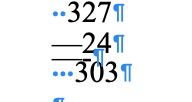
 sort of tournament. Each candidate is not so much a way of envisioning who the Democratic Party should be this year and next, but a free-lancing entrepreneur. Successful entrepreneurs get more fame, more money, more column inches, and a chance to move on to the next round.
 If I were a frontrunner, I would hammer on “electabiliy” until the entrepreneurs and the governors fall out. I would try to kill them off by denying them funds, by shrinking their airspace (there is only so much airspace) until they are electorally dead. The fewer there of them, the better for my own chances of surviving the Hunger Games.
 This is an ongoing game of Whack-a Mole.
 At this point, the “state intrusion into the zone of privacy” mole has been whacked.
 So “all hospitals are allowed to (a federal standard) becomes “all licensed hospitals are allowed to” (a state legislative standard) and the state standards are set so that no hospital meets them.
 The problem with this expansion, from a political point of view, is that it is technical.
 stops when the heart stops beating.
 a hamper for them.
 We protect, in the second clause, the order into which we have put our lives.
 confrontation, something happens that bothers me a good deal.
 Abate and they thought of it as “speaking out.”




 The Dilettante's Dilemma