Dr. Obama’s Bedside Manner Needs Work

It occurred to me recently, that back in the bad old days of medicine when there was very little you could actually do for a patient, people understood their job to be “being with” the patient and making him or her comfortable.  The illness was going to what it was going to do.  Before germ theory came along, everything was even more mysterious than it is now.  The bedside manner emphasized “I’m here for you” rather than “Take two of these and call me in the morning.”

When “take two of these” works, I’m pretty happy with it and I am delighted in the great progress medicine has made since it discovered germs.  But I didn’t have these little medical reflections for no reason at all.  There was something going on that had those same contours and it took me a little while to catch just what it was.

It’s the economy.  It’s in bad shape and it’s going to go on being in bad shape for quite a while.  Dr. Obama would really like to be a “take two of these and call me in the morning” kind of president.  It’s his style.  But Dr. Obama doesn’t have access to anything, two of which will help his patient.  The president will, of course, do a lot of Republican bashing over the next year—as he should—but he is still going to be held accountable for the bad economy and he doesn’t have any way to treat it.

Let’s consider some possibilities.  Let’s give the banks a bunch of money so they can loan it to people who will do something productive with it.  Dr. Obama can see to it that the banks get a bunch of money.  He cannot require them to actually lend it to anyone.  When the banks get the money, they will consult their own needs for reserves, for security, for high return loans and when they have considered all those, they will just sit on the money.

Let’s encourage companies to hire more workers.  This would help with the unemployment problem, one would think.  As the economy picks up, the companies really could use more workers, but they make more money by reducing workforces than they do by increasing them.  The new economic situation, in other words, allows quite a few currently unemployed workers to get their jobs back, but it doesn’t require the companies to rehire them.  The new “leaner” companies are going to be much more profitable, even as the economy continues to crawl along in low gear.  Nothing the President can say will cause these companies to make less profit so that the economy will improve.

The President could always raise taxes on businesses, of course, and use the new revenues to invest in new technologies and more employment.  But there’s this problem with the businesses.  They get the same services from the U. S. government whether they pay taxes or not and a business that has an accounting department that does NOT know how to keep the profits safe in an off-shore bank has a very uncreative accounting department.

The President could always cut taxes on the rich, of course, allowing them to create new jobs as their market savvy allows them to.  That has been prescribed many times and actually tried several times and it turns out that the rich have better things to do with their money than use it to increase production and therefore employment.  Yachts and corporate jets come readily to mind, but I am sure there are lots of less visible things to spend the money one.  The point is that they don’t spend it in ways that help the economy in any broad way.

Robert Reich argues persuasively in his book, Aftershock, that the fundamental problem of the American economy is that we don’t pay our workers enough to enable them to buy what we make.  Consumer spending is two thirds of the Gross Domestic Product, I heard yesterday on the radio.  Increasing what we pay the workers would enable them to spend more money—and they would spend it—which would increase demand, which would increase employment, etc.  This is the well-known Henry Ford solution.  It was Ford who scandalized the whole world of business by paying his assembly line workers enough money that they could buy Ford cars.  He sold a lot of Ford cars that way, but Reich passes along some of the commentary that appeared in the Wall Street Journal when he did that.  Scathing!

So that is a “treatment” that would work.  There is nothing Dr. Obama can do, unfortunately, to get that prescription filled.  Nothing.  Actually, there isn’t anything in the whole “take two of these and call me in the morning” world that the President can do.  And that’s why I think it is time for him to break out his bedside manner and get into the “I’m here for you” mode.  This guy’s got the idea, I think.

Posted in Politics | Leave a comment

America the Litigious

This note recognizes the past, present, and likely future of Dr. Loren Fishman, a psychiatrist.

The good doctor was driving along innocently one day when a taxi pulled in front of his car.  He swerved to avoid the taxi and suffered a bad tear in his left shoulder—a tear in the supraspinatus muscle, specifically.

Dr. Fishman had practiced yoga for many years and felt frustrated by his inability to continue yoga while he waited to see a surgeon.  One day he attempted a yoga headstand and after righting himself, he discovered he could raise his left arm over his head without pain, even though an M.R.I. showed that the supraspinatus muscle was still torn.

Note: This is not a serious post.  If you are seriously interested, I recommend Jane Brody’s column in this morning’s New York Times.

Everything is good so far.  And it gets better.

This headstand turned out to be a great treatment for the rotator cuff tears.  In a report published this spring in Topics in Geriatric Rehabilitation (an issue of the journal devoted to therapeutic yoga), he described results in 50 patients with partial or complete tears of the supraspinatus muscle.   All the yoga-treated patients maintained their initial relief for as long as they were studied, up to eight years, and none experienced new tears.

It’s that last line that shows clouds gathering on the horizon.  The future I see for Dr. Fishman is that he discovers the commercial potential of this exercise and markets it as “No More Tears.”  At that point, the children’s shampoo folks at Johnson and Johnson come down on him like a ton of bricks and he gets sprains in places he didn’t even know he had.

And he was so promising too, that Dr. Fishman.


Posted in Words | Leave a comment

Welcome, friends

This isn’t a dazzlingly simple puzzle like the one Gandalf faced.  He thought he was confronted by a sign that said, “Speak, friend, and enter.”  No incantation in his capacious memory opened the doors.  What it actually said was, “Speak friend and enter.”  Gandalf spoke the elvish word for friend–mellon, as I recall–and the doors opened.

This isn’t as tough as that.  My last post over at thedilettantesdilemma.blogspot.com invited you to come over here, following the bread crumbs, and here you are.

I’ve been poking and prodding at John Gray’s Mars/Venus books lately so I think that will be the subject of tomorrow’s post.  The thing that continues to puzzle me about Gray is this: a) his idea that there is an essential character to men and to women (different, but complementary) is not a respectable idea it seems to me.  Things are more complicated than that.  On the other hand, b) his advice is gold in the mine.  Forget how he understands gender relations.  When I do what he says to do, it always works better than what I would otherwise have done.

How’s that for a dilemma?

Posted in Uncategorized | 4 Comments

The House of the Venerable and Inscrutable Colonel

Really, It’s Just KFC

In general terms, this post is just a celebration of Neal Stephenson’s mastery with words and the fun he has with thunderous incongruities.  I’m going to do that in two ways—both from The Diamond Age.[1]

First, I want to place the utter centrality of Kentucky Fried Chicken in Shanghai, several decades into our future.  Judge Fang, Constable Chang, and Miss Pao are the participants in this spoof.[2]  They are trying a little boy named Harvard for assaulting a rich young engineer and stealing some of his possessions.  Up to this point the trial has been conducted in English.

At this point, the three revert to Chinese.

“The hour of noon has passed,” said Judge Fang.  “Let us go and get some Kentucky Fried Chicken.”

“As you wish, Judge Fang,” said Chang.

“As you wish, Judge Fang,” said Miss Pao.

Judge Fang switched back to English.  “Your case is very serious,” he said to the boy. “We will go and consult the ancient authorities.  You will wait here until we return.”

The House of the Venerable and Inscrutable Colonel was what they called it when they were speaking Chinese.  “Venerable” because of his goatee, white as the dogwood blossom, a badge of unimpeachable credibility in Confucian eyes.  “Inscrutable” because he had gone to his grave without divulging the Secret of the Eleven Herbs and Spices.

I think I have not passed a KFC for a decade or more without some version of the “House of the Venerable and Unscrutable Colonel” passing through my mind.

Today’s second celebration of Neal Stephenson will be made up of my notes on some of the words he introduced me to.  I’ll pick my favorite five for today.  I give Stephenson’s use first; then whatever I have come up with as the meaning.

7.         coenobitical

Page 25: There were a bunch of coenobitical phyles—religious tribes—that took people of all races, but most of they weren’t very powerful and didn’t have turf in the Leased Territories.

This isn’t as weird as it looks.  The dictionary cites cenobite, which solves the oe- problem and getting from cenobite to cenobitical is a short trip.  A cenobite is a member of a religious order living in a monastery or convent.  This distinguishes them from anchorites, who were hermits.  Cenobite is a version of the Greek koinos, “common” and bios, “life.”  There are later forms, of course, such as the Late Latin coenobium, “a cloister.”  The prefix is pronounced SEE-no, as in evil.

9.         coarcted

Page 30: All the other thetes,[3] coarcted into their tacky little claves[4] belonging to their synthetic phyles, turning up their own mediatrons to drown out the Senderos…

This is an unfamiliar word that really adds something.  It is just right.  The meaning of the adjective coarctate in biology is “compressed or constricted” or “rigidly enclosed in the last larval skin: said of certain insect pupae.”  Stephenson, with the verb coarcted gets not only the cramming together but the insect image as well.  “Crammed together as tight as the final skin on a larva” is the clout he gets out of this word.

7.         phyles

Phyle (Greek φυλή phulē, “clan, race, people”, derived from ancient Greek φύεσθαι “to descend, to originate”) is an ancient Greek term for clan or tribe. They were usually ruled by a basileus. Some of them can be classified by their geographic location: the Geleontes, the Argadeis, the Hopletes, and the Agikoreis, in Ionia ; the Hylleans, the Pamphyles, the Dymanes, in the Dorian region. [Wikipedia]

41.       decussating

Page 341:  The unmarked decussating paths would have been confusing to anyone but a native.

Decussating paths cross in the form of an X.  How that’s different from an ordinary intersection, I’m not sure.  The Latin is decis, “10.”  That’s 10 as in X, since it’s a Roman numeral.  Decussare means “to cross in the form of an X,” which is, apparently, what “decussating paths” do.

33.  glacis

Page 258:  “…who would struggle their way up the vast glacis separating wage slaves from Equity Participants.”

I am shocked to find that this word is pronounced like “glasses,” except the final s- is also sibilant.  It looks so French.  A glacis is a gradually slope.  It doesn’t have any particular temperature, although it shares the root of the Latin glacialis, “frozen.”  I think it’s the connotation he wants.  A glacis can be part of a fortress; the embankment sloping gradually up to a fortification so that anyone attacking it will be exposed to gunfire the whole way.  I think that’s the picture he wants us to have of wage slaves trying to become Equity Participants.


[1] Neal Stephenson, The Diamond Age: Or, A Young Lady’s Illustrated Primer. New York: Bantam Books, 2000.  The KFC passage is on page 91.

[2] All three are Chinese, but Judge Fang is from New York City and Miss Pao is from Austin, Texas.  They have been familiar with KFC for a long time.

[3] A thete is a person who belongs to no phyle at all.  Phyle is the next word in this list.  Until today, I thought it had no etymologically regular trail at all.

[4] enclaves, I imagine.

Posted in Saturday Evening Post | Tagged | 1 Comment

Debt Limit Chicken–And Worse

July 27, 2011.  It is now less than a week until the United States of America tells the people who have loaned money to us that we were, after all, a bad risk.  The debt limit confrontation has been pictured as a game of chicken between President Obama and Speaker John Boehner, the only presiding official in the Congress who opposes him.  Sen. McConnell will have to wait his turn.

So…a game of chicken.  We drive our cars toward each other at high speeds.  In the best outcome, you flinch and turn aside and I win.  In the second best outcome, I flinch and you win.  In the least good outcome, neither of us turns and we kill each other.  But now that I have gone that far, I realize that there is an outcome even worse.  We both flinch and turn into each other (that would be to the right for you and to the left for me—how very familiar that sounds!) and reveal ourselves not only as cowards but as incompetent cowards.  That would be worse.

I’m not sure that chicken captures all the elements of this contest, however, so I would like to try several others.  How about Russian Roulette?  You spin the cylinder, put the gun to your head, and pull the trigger.  You have five chances out of six of surviving—if you do it one time.  If you do it over and over—I’m not at all good at calculating cumulative probabilities—the odds get worse.[1] 

So let’s consider the roulette elements of the present situation.  President Obama can’t control the Democratic votes he needs to pass the compromise he prefers.  Speaker Boehner can’t control the Republican votes he needs to pass the compromise he prefers, which, until recently, was the same one the President preferred.  The two parties are highly ideological.  Votes which pitted 80% of Democrats voting one way against 80% of Republicans voting the other way were once unusual; now they are the commonest kind of vote.  The new Tea Party-backed Republican House members believe they owe intransigence to their constituents—it is their sworn duty—and that intransigence has now been turned against the leader of their own party.  This has led Eric Cantor, the Number 2 man in the House to tell them to “Grow up,” a sentiment also found on the lips of the President.  How awkward is that?

This is highly unstable.  Now we approach this brink over and over.  The probability of hitting the live chamber, by this analogy, goes up radically as you do it over and over.  Eventually, you will hit the live chamber—that would be the House in the present scenario—and you blow your brains out. Actually, that might have happened in the 2010 elections; it’s still too soon to tell.

The third scenario, one which captures yet another aspect of this impending disaster, is a champion battle.  I’m thinking of David and Goliath as an example.  I’m not really sure, now that I think of it, what was supposed to happen to the army of the defeated contestant.  Were they supposed to be massacred?  To be slaves?  To be put in internment camps?  I really don’t know.  But it doesn’t really matter, because the notion of “champion” is all I need.  Theoretically, if David wins, it is good news for the Israelites.  If Goliath wins, it is good news for the Philistines.  But fiscal default isn’t really like that.  If we default, both David and Goliath lose.  And all the people David and Goliath represent also lose.  All of us are killed or enslaved or put in camps, or whatever.  The cost to anyone of borrowing money for anything will go up, for instance.  You don’t need to be on the losing side to suffer this defeat because both sides are the losing sides—not just the champions but the armies and not just the armies but the civilian populations. Everyone—litigators, bundlers of financial instruments[2] and off-shore hiders of revenue and Chainsaw Al personnel departments—loses.

These three images together give us a fuller picture, I think, of what we’re up against.  This account sounds crude and contemporary to my ears, however.  This is how Lincoln put it.

“On the occasion corresponding to this four years ago all thoughts were anxiously directed to an impending civil war. All dreaded it, all sought to avert it. While the inaugural address was being delivered from this place, devoted altogether to saving the Union without war, insurgent agents were in the city seeking to destroy it without war—seeking to dissolve the Union and divide effects by negotiation. Both parties deprecated war, but one of them would make war rather than let the nation survive, and the other would accept war rather than let it perish, and the war came.”


[1] Your chance of living through 10 rounds of Russian Roulette is, by my naïve calculation, .161 so you’d be fine nearly 200 times out of 1000 tries.  Pretty good.

[2] This shows how far we have fallen.  Bundling was common among the Puritans of  New England and you never heard of anyone getting in trouble for it.

Posted in Politics | Leave a comment

The Two Tournaments

Today, I want to follow up the perspective on aging and dying that I called “rising above decline.”  As I promised, I will be using a tennis tournament to point to the differences that strike me.

But first, a word from my sponsor.  I’ve been playing around, for the last several weeks with a WordPress-supported blog.  A number of people had told me that WordPress is a better provider than BlogSpot and after experimenting for a while, I have concluded that they are right.  Consequently, beginning on August 2nd, a date on which the United States will or will not have defaulted on its financial obligations, I will be shifting over to thedilettantesdilemma.com.  I believe that thedilettantesdilemma.wordpress.com would also get you there, but I paid a small fee for the privilege of having the shorter and simpler site so I hope the longer one is not necessary.   Until then, I will be posting the same comments on both sites

Here is what WordPress says about following events on a WordPress blog.

When you leave a comment on a WordPress.com blog, check the Notify me of follow-up comments via email checkbox before submitting if you want to receive an email notification every time someone else leaves a comment on that post.

Note that subscribers do not need to be registered with WordPress.com. Any subscription made using an email address not associated with a WordPress.com account will be sent details of how to confirm and manage their subscriptions without needing to register at WordPress.com.

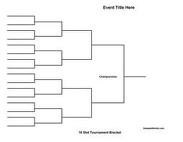
Now about the tennis tournament.  To make this work, I am going to follow a particular player through a tournament.  Since I was sure that Roger Federer was going to win Wimbledon this year (he didn’t: Jo-Wilfred Tsongas defeated him), I’m going to imagine that he gains, at each stage, what Erik Erikson says he would gain if “life” were a tennis tournament.[1] I’m going to come back to the tournament metaphor several times, I think  All of them are going to imagine that Roger Federer won Wimbledon this year, which, alas, he did not do.  I like the tournament metaphor, though, because it is familiar and graphic and goes in the general direction of my argument.  I always consider that last one a plus.

Here are the two parts for today.  If you distinguish, as I proposed in “Rising Above Decline,” the trajectories of the body and of the “self,” we see how different those trajectories are—or, rather, how different they might be.  In the first application, I will trace a body through the tournament.  It loses.  Not to spoil the suspense.  In the second application, I will trace a self through the tournament.  You could win this one.  The goal of the opponents you will face in this tournament isn’t to kill you; it is to defeat you.  There is no reason why you have to be defeated.  That’s what I think, anyway, and I have played enough really bad games that I think you ought to listen to me.

If you imagine life as a tournament and your body as an entrant in the tournament, you can easily pick out opponents.  Events and conditions that damage your body are opponents.  Your body never recovers from having lost the use of arms and legs in a car crash.  “You” might; there are perfectly happy quadriplegics; but your body doesn’t.  You can survive measles with no adverse effects at all.  You won that round.  You can live with persistently high levels of stress.  You win that round too, but you are disadvantaged by it in later rounds.  But at some round or another, an enemy will defeat you (your body) and you will drop out of the tournament.  Erickson has eight stages (about which, more later) and the tournament metaphor recognizes that you could lose at any of them.

The most substantial point to be made of the bodily tournament is that you will lose.  No one wins this tournament.  You can to better than expected, but eventually you will meet an opponent who is tougher than you are—cancer, say, or pneumonia, or heart attack—and you will drop from the bracket.  In saying all that, I have used the tournament bracket to define “mortality;” nothing more.

If, on the other hand, you picture your “self,” rather than your body, as the entrant in the tournament, then everything is different.  You still face opponents.  One of the great values of Erikson’s system is that you know what opponents you are going to face.  And you might lose to any of those opponents.  If you come up against “role-confusion” as an opponent, for instance—and in Erikson’s Stage 5, you will—you could play a bad game and lose.  The result of losing to that opponent is that you really don’t formulate a notion of who you are that you can accept and commit to.  You don’t form, in words I have come to like a great deal, “an accurate and acceptable self-image.”[2]  On the other hand, you could beat all these opponents and face, in the finals, “despair.”  That’s the last opponent, as Erikson conceives of it.

But you don’t have to lose even this final match.  You can win and you can be undefeated even at the very last when your self goes away.  So the trajectory of the tournament in which your self plays could be entirely different from the tournament in which your body plays.  The body will inevitably decline, but “you” may rise above it.  It will lose, but “you” need not.

Enough, probably too much, about mortality.  It is the other tournament that will concern us from here on out.  I’m in Stage 8.  According to Erikson, the opponent I am currently battling is “stagnation.”  I’m doing pretty well, but I got banged up some in several of the earlier rounds so we’ll have to see how it goes.


[1] Erikson’s best-known work is Identity: Youth and Crisis.  I am going to be relying more on The Life Cycle is Completed as we get further into this.

[2] Snell and Gail Putney, Normal Neuroses: The Adjusted American, Chapter 3.  First published in 1964 and LONG out of print.

Posted in Getting Old | 4 Comments

Rising Above Decline

Today, I want to think about dying and about not dying.  It’s pretty simple in a way, but I have quite a few posts I would like to write about getting old and about people who have written persuasively about what is involved—B. F. Skinner (left) and Erik Erikson (right) are the ones I will be following—and I find myself blocked because I have not said the few simple things that need to be said first.

Let’s start with “self.”  In my line of work, a self is a social construction: I have a work self and a running self and a punning self and so on.  And when I say “my self,” that is what people ordinarily refer to.[1]  But when I say “myself,” I mean me.  I mean all of me and my close identification with myself as someone who has a past and who has done some things and who is so substantial that I (it) is legally liable.  Since a self is socially required, “myself” is socially liable as well, of course.

Myself includes my body.  My self does not.  From the standpoint of my self, my body is “it.”  I am still fully engaged in this conversation but “it” is exhausted and will go to sleep no matter what I want it to do.[2]

OK, that was the hard part.  “It,” i.e., my body, is in a state of extended and predictable decline.  Nothing works as well as it used to and things are going to keep on declining.  Mostly, I’m fine with that.  But I don’t think “I” need to follow along too closely.  The analog of bodily death, it seems to me, is personal despair.  I got that from Erikson and eventually, I’d like to write a little more about how I understand him and how I feel about it.  I do need to die—or, to say it another way, “it” needs to—but I don’t need to despair.

The best summary of this I have ever seen was the title of an article about the kinds of economic uses schools could be put to when there were no children to put in them.  The population of the district was declining and the business manager was looking for a way to turn a profit on the empty buildings.  The article was called “Rising Above Decline.”  So I think “it” will decline, but I think “I” can rise above it.[3]  There is a good reason to die, but there is not a good reason to despair.

My body has a predictable arc of decline.  About 60% of adult males, age 50, can do this; 40% at age 60; 20% at age 80, and so on.  That’s a social assessment of who can do what.  I have my own assessment as well and any number of metrics could be called into play here.  I think I’ll use running times.  I always wanted to run a 10K under 41 minutes.  Never did.  I got to 41:12 once and to 41:15 twice.  After a while, I started just being sure that whatever the course was, I was in under 45 minutes.  Then under an hour.  My Wildwood trail times for a mile have gone from 9:15/mile to 10 minutes.  My standard time these days is about 13 minutes, although that includes some walking, and I do sometimes run the last mile or so under 12 minutes.  Each.

I am illustrating “decline.”  I’m perfectly contented with these times if they are all I am capable of.  I keep pushing on the edges to see if bad things happen when I push.  When they don’t, I push a little harder; when they do, I count myself satisfied.  Sometimes more than satisfied, although I wouldn’t want to have to justify how good I feel when I have done what I am capable of.  I call it “leaving it all on the trail,” a version of the “leave it all on the floor” of my early basketball days.  When I have pushed my body to do what it is capable of that day, I am really tired and entirely content at the end of the day.  If it took me an hour and twenty minutes to run the six mile course and that’s the best I could do that day, I’m proud of myself.  If I think I really could have run it in an hour and fifteen minutes and just didn’t have the guts to do it, I am disappointed in myself.

I win nearly all the time because I keep adjusting the goals down so that I have a decent chance at achieving them.  I like winning, but I like to set the goals where they demand my best performance to reach them, so being disappointed today is the price I pay for really believing in my satisfaction the next time.

If this works out right, the next post in this series will imagine the “stages of life” (Erikson) as a tennis tournament, like Wimbledon, in which each victory gives you the opportunity to play someone better than the guy you just beat, but which also gives you additional tools for the next match.  Now that I think of it, it is even more like the New Wilmington (Pennsylvania) summer tennis tournaments, where each player brought a new can of balls to the match and the winner got to keep the unopened can.


[1] English has come to use person as the crucial word.  There is an irony there because person once referred to the theater masks used in Greek drama, so that dramatis personae didn’t mean so much “cast of characters,” i.e., the actors and actresses, as it meant the range of masks to be used.  The derivation per, “through” +, “to sound,” shows the dramatic origins of the term and also why an actor would “sound through” whatever mask he was wearing.

[2] None of this is meant to imply that I believe the body and the other part (self, soul, essence) are independent entities.  The body is the host to the neurons, the interaction of which generates the possibility of selfhood.  I know this is controversial in some settings, but since I believe the self requires a supporting cast of connected neurons, I also believe that when the neurons go, I go.  I am, in this sense, a psychosomatic unity and neither element works alone.  Surprisingly, The Matrix is very good about this.  As is The Bible, in a very different way.

[3] I will still think that is true when I get to the question of pervasive dementia, but that isn’t the focus of today’s piece.

Posted in Getting Old | Leave a comment

Ten years later, you get hauled up before a committee

I had been working with “posts” to my “blog” for a while before it occurred to me that a post I published on Saturday Evening was a Saturday Evening Post. You wouldn’t think it would have taken me that long, but it did.

This Saturday, I want to honor Benjamin Franklin who assembled the first Saturday Evening Post and also Howard da Silva, who plays the part of Franklin on Broadway and in the movie version of 1776. John Adams prevails on him to write the Declaration of Independence. Franklin declines on the grounds that his prose doesn’t have the necessary gravity.

 Mr. Adams
But, Mr. Adams
The things I write are only light extemporania
I won’t put politics on paper
It’s a mania
I refuse to use the pen in Pennsylvania

Howard da Silva makes a great Franklin, but there is more to his story than I knew. He was born Howard Silverblatt in Cleveland in 1909. He was charged as “a troublemaker” by fellow actor Robert Taylor and called before the House Unamerican Activities Committee. He refused to answer their questions and was promptly blacklisted.

I suspect that Stan Freberg knew that. You never really know about Freberg. It is true, nevertheless, that in his History of the United States, Volume 1, Freberg presents a little dialog between Franklin and Jefferson. Jefferson is trying to get Franklin to sign the Declaration of Independence. He calls it “a little petition I’ve been circulating around the neighborhood.” Franklin is reluctant.

Jefferson:      Come on and put your name on the dotted line.
Franklin:        I got to be particular what I sign.
Jefferson:      It’s just a piece of paper
Franklin:       Just a piece of paper, that’s what you say.
Jefferson:      Come on and put your signature on the list.
Franklin:       It looks to have a very subversive twist.
Jefferson:      How silly to assume it. Won’t you nom de plume it today? You’re so skittish, who possibly could care if you do.
Franklin:       The un-British Activities Committee, that’s who.

My guess is that Freberg knew da Silva or at least knew about him and that’s why the un-British Activities Committee shows up in the song. You sign a harmless piece of paper, Franklin whines, and “ten years later, you get hauled up before a committee.”  He also says he’s too busy to be messing with politics. “You know,” he says, “every Saturday evening, I bring out the mag.”

Posted in Saturday Evening Post | Leave a comment

Owning Less

I own a lot of books and I own different ones for different reasons.  I’m going to have to get rid of nearly all of them soon and I find myself stumbling over how different those reasons are from each other.  That’s what this post is about.

The default date Bette and I have chosen for moving out of our home here in Southwest Portland and moving into a retirement center of some sort is 2017.[1]  That isn’t a hard date.  It’s the time when we want to be ready to move—we’ve chosen a place and made some early payments and located ourselves at the top of whatever list we want to be on—not the time when we absolutely will move.  Still, I am mindful of my father’s often-repeated maxim that it is good to “pre-think the inevitable.”

Wherever we move, we will have something like a fifth of the space for books that is currently occupied by books where we live now.  We need to get rid of four fifths of our books.  It’s hard to say it out loud and take it seriously.

That brings me to the question of why I have the books I have.  Some of the books I have are biographically significant.  I have the revised edition of Dolbeare and Edelman’s American government text, which has a nice little recognition of me in the acknowledgements and the substantially different treatment of the federal bureaucracy that I had asked for.  That doesn’t seem like a book I should get rid of.  I have the copy of Jim Davies’ Human Nature and Politics which I was reading when I called him at the University of Oregon and told him I was blown away by the book and wanted to do doctoral studies with him.  That’s what got me to Oregon.  I have my brother John’s signed copy of his Galapagos: Exploring Darwin’s Tapestry, which, in addition to being a well-conceived, well-written, and beautiful book,acknowledges my contributions to its present form.  I’m not going to give books like that to the Salvation Army.

I have reference books.  I have a lot of reference books.  Most of them are biblical commentaries or cribs of one kind or another.  Some are etymological collections I couldn’t find elsewhere..  And there are some reference books that you really need to have within arm’s reach, even if you could go to the library and find them.

I have books I read over and over.  If I designed a graphic like this Venn diagram, the red spot would be a great deal larger.  I read The Lord of the Rings over and over.  I read the four Lord and Lady Peter Wimsey books quite a bit.  I read Ursula LeGuin’s Hainish Trilogy and EarthSea books.  And other, less respectable collections as well.  I want to keep the books I read over and over, no matter how big the red spot gets.

The political science books that I have kept around as markers for a path I might be moved to take some time will have to go.  It won’t be hard to do without the books, but it will be hard to say out loud that I will never actually pursue this or that very interesting path of inquiry.  Evolutionary psychology will probably fall into that category, as will brain studies, world culture conflicts, and nearly everything about contemporary politics.  The books on the psychology and sociology of intimate relationships, about dating and true love (not the same thing, in my experience), and histories of marriage in the West since the Industrial Revolution, will have to go.  I will make an exception of Gary Chapman’s The Five Languages of Love because it has been such a good book for Bette and me and because it is about the need to find and learn the language your partner understands best.

No more new novels in paper form.  Probably Kindle books or whatever has replaced Kindle by that time.  Or I will buy them and read them and pass them along.  And then if I have to read them again (that red spot), I will try to get one from the library.

So—as you can see—it isn’t the books that make this hard.  It’s the rationales.  I have become the person I am in large part by reading and internalizing the information and the arguments in these books.  Now I’m going to have to find out how well I do without the books.  The reasons for having books are so powerful; the reasons for not having them seem, somehow, weaker.

Well Dad, it’s time to “pre-think the inevitable.”  Maybe I’ll start on it tomorrow.


[1] We have looked at a few places.  There are some very good places in Portland.  But now we run into decision criteria, like is “good enough” really good enough or does it have to be the best of the available options?  Do we want the best place or the place with best access to downtown Portland?  We haven’t looked at a place I couldn’t be happy, but where I am living has never been the biggest single determinant of whether I’m happy.

Posted in Biblical Studies, Getting Old, Theology | Leave a comment

Can we owe a debt of forgiveness?

We are a credit-driven society.  We know all about debts.  You see something you want to buy, you give the merchant your credit card (thereby acquiring a debt) and when, eventually, the bill comes, you pay it, thus discharging the debt.  That’s how it goes.  Being “forgiven” this debt is nearly inconceivable[1].  Even bankruptcy doesn’t do that.[2]

It is our individualism that makes this so clear.  If you didn’t buy it, then you don’t owe a debt for it.  But we weren’t always so individualistic and our notions of forgiveness come from a setting that was much more collectivist than we are.  The people of Israel were bound in a covenant with God.  You don’t get much more collectivist than that.

A part of this covenant with God was that there was a collectivity (a tribe, let’s say) that owed a debt.  It was an obligation.  Often it was clear how the debt was to be discharged, but it was not always clear just who was to do the discharging.  That’s where forgiveness comes in.

Let me give a simple example.  Redemption was a part of the Israelite covenant.[3]  Leviticus 25 offers a good example.  Every Israelite properly belonged to God, therefore there would have to be some limits put on the length of time anyone could be a slave, even if he sold himself into slavery.  Selling yourself into slavery is like hocking yourself at the pawnshop.  You probably shouldn’t have allowed things to get that bad, but you did.  You screwed up so badly, let’s say, that you really don’t deserve to be redeemed.  We can imagine that, can’t we?

The interesting thing about the Israelite covenant is that it really didn’t matter whether you deserved to be redeemed or not.  You belong to God.  You are not, to use an expression with New Testament overtones, your own.  God deserves for you to be redeemed, to be restored to Him.  You may not deserve it, but God deserves it.  And for that reason, someone has a debt.  It is not a debt to you.  It is a debt to God.  The debt is discharged when someone—probably a close kinsman—goes to the man who owns you and pays him the money he demands to release his claims on your labor.  You have now been redeemed.  You don’t belong to yourself now because you never belonged to yourself.  You belong to God again, and not to the slave owner to whom you had hocked yourself.

We are now in a position to reconsider the forgiveness of debts.  Raymond E. Brown, in a lecture on the beginnings of the church, says that he thinks that Matthew’s “debts” is historically richer than Luke’s “trespasses.”  Brown’s idea is that you “trespass against” someone by committing an act against him or her.  “Trespass” is a clear act.  But you can owe a “debt” to someone you don’t know.  Brown thinks that Matthew had the covenant obligations in mind.  I might “owe you” redemption, for instance.  If you are from my tribe and if you were sold into slavery and if I am your closest kinsman, then I owe you your freedom.  I may not know you.  If I know you, I may not like you.  But because we both belong to the covenant of God and because you should have no other owner than God, I have a debt to you.  I am to find you and make the transaction with your owner that will restore you to God.

I have a debt to God, but because of that debt, I owe an action to you.  If I did not take that action for whatever reason, I would need to be forgiven by you and by God, since I had transgressed against both.  It is for that reason, Brown argues, that “forgive us our debts” reaches so deeply into the community.

As Christians, we don’t have the covenant obligations our Israelite forbears had.  In fact, the apostle Paul struggled over and over with the question of just what we did owe each other.  Paul thought that living the life of the Spirit ought to make questions of what Christians owed each other practically obsolete.  But Paul was a pastor, so he knew these questions weren’t obsolete.  What do the strong in faith owe the overscrupulous?  What do husbands owe wives?  What do those with the charism of administration owe to their congregations?[4]

Whatever specific behavior we owe—or the attitudes that support the behavior—we owe to people who “belong with us” because they “belong to God.”  The debt we owe, using Matthew’s phrasing, is a debt of action and not taking the needed action is failing to discharge our debt.  Anyone who has been given the gift of encouragement and who withholds encouragement from a brother or sister has not paid the debt he owes[5].  Anyone who has been given the gift of administering the affairs of the church and who has not done so has not paid the debt he owes.

The conclusion here is that owing an action to a brother or sister is not quite as straightforward as owing a debt on your credit card.  When we pray “forgive us our debts,” we mean “forgive us the debts we have not paid.”  We mean, “forgive us the debts of which we have already defaulted.”

It’s a very pushy notion.  That is one of the many reasons I like Pay It Forward.  It isn’t about divine grace, but there is a divine sort of pushiness about it.  As the attorney says, “You accepted the gift.  You’re obligated.”


[1] The sources of our word forgive are difficult, but interesting.  The prefix, for-, probably means “away” in this word.  You give away the expectation of payment when you “forgive” a debt.  You give away the justification for the anger you are “holding”—and on a good day, you might even give away the anger itself—when you “forgive” an action that a neighbor has committed against you.

[2] If you are bankrupt, your bench (the Italian banca) is broken (the Latin rupta is probably clearer than the Italian rotta) and you can’t do business in the marketplace anymore.  Chapter 11 is an entirely new chapter in bench-breaking.

[3] Leviticus 25: 47—51 describes this

[4] A charism is a gift, of course.    All the gifts of the Spirit are charisms.  Or charismata, if you absolutely must.  I just love the idea that church administrators are charismatic by definition.

[5] There is a very relevant list in Romans 12:3—13.

Posted in Biblical Studies | Leave a comment