American Exceptionalism

I got a late start on the current discussion of “American Exceptionalism.”  When I was in grad school, there was some talk about it.  The idea at the time was that the U. S., unique among the Western powers, had no experience of feudalism; no deep-rooted anticlericalism; no authentic Marxist reaction to the brutalities of the early Industrial Revolution.  We were the exception.

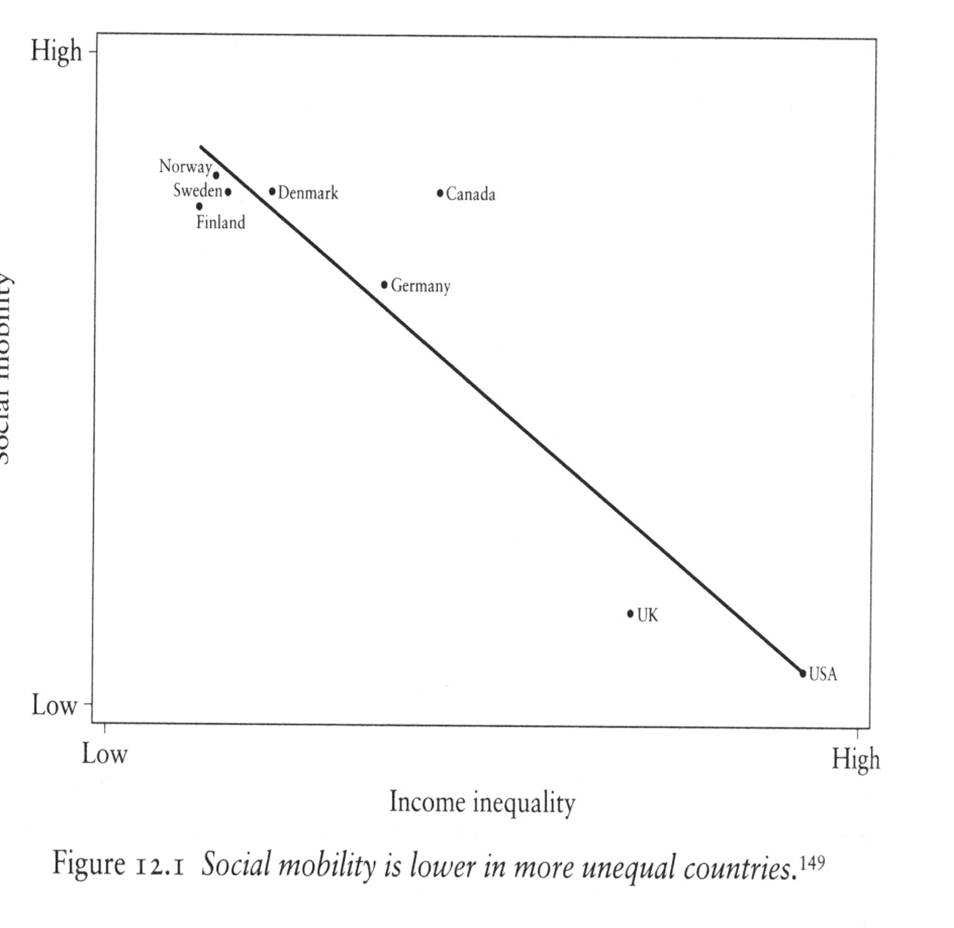
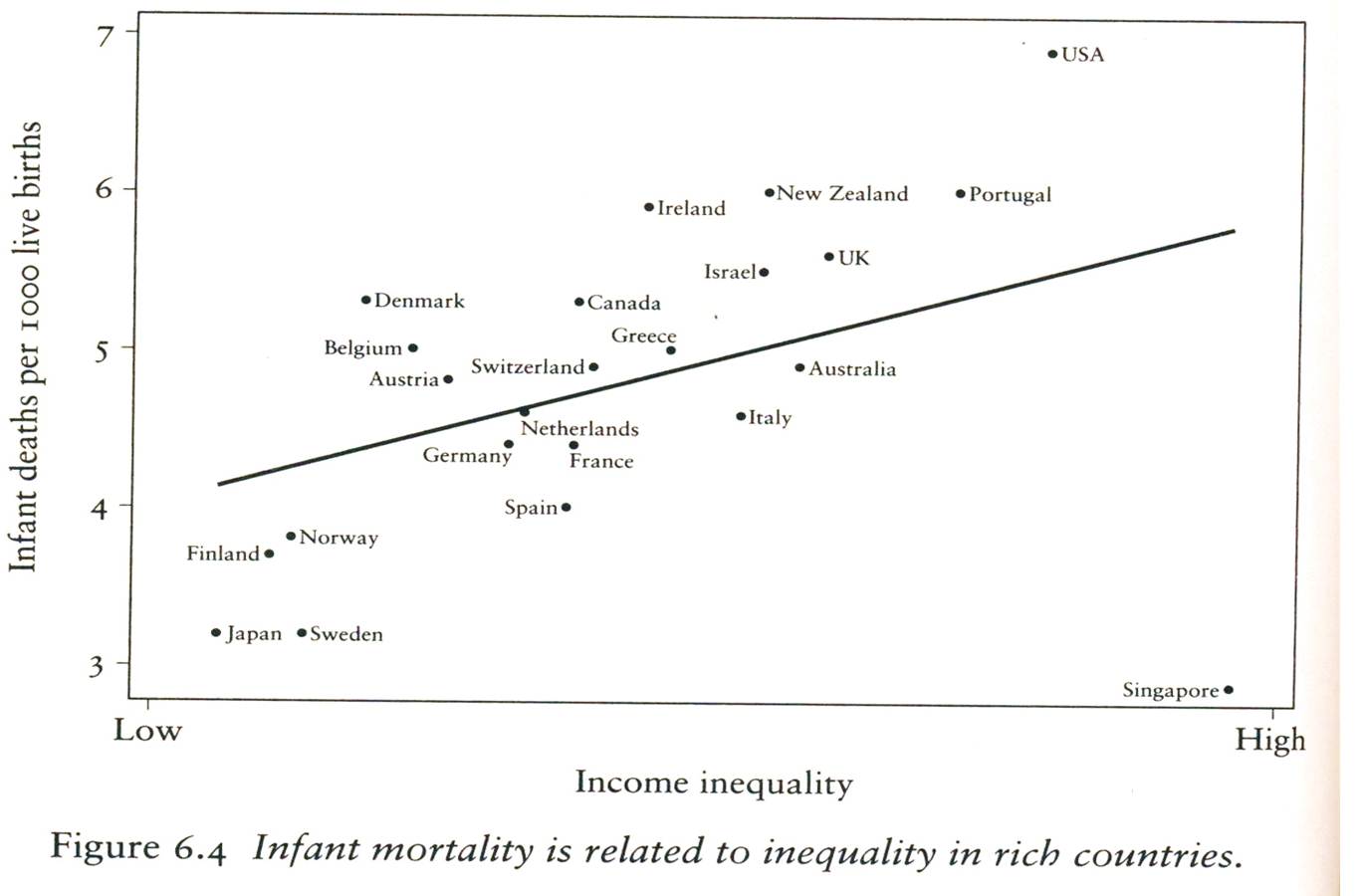
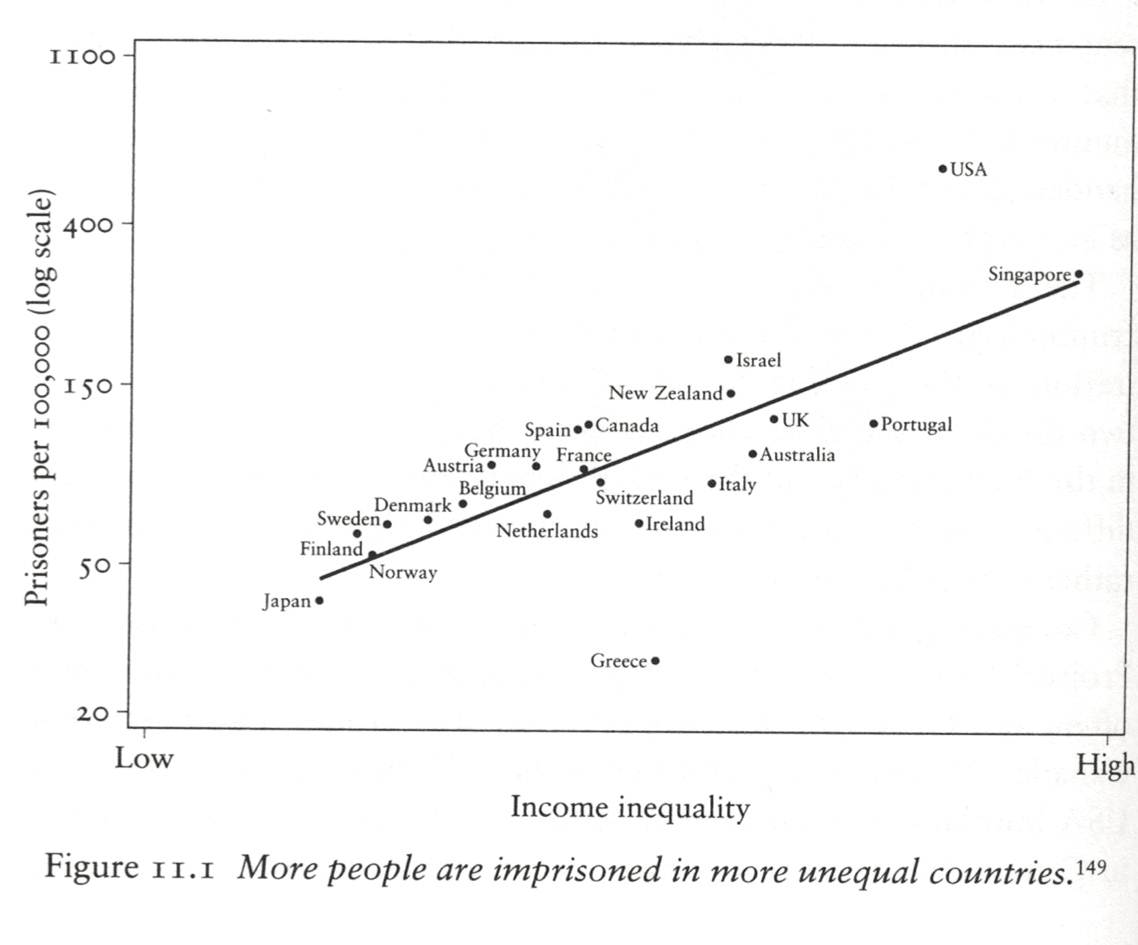
In this post, I am going to pass along some slides my brother Karl found.  Neither of us claims to have developed this information; both of us find it frightening.  Here, I will simply show you the charts and comment on each.

This chart doesn’t need a great deal of comment.  These nation-states are shown by the number of prisoners per 100,000 of population and by how unequally the income is distributed within each state.  Japan has distributed its income most equally of the nations shown here and has the fewest prisoners.  We are at the other end, almost off the chart entirely.  The very highest in income inequality and in number of prisoners.  The authors think there is a relationship between those two facts.  I am simply looking at American exceptionalism.  Here is an example.  When we sing about “the land of the free,” we aren’t talking about the percent of Americans in prison.

This one looks at social mobility.  In general terms, social mobility is the ability to move “up the ladder of success.”  You have to get pretty deep into the sociological literature before they start to consider moving down the ladder.  Getting up the ladder is a deeply American aspiration.  It shows up, in part, in our wanting to preserve the favorable status of the elites because, you know, we always might become elites ourselves and we would want that status to be there for us, or possibly for our children.

That being the case, it is a shame we aren’t Scandanavian.  The four nations clustered at the top of this scale are the lowest in income inequality—the highest, that is, in “income equality”—and they have the highest social mobility.  No reason at all why a little Finnish child shouldn’t hope to grow up to be Prime Minister.  Again, this chart doesn’t speculate about causes.  It just groups the nations by where they fall on these two measures.  We are exceptional, again, in how unequally our income is distributed and in how unlikely any of us is to improve his or her social standing.

The final chart is a variation on the same theme.  This one looks at infant mortality.  Remember that the bottom line doesn’t measure the availability of income.  You could have a rich nation right next to a poor nation on this chart.  It measures how very little the poor have in that country compared to the rich in that country.  Again, we are clearly exceptional.   Not as much as Singapore, as you see.  Singapore’s wealth is even more unevenly distributed than ours, but the instances of infant mortality are very low.  Ours are very high.

None of this is at all pretty.  I know this isn’t what the current discussion of “American exceptionalism” is about, but maybe it should be.  I’ve just begun reading a very good book on this question.  It is The Spirit Level: Why Greater Equality Makes Societies Stronger by Kate Pickett and Richard Wilkinson. 

A “spirit level” is what Americans would call a carpenter’s level, the one where you try to adjust the surface so the bubble is between the lines.  America is about half a bubble out of plumb, as we used to say at the lumber yard where I grew up.

Posted in Politics | Tagged , | 3 Comments

Federer Plays Erikson, Round 4

Roger Federer had absolutely no trouble with Juan Monaco last night.  Did Monaco have a bad game?  Did it start too late?  Is Roger finally getting focused on the tournament?  He had better start to get focused, because he has Jo-Wilfed Tsonga next and Tsonga is a monster.  Monaco was not a monster.  Federer took him 6-1, 6-2, 6-0.

These are the quarterfinals now.  When this draw fills out, there will be eight players.  If Federer wins, he will get the No. 1 seed, Novak Djokovic as the prize.  That means it is time to look at the Erikson stage not only in terms of what strengths Roger has developed in previous stages, but what strengths he is going to need to beat Tsonga, then (probably) Djokovic, then (probably) Rafa Nadal.

Since the quarterfinals are the fourth round of the U. S. Open, they direct us to Stage 5 of Erikson’s stages.  What is supposed to be going on there?  Erikson places this stage roughly at adolescence and the principal question is, “Who am I?  Really.”  The opponent to be defeated is role confusion; in Erikson’s terms, the dystonic value.  The strength to be attained is identity coherence; that is the syntonic value.[1]  The unchecked, “too much” version of identity coherence is called fanaticism.  The unchecked, “too much” version of role confusion is called repudiation.

Here, from Vital Involvement in Old Age, is a summary of what’s at stake.

It is important [for a person in Stage 5] to identify himself with life goals worthy of commitment and fidelity and to do this with an appropriate knowledge of his capacities.  The sturdy strengths of hope, will, purpose, and competence, which result from the earlier balancing of these stage-specific syntonic and dystonic tensions, will not support these new vital commitments.  But this is a demanding step to be taken, and it is easy to become confused and uncertain about one’s life role and one’s firm sense of “I.”

Without turning the tennis tournament into an allegory, I’d have to say this is surprisingly apt.  When the top players play poor players, they win no matter what the style of the game is.  But when good players play good players, the most important single thing to know is, “Whose game is going to be played?”  We know beforehand that I will win the match if it is all baseline rallies and that you will win a serve and volley game.  I will be trying to get you to play a baseline game, which means I will be hitting the ball deep and trying to make you run for it.  You will be hitting sharply angled shots you can follow to the net or short shots to draw me to the net.  If I know who I am, I will know what kind of game I must play.  Note how disadvantageous “role confusion” is at this level.  Or, for that matter, “fanaticism.”

It makes such sense that the product that best emerges from the struggle of syntonic and dystonic values is FIDELITY.  This is not fidelity to a friend or a partner.  Such a relationship with such a partner is the principal goal of Stage 6.  This is fidelity to oneself and to the view of what is important in life that you have acquired through the frictions of role confusion—with its gift of openness—and identity coherence, with its gifts of closure and commitment.  It is fidelity to the person you now know you are that is crucial here.

This is not so important for the Federer/Tsonga match.  They have played before.  Each man knows what game the other would like to impose; each knows what his own best game is and what strokes and strategies will be necessary to establish it.  It is crucially important in the development of persons.  The players who win, said Jo-Wilfred Tsonga after the match, are those who are “strong in the head.”

If you tend, as I do, to see important questions asked and answered in the movies, you will probably already have been attracted to The Truman Show.  Truman Burbank has lived his entire life on a movie set, surrounded by actors pretending to be a friend or a mother or a wife.  Truman is the only person in the world who does not know who he is.  When he finds out he is, for all practical purposes, a prisoner, he escapes.  Just as he is about to go into “the real world,” Christof the creator and director of the show addresses him and tries to persuade him to stay in this world, even though he now knows it to be completely contrived.  Here’s Ed Harris as Christof.

Christof:         Truman.  You can speak.  I can hear you.

Truman:          Who are you?

Christof:         I am the Creator…of a television show that gives hope and joy and inspiration to millions.

Truman:          Then who am I?

Christof:         You are the star.

Truman:          (Catching on immediately).  Was nothing real?

Christof:         You.  You were real.  (The answer there is really No.  Everything you have ever experienced was contrived, artificial, and manipulative.)

Truman decides, however, that he does know who he is and launches himself on a real life that will be based on that idea.  No actual person is launched quite so dramatically, but it is a common experience to look back at your own life and locate the time when the general contours of the person you now are were first visible.


[1] The book I am cribbing from, Vital Involvement in Old Age, used the term “identity cohesion” here, but a lot of the words that are chosen seem about an eighth of a turn off and I am going to start substitution the form of the word that would be more normally heard.

Posted in Getting Old | Tagged , , , | Leave a comment

Federer Plays Erikson, Round 3

The first week of the U. S. Open tennis championship is drawing to a close and we won’t know anything more about my guy until Monday, when he will be playing Juan Monaco of Venezuela. If you have not been following my attempt to fold the U. S. Open into Erik Erkison’s developmental stages, this post is really not the place to begin but the point of the analogy is this: just as we progress in our lives along our developmental course, defeating one opponent after another, so the tennis players progress along their (mutual) developmental courses, playing one opponent after another.  There are lots of pictures of Roger Federer.  I’m choosing this one because they both look so happy.

I’m using Roger Federer’s path as my focus as long as he remains in the tournament and today, he dispatched the Croat Marin Cilic (pronounced CHIL-itch) in four sets.  Federer didn’t look at all good in the second set and I wasn’t sure how things were going to go, but something good happened—he found a new strategy or a new focus or Cilic started to wear down—and the third and fourth sets went smoothly.

So from an Eriksonian standpoint, who was Federer’s opponent in Round 3?  I’ll put the short answers here so we can play with them a little.  Federer’s opponent was inferiority.  That is the dystonic value in Stage 4.  Federer seeks in Stage 4 to achieve what they call “industriousness,” but it used to be called industry.  We call it “hard work” sometimes today.  Here, in Edmund Burke’s well-known letter to his constituents in 1754, is the use of “industry” I will mean.

Your representative owes you, not his industry only, but his judgment; and he betrays, instead of serving you, if he sacrifices it to your opinion.

Your representative owes you his hard work—his industry—and his own judgment as well.  In the expanded presentation I am following (Erikson, Erikson, and Kivnick’s Vital Involvement in Old Age), they consider the unconstrained victory of the syntonic value as a maladaptive tendency.  In this stage, it is called “narrow virtuosity.”  They consider the unconstrained victory of the dystonic value to be a malignant tendency; they call it “inertia.”  Those unhappy states are where a person runs the risk of sliding off if there is a clear victory of industry or of inferiority.

The ideal, in the Erikson system, is for the syntonic value to triumph (industry, in this case) but only after having had to struggle with the dystonic value (inferiority, in this case).  The virtue one carries forward in that case is COMPETENCE, which is what industry produces when it has learned that it needs to take the threat of inferiority seriously.[1] 

I began in the last post to see that a straight tradeoff is implied in the developmental scheme.  If there is too much of the dystonic value, the first place to look for effects is in the syntonic value.  For example, I speculated in the previous post that guilt had played too large a role in my life and wondered aloud if it had had the effect of reducing my readiness to take initiatives.  In thinking of my own life in Stage 4, I would wonder if too large a sense of inferiority had produced a deficit of hard work on my own behalf.  It’s a question worth asking and it is given a very useful shape by Erikson’s scheme.

For me, I think, the answer is that it did not.  There were quite a few times in my life—Erikson has school age children in mind here—when it might have.  I hit speed bumps several times that brought me to a place where I just stopped trying.  But then I started trying again and gained both a sense of my own competence, but also a sense of what is most apt to damage it.  It is that awareness that has kept me from swerving too far into narrow virtuosity.  I think you’ll agree that a man who has titled his blog, “the dilettante’s dilemma” has escaped “narrow virtuosity.”

The other interesting speculation, though, is how the deficit of initiative that I brought with me from Stage III affected my development in Stage IV.  I think the line there is clear.  I have often attempted to make up for the somewhat tattered initiative of Stage III with a very vigorous display of “effort” in Stage IV.  As I look at the chart, it seems to me that I have tried to make up for the lack of vision and daring with a lot of hard work, substituting the syntonic value of Stage IV for the syntonic value of Stage III.  Erikson is clear that you take both your successes and your failures with you when you face the next opponent.  I may have taken the partial failure of Stage III with me and attempted to remedy it—Erikson says you can actually do that—in Stage IV.

So, for Roger Federer, Juan Monaco of Argentina is next. This is the round of sixteen at the U. S. Open, what they would call “the Sweet Sixteen” in college basketball’s March Madness.  It will be round 4 of the tournament, so it will be Stage V of Erikson’s scheme.

Talk to you again on Monday.


[1] Last night, my Oregon Ducks were pounded on national TV by the LSU Tigers.  The general run of press comments in Oregon today matches the Erikson tradeoff exactly.  Oregon’s highly respected offense (industry) has just taken a slap of inferiority in the face.  If it handles that public humiliation properly, it will approach COMPETENCE as the season continues.

Posted in Getting Old | Tagged , , | Leave a comment

Federer Plays Erikson, Round 2

I’ve been using Roger Federer’s progress through the U. S. Open to pursue my idea that Erik Erikson’s famous set of developmental stages can be thought of as a tournament in some ways.  To compensate for the fact that there are only seven rounds in the tournament and eight stages in Erikson’s scheme, I started Roger on Stage 2.  His opponent in the tournament was Giraldo, a Columbian, whom he defeated without much trouble, although he had a run of careless games in the first set.  In Erikson’s system, the opponent to be defeated is the sense of shame or doubt.  The great virtue of that stage is a sense of autonomy.  Ideally, autonomy wins, but is tempered a little by shame.  After all, in English, “shamelessness” is considered to be a really bad trait.

Today, Federer faced and defeated the Israeli, Dudi Sela, who also won his first round game.  The further you go in the tournament, the more you meet opponents who, like you, have met the challenges they have faced.  In a tennis tournament, the challenges may have been quite different.  He beat a baseline player; you beat a serve and volley player, for instance.  In Erikson’s scheme, each person faces the same challenges because they are rooted in the nature of our development as humans.  Federer didn’t have much trouble with Sela, defeating him 6-3, 6-2, 6-2.  The question for today is what that means as we project it onto Erikson’s stages.

The opponent, what Eriksonians call the “dystonic tendency,” is guilt.  The strength to be mastered and made part of the person’s repertoire is initiative.  The best outcome in this struggle is thought to be the victory of initiative, but an initiative that has had to take account of guilt.[1]  If guilt were to triumph, it would take the form of inhibition, which is called “the malignant tendency.”  If initiative were to triumph without ever having to take account of guilt, it would take on a “maladaptive tendency” called ruthlessness.   The strength we grow into in this stage is called PURPOSE.  Clearly, that requires the victory of initiative, but, in this way of conceiving of it, it is a victory over a real opponent and doing what you have to do to achieve that victory gives you a solid and settled sense that you may have and pursue purposes without shading over into ruthlessness.

This stage has meant a good deal to me personally.  Guilt was a major tool in the culture I grew up in.  It was felt that punishing children in direct and overt ways could achieve only an outer compliance, but that guilt—a violation not of the child’s standards, but of what the child’s standards should be—would result in the internalization of those goals.  They would become, in time, the child’s own authentic goals.  That notion was the standard of middle class parenting when I was growing up and I have no objection to it in principle.

It can be overdone, of course, and even the standard dose can be too much for a child who is more than usually vulnerable to it.[2]  It’s hard to know these things for sure but I’d guess that I was a guilt-accepting child in a guilt-inducing culture.  Following Erikson’s set of tradeoffs, that should produce in my life, substantial reductions in initiative, the syntonic value.  My life has never been marked by aggressive goals, let alone by the dark surplus the Eriksons call “ruthlessness,” so maybe I struck the balance a little more to the side of guilt and a little less to the side of initiative than the Eriksons would think ideal.  I have no idea at all.  It has been “the way my life has been” and, while it would be silly to say it could not have been otherwise, I’m happy with it.  I do think it might have set me up for the next stage, but we’ll consider that when the time comes.

Now to return to Roger Federer and his prospects, his next actual opponent will be Marin Cilic, a hard-hitting Croat, who ate Australian Bernard Tomic’s lunch in three quick sets today.  Federer’s Eriksonian opponent will be “inferiority.”  If that turns out to be the German Tommy Haas, who has been a top ten player at his peak, Federer will need to draw on PURPOSE, the strength he earned in Stage 3.


[1] I try to distinguish, when I can, between actual guilt and feelings of guilt.  In developmental psychology, it is the feelings that really matter.

[2] When I see a sentence like that, I am reminded that we get vulnerable from the Latin vulna, “a wound.”

Posted in Getting Old, Uncategorized | Tagged , , , | Leave a comment

Federer Plays Erikson, Round 1

The U. S. Open tennis tournament has begun.  This is my first chance since Wimbledon to play with my idea that the seven rounds of the tournament are (almost) like the eight stages in Erik Erikson’s developmental scheme—in a narrow and limited sense, of course.[1]  I want to use it as a metaphor showing that as you come to each new stage, you face a new opponent (not, remember, an “enemy”).  At each round, you draw on the strengths your game developed or displayed in the previous rounds.

I am especially interested in Round 7 because that is where I am in my own life.  I am especially interested in the Swiss star Roger Federer because I like the way he plays tennis and the way he conducts himself generally.  He’s my favorite player, although he has now declined from #1 in the world to #3 and although he is not old by tennis standards.  He is 30.  I will follow Federer until someone beats him and then I’ll follow that person until he gets beat and so on.  I WILL get all the way to the finals.

If there are only seven matches and there are eight stages, I will have to drop one so I’ll drop the first one.  I will presume that in Roger’s first round he confronted his opponent, mistrust, and defeated him.  From the contest between what Erikson calls “basic trust” and “basic mistrust,” Roger emerged with a sobered and realistic trust, the goal Erikson calls (all caps) HOPE.  That strength he takes with him to the next stage and at that point, we pick up the actual U. S. Open.

Federer played and defeated his first opponent yesterday, the Columbian Santiago Giraldo.[2]  Federer didn’t play all that well, but he did win 6-4, 6-3, 6-2.  Federer fans will find the trend encouraging.  Giraldo will represent Federer’s first opponent in the Erikson scheme.  Giraldo represents “shame or doubt.”  The strength Federer showed in defeating this opponent was autonomy, but in Erikson’s last writings on this scheme, it isn’t just the triumph of autonomy that is the goal, the autonomy chastened by its struggle with shame or doubt.  Federer emerges from this stage/round with (all caps again) WILL.  A new determination emerges at this stage of a child’s life, so I will be proposing that it emerges in Federer at this round of the tournament.

His next opponent will be guilt.  That will be the third Erikson stage (because we had to skip one) and the second round of the tournament.  Federer will be playing the Israeli, Dudi Sela, who also won his first round game.  One of them—Federer, I hope—will continue on to the third round.  Stay tuned.


[1] It is tempting to fall into a shorthand like “Federer plays Erikson.”  I want to avoid that because it reminds me of the scathing report given by a reviewer.  Here is his review: “A string quartet played Brahms here last night.  Brahms lost.”

[2] The brothers McEnroe, John and Patrick, were the commentators for this match.  Patrick called the Columbian Hiraldo; John called him Giraldo.  Neither accommodated himself to the other which, I understand, is what their relationship has always been like.

Posted in Getting Old | Tagged , , | Leave a comment

The Erikson Tournament: Stage 7 Explored

This is going to be a busy sort of post.  I recommend it to people who are thinking of retiring, to fans of Erik Erikson’s epigenetic stages, and to anyone who has been following these posts and who thinks I have painted myself into a corner.  There are three pieces here, after a beginning event and a review of the tournament metaphor.  The first is an attempt—long deferred already—to look at the inner workings of any of the Erikson stages.  It’s more complicated than I thought when I started.  The second is an attempt to apply the main value of Stage 7 to the life I am not living.  What, in other words, does “generativity” look like in my life right now?  In the third point, I apply these traits to a new setting—a retirement center—and try to think whether they will work there.

As I say, it’s complicated.  So let’s get to it.

Some sort of process began in my mind when I started offloading my books.  Right now—this feeling is roughly a month old at the moment—it seems like a long term change.  It feels the way a change feels when it is going to turn out to be permanent.  Here’s what “permanent” means.  Bette and I plan to be ready to move from our house to a retirement center in 2017.[1]  So I have roughly six years to work this out in principle.

So what does this mean for questions weightier than how many books I have?  Let’s look at Stage 7, which is where am supposed to be at this time of my life.  If I continue to look at Erikson’s epigenetic stages as matches in a tennis tournament, I got to Stage 7 by defeating my opponents in stages 1—6.  I have “defeated,” that is, mistrust, shame and doubt, guilt, inferiority, role confusion, and isolation and my current opponent is some form of self-absorption.   Erikson calls it “stagnation.”  “Self-absorbed” seems like a cruel thing to say to a man who writes a blog, but there it is.  Presuming that I win this one, my next opponent will be despair.[2]

So what is the current match like?  At this point, I am going to shift over to a book called Vital Involvement in Old Age.  I’m going to return, at the end, to what defeating “stagnation” looks like between now and 2017, but let’s look right now at the mechanics within a stage.  In the expanded view offered by Vital Involvement, there are five elements to account for in every stage.  I’m going to look at Stage 6 for my example because I am going to be concentrating on Stage 7 in these posts and here, the notion of the tennis tournament is again useful.  If I don’t “win my match” (meaning to be specified below), I don’t get to Stage 7

You are going to have to give me a little wiggle room in order to keep the tournament idea, but I think it’s worth it.  In a real tournament, you lose and you go home.  In the Erikson “tournament” you win big and move on more capable and confident than before; or you win but incur liabilities[3] or you are so mired in Stage 6 that you never really move on. 

So what are the elements of any stage?  The middle two columns represent the struggle most people have.  They want to find some balance between the achievement and the opposing value.  The first and fourth columns are clearly losses although just how bad and just what kind will vary from one stage to another.  The bottom row represents what the achievement, balanced by the struggle with the opposition, will result in.  It is the true goal of that stage.

Unconstrained Achievement

Achievement on Balance

The presence of the opposing value

The domination of the opposing value

Maladaptive

Syntonic Value

Dystonic Value

Malignant

Generalized “Master Value” of that Stage


Note that the achievement of the master value is not the triumph of the syntonic value over the dystonic value, as earlier work with Erikson suggested.  It is the achievement of the syntonic value constrained by the experience of the dystonic value.  A child is supposed to learn to trust, for instance, but he is not supposed to be completely gullible.  It is his experience with mistrust that enables him, in the famous phrase of Ronald Reagan, to “trust, but verify.”

In Stage 6, that looks like this. 

Unconstrained achievement: the syntonic value unconstrained

The key achievement

The key opposing force

The domination of the opposing force: the dystonic value triumphant.

Maladaptive

Syntonic Value

Dystonic Value

Malignant

Promiscuity

Intimacy

Isolation

Exclusivity

Love


In considering the transition to Stage 7, it is clear that I take with me the victories in Stage 6.  I take the defeats too, of course, but Stage 6 was a really good stage for me.  The same chart, considering  the goals and liabilities of Stage 7, looks like this.  Note that the forms are all the same, but new values are now being pursued—the previous ones now presupposed—and new liabilities are being considered and so on.

Unconstrained Achievement: the syntonic value unconstrained The key achievement The key opposing force The domination of the opposing force: the dystonic value triumphant.
Maladaptive Syntonic Value Dystonic Value Malignant
Overextension Generativity Stagnation Rejectivity

Care


Again we see that “too much,” the unimpeded triumph of the syntonic value, is not good.  It results in the maladaptation that, in this stage, is called “overextension.”  The extension of the dystonic value again produces a malignant form, this time called “rejectivity.”[4] In any case, when my interest in generativity is appropriately modified by enough quiet self-oriented experience it is not driven over the cliff into “overextension.”  It retains the characteristics that are the reason we called it a good trait in the first place.  And what are those?  What, in other words, is “generativity?”

Generativity is a concern for making life a good home for others, just as I have (Stages 1—6) made it a good home for myself.  The term the authors use is not “others,” as I have, but “following generations.”  That is who a generative older person is to make this life a home for.  For reasons that are complex beyond the needs of this post, I don’t have much of an orientation toward the following generations.  The flavor of my generativity has more to do with “making things better.”  If I assume for the moment that generativity characterizes the life I am now living, I arrive finally at the question with which I began.  How shall I imagine the life I will be living at the retirement center in terms of generativity?

If I could keep on doing the things that now seem to me to be worthwhile in the “making the world a better place” sort of way, that would minimize the transition from one setting to another.  The setting would be different, but the kinds of things I am doing would be the same.  Here are three things I do that might transition well. 

1.         I provide contexts for discussions about things.

Anything that can be said to have a generalized focus works pretty well for me.  Not, with a few exceptions, what your vacation was like, but “vacations” works for me.  Bermuda works for me.  “Knowing when it’s time to go home” works for me.  You get the idea.  If it’s not just trading experiences—again, with a few exceptions—it’s “general;”  it’s an “it,” and I can find a context that enables me to talk about nearly any “it.”

That may seem a pale skill, but in fact, it works for topics more demanding that vacations.  It works for relationships; it works for politics; it works for religion; it works for sex.[5]

2.  I organize people around shared interests.

Seeing a number of people doing one at a time something I think we would all enjoy doing together is a kind of itch for me.  I am only guessing that there are always more people who would enjoy doing something together than there are people who can see that common thing and pursue it.  If that’s really true, there will be no reason for me to stop scratching that particular itch when Bette and I move to the senior center.

3.  I really enjoy teaching and learning.  In place of  “schools, Illich favored self-organizing groups of people who were taken with an interest in learning something.  As I remember it, he used the example of people who wanted to learn about Dickens.  I am one of those people who would really like to know more about Dickens and I am one of the people who would be likely to notice that there was a general interest in Dickens.  I am not, alas, someone who could teach a class on Dickens, but there are other subjects I really could teach and would like to.

Doing things like that is probably most of what generativity means to me now.  I imagine it is those same kinds of things that will matter to me when we retire from maintaining the homestead.  Doing those things well—maintaining my commitment to making things better—and not sliding over to relentless activism is what “winning” in Stage 7 looks like to me.  But, to return to the tennis metaphor one more time, if I really have an opponent, he is going to change tactics because every point I win, he loses.  He has already learned I can win points from the baseline, let’s say; now he needs to know if I can volley a good passing shot and protect against a lob.  In short, even within Stage 7, things change.  I’m happy I’ve been able to win so many points from the baseline, but I’m not always going to be able to play on the baseline and thinking ahead to some other way I could win some points seem like a good idea.


[1] I just this moment realized that I imagined it occurring in the fall of 2017 and right after that, I understood that I had been seeing it as a fall event because…you know…school is starting then.  We’ll be moving on “the academic calendar,” I guess.

[2] I distinguished earlier between the two tournaments, calling one “the physical tournament” and the other, after some hemming and hawing, “the spiritual tournament.”  We do lose the physical tournament, i.e., we die.  You heard it here first.  The relation of the second tournament to the first is captured by the slogan, “rising above decline.”  That’s what “winning” the spiritual tournament means to me.

[3] Not to get too tennisy,  but this might by a physical liability, like the hamstring injury, or a flaw in your game.  If you won in Stage 6, but also demonstrated that you have no facility at all to handle a ball lobbed to your backhand, you move on to Stage 7 with that weakness exposed.  Your opponent in Stage 7 got there by exploiting the weaknesses of his previous opponents.  He’s not inattentive and you have shown himself something you will wish you had not shown.

[4] To my ear, the really weak word in this set is “stagnation.”  What the Eriksons (and Kivnick) really want, it is clear, is something that will modify the normal and balanced drive to share the wealth of one’s life with others, something that will prevent it from being driven too far.  I’d want a word like “moderation” or “quiet reflection” or “self-oriented experience” or something.  Stagnation?  It just doesn’t sound good.

[5] I’m not sure just how widely it works for sex, but I didn’t want to leave politics and religion hanging out there by themselves.

Posted in Getting Old | Leave a comment

My Opponent is Really Really Stupid

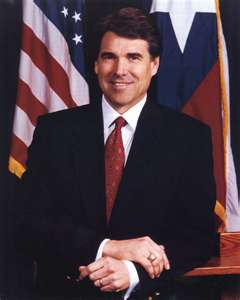
President Obama doesn’t really need to be Superman to win a second term, says Timothy Egan, in a New York Times op ed piece.  He does have “Republican craziness” to run against.  One of the examples of this craziness Egan cites is the doubt Gov. Rick Perry is trying to cast on the adequacy of evolutionary theory.  Here is the relevant clip from Egan’s column.

In the same week that scientists announced the discovery of fossils 3.4 billion years old, evidence of explosive growth of early life through evolution, Rick Perry showed he will take his science from the Bible. He called evolution “a theory that’s out there.” If he thinks it is just a theory, he should get last year’s flu shot.

This post isn’t about evolution.  It’s about a civic virtue for which I have not yet accepted a name.  I want to go little further than “decency” but not as far as “generosity.”  I do believe that the quality of public discourse suffers when the general level of political argument takes on the characteristics that were once associated only with the party’s flamethrowers.  Everyone knew that James Carville (he wasn’t called “the Ragin’ Cajun” entirely as a joke) was going to make extreme and very colorful statements about Republicans.  At the time, he could do that and there could exist, back in mainstream political discourse, the mutual courtesy that each combatant and his or her backers extended to the others.

We are now facing a time when the normal course of public debate is more like the James Carville kind.  I can understand that it feels good to do it that way.  Your opponents have done something outrageous and it doesn’t seem out of line to nail that action with an outrageous accusation.  The real difficulty is, I rely here on evolutionary theory, outrageous political expressions compete very successfully with more moderate expressions and drive them to the few niches in the political world where they can survive.[1]  The real world, the world outside the theme parks, would be dominated by the most extreme, the most caustic, views, the slowest to be constrained by actual facts.  Has Fed Chairman Ben Bernanke committed treason in making more money available during the economic recession?  Treason?

The question that lies at the heart of Egan’s column is this: Just how stupid is Gov. Perry?  Is he so stupid—has he taken his opposition to evolutionary theory so far—that he believes flu viruses don’t adapt to flu vaccines?  No.  He isn’t.  What Eagan has done is to create a huge category called EVOLUTION and to put into that category not only the large and politically volatile question of whether humans evolved from apes but also the undisputed question of whether viruses adapt to anti-viruses.  Once the huge category is created, every question represents the whole category.[2]  The most contentious questions about human origins are now “the same as” the least contentious questions about developments in pharmacology.  That is the device that Eagan relies on to ridicule Gov. Perry, implying that Perry doesn’t understand the need for an annually modified vaccine.

I almost passed by Egan’s sniping because making fun of Gov. Perry feels so good, but that good feeling collided with a bad feeling I have been having more and more lately.  Reasonable policy arguments are harder to find.  There are still reasonable wonkish discussions in think tanks, certainly, but anyone who wants to apply the conclusions reached in those discussions to political debate is going to have to find some way to make them into a slur on his opponents.  Back in the good old days, the biggest challenge in using think tank discussions was making them understandable to the general public.  Now you have to make them vicious or they don’t really help you.  I really don’t think they can be both.

I know that I am risking sounding like the social worker in West Side Story who didn’t know anything about the Jets or the Sharks, but wanted them to mix together at the dance and make nice with each other.  And I know that if one of the major parties turned off the flamethrowers, the first effect would be that all its officeholders would be fried by the other party’s flamethrowers.

Still, here are two simple truths. 

The partisan flamethrowers are sustained by people who like it and think it is justified.  Those are the people who are going to have to change their views.  It may be pleasant and it may be justified, but it leads to pointless policy debate and ineffective government.

We can have this kind of public debate and continue to “make policy” by rejecting Extreme Proposals 1—10.  Every potentially ineffective idea can be skewered in public and its proponents called traitors to the republic.  I know we can do that because we actually are doing that.  What we can’t do it establish a policy goal and work toward achieving it. 

It seems to me that a democracy that can’t do that is going to go the way of last year’s flu virus.


[1] Each party could establish and maintain a “moderate discourse” theme park.  They could charge tourists a nifty little price to come in and listen to R’s and D’s disagreeing respectfully with each other.

[2] That particular device is called synecdoche for those of you who are keeping a box score.

Posted in Politics | Tagged , , , | 1 Comment

Is It Just Will Power?

So how do you feel about “will power?”  Old fashioned? Crucially necessary?  Both? 

John Tierney wrote a really wonderful piece about will power in the New York Times recently.  You can see the full article here.  I’m going to reflect here on a few elements of the scientific study of the question; then a little bit on some practical implications.

First, “decision fatigue.”  It’s not just an apt metaphor, it turns out.  Making decisions is work and work takes energy and as you run out of energy, you feel fatigued.  There it is.  There has always been a difficulty to this simple formulation among scientists who study it.  The difficulty is that no one knew how glucose could affect the brain discriminantly rather than generally.  Either your brain has enough glucose to function effectively or it does not.  But, it turns out that decision fatigue causes activity to rise in some parts of the brain and to decline in others.  There is “more activity in the nucleus accumbens, the brain’s reward center, and a corresponding decrease in the amygdala, which ordinarily helps control impulses.”

So more demands from the reward center and less resistance from the control center.  That doesn’t sound good.

Second, the more decisions you make, the more you suffer from decision fatigue.  It isn’t like a set of conversations you can imagine having.  You feel energized after this one and depleted after that one.  All the decisions cost and the more options you are considering, the more they cost; the higher the value of making a good decision, the more they cost. 

I think about that first criterion when I go to Starbucks and hear a new person go through the decisions that are necessary to get a cup of coffee.  When I go in my Starbucks, they start making my coffee when they see me coming in.  So I have much less excuse for buying the doughnut than the new guy does.  The idea that the cost of the decision varies with the cost of doing it wrong can be illustrated by the idea that it costs a poor person more to go shopping than a well off person because the trade-offs are more numerous for the poor person as is the cost of a bad decision.

Third, these studies all emphasize that there is more difference among settings for choice than there is among choosers.  I have some reservations about that myself, but let’s go with it for a little while.  Someone who “has a lot of will power” is someone who arranges his decisions properly.[1]  He builds good habits, for example, so he will choose the good options—the ones he has decided are right for him—without having to choose them every time.    She saves some will power, some “decision energy” for decisions that would otherwise catch her short.  She doesn’t run her brain near the empty line, in other words.  She anticipates routinely bad settings for decisions, like back-to-back meetings or end of the work day times.  She controls her schedule and her diet so that if she makes wrong decisions, it won’t be because her brain has run out of fuel.

Fourth, since it is the accumulated depletion of the decisions that gets to you, you might want to make fewer at a time if that is feasible or in a commercial transaction, like buying a car, put all the high cost decisions up front where you will make them better.  Here is a catchy example of sequence.

The car buyers — and these were real customers spending their own money — had to choose, for instance, among 4 styles of gearshift knobs, 13 kinds of wheel rims, 25 configurations of the engine and gearbox and a palette of 56 colors for the interior. As they started picking features, customers would carefully weigh the choices, but as decision fatigue set in, they would start settling for whatever the default option was. And the more tough choices they encountered early in the process — like going through those 56 colors to choose the precise shade of gray or brown — the quicker people became fatigued and settled for the path of least resistance by taking the default option. By manipulating the order of the car buyers’ choices, the researchers found that the customers would end up settling for different kinds of options, and the average difference totaled more than 1,500 euros per car (about $2,000 at the time). Whether the customers paid a little extra for fancy wheel rims or a lot extra for a more powerful engine depended on when the choice was offered and how much willpower was left in the customer.

The car buyers eventually just run out of gas.

And finally, it seems to me that a lot of the implications of these decisions have been anticipated for a long time by “good practices.”  People who remind you not to make important decisions when you are tired or to eat something before you go grocery shopping have had no idea at all of the mechanics underlying these prudent reminders.  I, myself, am really drawn to the mechanics, but the fact is that eating something before going on a food-buying excursion was a good idea before we found what processes support it and it remains a good idea now.

The great conundrum considered by the article is all the will power required to stay on a weight loss diet.  As you say no to one sugary snack after another, your energy is depleted and so you can sustain these decisions, you long for a quick sugar hit.  For any other kind of decision, that might be just the right thing.  For weight loss, not so much.


[1] I don’t fuss with personal pronouns much, but here I am going to use “he” sometimes and “she” sometimes.  It seems likely to me that people will think men are better at will power than women or vice versa and that really isn’t a good thing to think.  So I’m going to make sure pronouns of both flavors are present.

Posted in Political Psychology | Tagged , | 83 Comments

John and Bonnie Gray, Just Doin’ Their Jobs

I want to poke just a little today at the way John and Bonnie Gray illustrate what communication between a husband and a wife ought to look like.  John Gray is the founder of the now vast Mars/Venus industries: books, seminars, websites, and so on.  Bonnie is John’s wife and in his books, she needs to act in ways that allow him to model how husbands should respond when their wives seem petulant and unreasonable.  So whatever Bonnie Gray is actually like, in the books, she needs to seem petulant and unreasonable.  It’s a nasty job, but somebody’s got to do it.  Here they are in much earlier days, before all the ducking and dodging and pausing and preparing.

Just a note here to clarify my position on the Mars & Venus books.  I disagree with nearly everything in them, with one exception.  It’s a very important exception.  When I do what John Gray says to do, everything works out really well.  I think his characterizations of male and female roles are stereotyped and rigid.  I think his historical grounding for those roles is preposterous.  Early man had to learn to “duck and dodge” his enemies in battle, for instance, so it should come naturally for a husband to “duck and dodge” his wife’s unreasonable tongue-lashing.  Oh, please!

On the other hand, it is not a small service he provides if, as has been my experience, doing what he says to do makes everything better.  And even if I value him only for that, I value him very greatly.

In this post, I want to look at what John Gray is supposed to do—what his job is—and at what Bonnie Gray is supposed to do.  If John does what he is supposed to do, nearly anything Bonnie does will work out.  If Bonnie does what she is supposed to do, it will make it much easier for John to respond to her.  In that sense, there is symmetry to their roles.  But only in that sense.

It can’t be all that much fun to be Bonnie Gray, the wife of John Gray, the founding genius of the Mars/Venus industry. John Gray uses his interactions with Bonnie mostly to provide instructions to men about how to deal with wives who seem petulant and unreasonable.  For that reason, Bonnie Gray, as she appears in the Mars/Venus books, comes off as petulant and unreasonable.

Here is a little clip from Mars and Venus Together Forever: Relationship Skills for Lasting Love.[1]  This was written to illustrate how John did what needed to be done—and so should we all, guys—and so resolved the crisis.  John tells her he was going to buy a new computer.  I’m adding his comments here, although they tend to excuse his choices, because he is trying to illustrate what “doing it right” looks like and he is being the example for us all.

Bonnie:           Why do you need to buy a new computer (she demanded)?  You already have one.

John:               Well, for lots of reasons. (He says he didn’t like being questioned, but by saying as little as this, he was able to prevent clashing with her)

Bonnie:           What’s wrong with the computer you already have? (She persisted).

John:               You seem upset.  (He “observes” this, after a pause.)

Bonnie:           Have you researched the market?  How much is this computer going to cost?  (She persisted, not answering my question.)

The next four exchanges are presented as a block.  He says he is ducking and dodging, continuing to hold back and not retaliate, but he is aware that he can take only so much more.  I will just present Bonnie’s four responses because she is the one who gets my sympathy today.

One.  Well I AM upset.  Whenever you want something, you just go out and get it.  I don’t know why you have to get another computer.  Yours works fine.  If we are going to spend money, there are other things we could spend it on.

Two.  It’s not like I have all this thought out (He asked what she thought they should spend the money on).  It’s just a feeling.  I feel like you get what you want and I get seconds.  Maybe I am mad that you want so much more than me.  When I want something, it doesn’t seem so important.

Three.  I don’t know.  (He asked her what she wanted to buy.)  But it feels like everything we do is for you and not me.  We always do what you want to do and you always get your way.  I’m afraid I will not get what I want.

Four.  We have been waiting six months to redo our floor.  Our couch needs to be recovered.  I still need a kitchen cupboard.  There are so many things we need to spend money on in the house and you are buying a computer.  It just feels like you don’t care about me.  You are going to buy what you want and that’s it.  What I have to say doesn’t matter at all.”

Here is the resolution of the computer argument above.

John:               I really want to understand your feelings and it really is hard for me.  It’s starting to sound like you’re saying I’m this selfish person.  Don’t I do anything nice?

Bonnie:           Of course you do.  I don’t mean to upset you.  I just have a lot of feelings coming up.  I really appreciate you trying to listen.  Just the fact that I could talk about my feelings without you getting upset with me makes me feel so loved.

So that’s how this round ends with a woman like Bonnie.  The problem is that she has feelings that prevent her from having a fact-based conversation about the computer and other household needs.  The solution is that John ducks and dodges long enough (he was getting close to the edge there at the end) that Bonnie gets the feelings out; she appreciates his listening to her; the emotional relationship is restored; and, eventually, the household purchases will be decided upon.

Now let’s look at what Bonnie Gray’s responsibilities are.  Since John’s responsibility is to “duck and dodge,” you will not be surprised to learn that Bonnie’s are to “pause and prepare.”  Women come naturally to this role because while the caveman husband was off fighting enemies—that’s where the ducking and dodging came from, remember—the cavewoman is home preparing.  Gray runs through things women prepare for: meals, children, their appearance, relationship, and so on

Women need to pause when they feel themselves cranking up the grievance machine.  So Bonnie need not respond by saying “You’re not listening” or “You just don’t understand.”  She can say, “Let me try saying that in a different way.”  That is pausing.  It gives John a chance to remember that he’s supposed to be listening to her feelings, not solving her problems.

“Preparing” comes next.  Bonnie says, “I have a lot of feelings coming up, and I would like to talk about them.  I just want you to know in advance that it sounds worse than it is.  I just need to talk for a while and feel that you care.”  In saying that, Bonnie not only prepares John for the ducking and dodging he is going to have to do, but also apologizes in advance for whatever she may say that is offensive or mean-spirited.  This approach asks his patience as a favor to her and promises that the barrage will be as brief as can be, still allowing time for the feelings to be expressed.

That’s what she should have done in the “buying the computer” scenario.  Asking for his patience (her job) and listening receptively to whatever feelings she has (his job) are both collegial acts. It could look adversarial to a bystander, but it really isn’t.  Bonnie needs to say how she feels and it isn’t going to be pretty.  She engages her husband as a helper and a hearer and promises her gratitude for his work when she is done.  John ducks and dodges while she unloads her feelings, then initiates reconciliation when the time is right.

“It could look adversarial to a bystander,” I said.  I was the bystander I had in mind and I really would not like to see that transaction, much less to be on the receiving end of Bonnie’s anger.  As a bystander, I ask the kinds of questions I am going to look at in the next post in this series.  I ask questions like, “Is it really fair that I have to put up with this kind of abuse over and over?”  I ask, “Is this really the best she can do?”  I ask, “Is it always going to be like this.”

In the next post, I am going to show you what happens when I actually act on those sentiments, rather than just asking them abstractly.  I have actually done that.  I did it for years.  It was ugly and I am glad I don’t do it anymore.  And so is Bette, although if I did let it slip and act like that, she would say, “That’s not like you at all.”  Little does she know.


[1] I MUCH prefer the earlier title of this book: What Your Mother Couldn’t Tell You and Your Father Didn’t Know.  His point in this book is that we don’t know what we need to know because our parents didn’t tell us and they didn’t tell us because we are living a life that would have mystified them entirely.

Posted in Love and Marriage | Tagged , , | 5 Comments

Highballs and the High Road

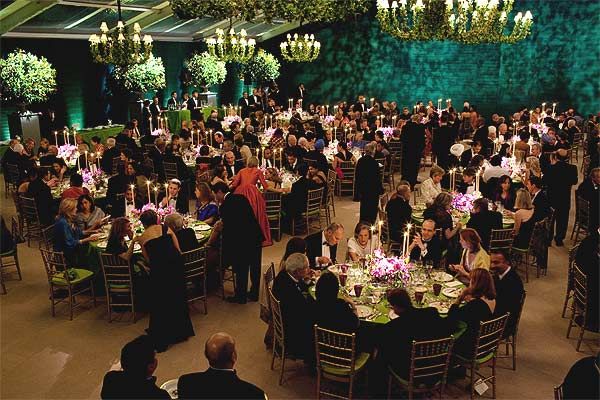
Imagine that this is one of the notorious “Washington Cocktail Parties.”  Maybe it is.  I don’t know.  My son, Doug, found it for me after I had spent a week looking for one.  I wanted one that played up the lavish drinks and luxurious women, but this one is close enough.  I mean, just look at those chandeliers!

What’s going on here?  There are two views.  We could call them the elite view and the populist view.  We could call them the incumbent view and the challenger view.  Or we could just call them “then” and “now.

It was a piece by Sheryl Gay Stolberg in Sunday’s New York Times that got me thinking about this.  Here’s the passage I had in mind.  Here is the whole article.

And the genteel Washington of yore — where lawmakers and spouses socialized across party lines, sharing cocktails and swapping ideas — has disappeared, replaced by a culture in which families stay in the district and members jet home each weekend.

Want to establish contacts across party and ideological lines?  Cocktail parties.  Want to beat the “bowling alone” problem?[1]  Cocktail parties.  Want to build the long-term relationships between committee chairs, the ordinary source of major compromises?  Cocktail parties.  The extraordinary intransigence that was apparent in Congress’s struggle to raise the debt ceiling is a result of too few cocktail parties.

And why are there now so few?  Of all the reasons that could be given—the Stolberg articles surveys them—I pick populism.  If you are the incumbent Congressman or Senator and you attend this party, that means one set of things in Washington: rag the committee’s ranking minority member about the double bogey on the 12th hole; compliment Mrs. Ranking Minority Member on her gorgeous gown (I pick the off-the-shoulder black gown of the woman standing at the left of the picture) and ask about how her kids have been doing in school since last you heard; pass along to a lobbyist who is close to a sometimes hostile committee chair a report one of your staff handed you and that might help the lobbyist press your case with the chair.

If you are a potential challenger in the district or anyone of the other party in the district or any group that hopes to stoke the anger of poor people by suggesting that their representative is living it up in Washington with their tax dollars, it means something else entirely.  Here’s the campaign. 

What is Congressman Smathers doing is Washington?  Just look at the picture.  Here in the district, there are hard-working families who are struggling to pay the mortgage, to afford their medicines, to put food on the table.  Clearly Congressman Smathers has lost touch with real folks here is Dubuque.

That would have worked in a few cases back in the old days.  There have always been campaigns like that.  But it wouldn’t always have worked in the old days.  Only if Congressman Smathers had made himself particularly vulnerable on that kind of issue: had voted against funds for the low income families of his district; was known for lavish vacations; didn’t come back to the district at all to meet with the voters, and so on.  Now, Stolberg suggests, you don’t have to do anything to be vulnerable to the populist smear.  You just have to go to the parties where a great deal of the mollification of angry opponents used to take place.

If that work still went on at cocktail parties, you couldn’t afford not to go.  In the “Washington of yore” Stolberg refers to, you couldn’t afford NOT to go.  So now, you go because your job demands it and open yourself to people who make their living riling up angry voters or you don’t go, to support your re-election bid, and you allow Congress to continue sliding in the direction of Civil War.  It’s a nasty choice.


[1] Robert Putnam put this issue on the front burner by observing that there has been no decline in the number of people who bowl, but there has been a substantial reduction in the number of bowling leagues.  The bowling league was a social institution that brought people who weren’t friends together year after year.  Familiarity, not charity or toleration or anything that big, is Putnam’s notion of increasing our social capital.

Posted in Politics | Tagged , , , | Leave a comment