
I have been a fan of C. S. Lewis’s The Great Divorce for a long time. I have appreciated it the way a reader of fiction appreciates, and since I have taught courses using it as a text, I have also appreciated it the way a teacher appreciates it. The course I taught was called “Seven Characters in Search of Damnation,” a play on Luigi Pirandello’s “Six Characters in Search of an Author.”
The Setting
The basic mechanism that collects these characters in one place is the bus that leaves Hell every morning, taking any Ghosts (that is the term for the people who have chosen to live in Hell) up to Heaven. There, they will meet Spirits (the term for people who by accepting God’s invitation, have chosen to live in Heaven) who have come down to the bus stop to meet them and if possible to assist them in any way. With a single exception, every character in the book who comes in the morning chooses to go back “home” in the evening.
The sin—it is the same one for every character—is the determination to put something first that is not God. God is to be used, variously in the case of the different Ghosts, as a tool to get something they value. This valued thing varies from one Ghost to another, which is what makes the book so interesting, but over the years, I have found “the Episcopal Ghost”(EG) to be the most challenging. [1]
The Episcopal Ghost
In this little episode, Lewis [2] comes very close to condemning liberalism as such. I say “very close” because he makes the Episcopal Ghost such a fearful hash that even people who would like to embrace some version of his positions do not want to be seen in public with him. I feel that way myself.
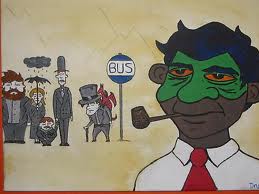 That is a very good way to write a character. You push him out to the very margins of what anyone would tolerate. Then you define “the alternative” as certain (the Spirit actually knows the truth) and as conservative as you like. The reader is put into the difficult position of inventing an alternative where there is no space for one. The positions taken by EG and the Spirit take up all the theological space there is. You would need a crowbar and an immensely long lever to create any space at all between them. And yet, I do believe that I fall between them. I am not the muddled theological liberal EG is. On the other hand, I am not aggressive and knowledgeable conservative the Spirit is. Where I live, think really don’t have the clarity he draws on. And Lewis, is, after all a master of the either/or. For instance.
A man who was merely a man and said the sort of things Jesus said would not be a great moral teacher. He would either be a lunatic — on the level with the man who says he is a poached egg — or else he would be the Devil of Hell. You must make your choice.
And yet, the dilemma the Spirit faces with this Episcopal Ghost has intrigued me for many years and I want to look a little more carefully at this episode, which, does, after all offer a daunting question: Can a person really be damned for believing the wrong things?
EG is the classic maddening liberal.
Picture yourself trying to make a point—any point—to someone whose mind works like this. The structure has collapsed entirely. Everything is process. Words cannot be found that clearly mean anything in particular. Tone is everything. Allow yourself to get good and disgusted and then we can come back afterwards and see if anything can be salvaged of his actual views.
EG here shows no understanding of where he is at the moment or at where he was before he got on the bus in Hell. But that isn’t the worst part.
‘Well, it’s obvious by now, isn’t it, that you weren’t quite right. Why, my dear boy, you were coming to believe in a literal Heaven and Hell!’
‘But wasn’t I right?’
‘Oh, in a spiritual sense, to be sure. I still believe in them in that way.
He still believes in “a literal Heaven and Hell” he says, but only “in a spiritual sense.”
The Spirit faces the Ghost with the reality of his choices and their effects. That doesn’t go too well either.
‘I’m not sure that I’ve got the exact point you are trying to make,’ said the Ghost.
‘I am not trying to make any point,’ said the Spirit. ‘I am telling you to repent and believe.’
‘But my dear boy, I believe already. We may not be perfectly agreed, but you have completely misjudged me if you do not realise that my religion is a very real and a very precious thing to me.’
The context here is doctrinal. The notion that the Ghost’s beliefs are “a real and…precious thing” brings no clarity at all to the doctrines he holds to be true. The Spirit knows what is true and what is not and “my religion…is precious to me” is neither true nor false. It has nothing to do with truth or falsity.
So that doesn’t work. The Spirit then tries direct and immediate action.
‘Will you come with me to the mountains? It will hurt at first, until your feet are hardened. Reality is harsh to the feet of shadows. But will you come?’
This is not doctrinal, please notice. “Let’s go to the mountains (the natural goal of every Spirit in heaven) and let’s start now. Here, take my arm.” But the response is eerily familiar.
‘Well, that is a plan,” says the Ghost. “I am perfectly ready to consider it.”
Notice that “considering the plan” does not get either of them any closer to the mountains. Walking would; “considering” will not.
At that point, the Ghost begins to ask for assurances. I will consent to accept Heaven if I can be given some guarantees. He has two in mind. You will not need to be told, at this point, that neither of them is viable.
The first is that he wants to be “useful.” Then he demands “the free play of the mind.” These are not ridiculous, particularly if we contrast them to the alternatives as he experienced them in his life on earth. But they make no sense at all in Heaven, as Lewis describes it. Here is the Spirit’s response.
‘No,’ said the other. ‘I can promise you none of these things. No sphere of usefulness: you are not needed there at all. No scope for your talents: only forgiveness for having perverted them. No atmosphere of inquiry; for I will bring you to the land not of questions but of answers, and you shall see the face of God.’
We are not “needed” in Heaven as if God had some deficiency that only we could remedy. “Inquiry” is not needed when the plain and true factuality of everything is staring you in the face.. Forgiveness is needed and it is abundantly available and the Truth is here, indeed it is unavoidable except by such subterfuges as the Ghost keeps using.
Nothing works. The Ghost needs to be needed, even by God, and he needs to keep his mind spinning by what he calls “free inquiry.” But facing the clear and real Fact of God, the Ghost equivocates.
“You will keep on implying,” he says, “some sort of static, ready-made reality which is, so to speak, “there”, and to which our minds have simply to conform.”
Notice the pejoratives. “Static” is bad because it is not “dynamic,” “Ready-made” is bad because God, not this particular Ghost, has made it. “Conform” is bad both because it implies compulsion and also because it is a demand made by a reality outside the Ghost himself. Everything about Heaven and God is not quite up to snuff, somehow.
And finally, God is not a person in the sense that one can have a relationship with Him. God is:
“The spirit of sweetness and light and tolerance—and, er, service, Dick, service. We mustn’t forget that, you know.”
A man like this Ghost would drive me crazy. He is repulsive to me in nearly every way. The Truth, apparent and irrefutable for once, does not meet his needs and he escapes back to Hell where his talents can be more fully utilized. “Service,” you know.
Believing your way to Hell
I have spent a little of your valuable time on the true ugliness of this Ghost because I  want to separate it from the reason he is in Hell in the first place, which is, according to the Spirit, who has to inform him of the reason, that he is apostate. [3] He was once “a slave of Christ” (Ephesians 6:6, Colossians 3;24, 1 Peter 2:16), but he has “run away,” as the etymology implies.
This is the part of the dialogue between Spirit and Ghost that I wanted most to explore. The setting of Heaven and Hell (and the bus line that connects them) and the obnoxiousness of the Ghost, are just setting the table. What, specifically is the charge that the Spirit brings against the Ghost. Here is the central passage for that question.
‘Go on, my dear boy, go on. That is so like you. No doubt you’ll tell me why, on your view, I was sent there. I’m not angry.’
‘But don’t you know? You went there because you are an apostate.’
‘Are you serious, Dick?’
‘Perfectly.’
‘This is worse than I expected. Do you really think people are penalised for their honest opinions? Even assuming, for the sake of argument, that those opinions were mistaken.’
‘Do you really think there are no sins of intellect?’
‘There are indeed, Dick. There is hide-bound prejudice, and intellectual dishonesty, and timidity, and stagnation. But honest opinions fearlessly followed—they are not sins.’
‘I know we used to talk that way. I did it too until the end of my life when I became what you call narrow. It all turns on what are honest opinions.’
‘Mine certainly were. They were not only honest but heroic. I asserted them fearlessly. When the doctrine of the Resurrection ceased to commend itself to the critical faculties which God had given me, I openly rejected it. I preached my famous sermon. I defied the whole chapter. I took every risk.’
The heart of EG’s defense is that these were “honest opinions.” Here is the Spirit’s rebuttal.
‘Friend, I am not suggesting at all. You see, I know now. Let us be frank. Our opinions were not honestly come by. We simply found ourselves in contact with a certain current of ideas and plunged into it because it seemed modern and successful. At College, you know, we just started automatically writing the kind of essays that got good marks and saying the kind of things that won applause. When, in our whole lives, did we honestly face, in solitude, the one question on which all turned: whether after all the Supernatural might not in fact occur? When did we put up one moment’s real resistance to the loss of our faith?’
EG responds.
“But it’s not a question of how the opinions are formed. The point is that they were my honest opinions, sincerely expressed.”
This is the Spirit’s devastating response, which he knows to be true because he was there at the time and made the same mistakes.
‘Of course. Having allowed oneself to drift, unresisting, unpraying, accepting every half-conscious solicitation from our desires, we reached a point where we no longer believed the Faith. Just in the same way, a jealous man, drifting and unresisting, reaches a point at which he believes lies about his best friend: a drunkard reaches a point at which (for the moment) he actually believes that another glass will do him no harm. The beliefs are sincere in the sense that they do occur as psychological events in the man’s mind. If that’s what you mean by sincerity they are sincere, and so were ours. But errors which are sincere in that sense are not innocent.’
Let the Trial Begin
EG says first that there are no “errors of the intellect” and if there are, they are sins like prejudice, intellectual dishonesty, timidity, and stagnation. He says then that his new beliefs were honest (When the doctrine of the Resurrection ceased to commend itself to the critical faculties which God had given me, I openly rejected it) and also courageous.
This is EG at his best, I think. Not the weasel-worded obscurantist who shows up later in the dialogue. This is the best he has got.
And it is not nearly good enough for the Spirit. First, the Spirit says that there are, in fact, “errors of the intellect.” He says that right away. And the language Lewis provides is very strong because the Spirit asks EG to deny a negative formulation. “Do you really think there are no—that there is no such thing as— errors of the intellect?” A less strong response by the Spirit would be no answer at all.
Second, the Spirit describes how “honest opinions” must be maintained. This sounds odd to my ears and I am guessing it will sound odd to yours as well. I’ll take the second one first. Dick (the Spirit) and EG followed the same track at first.
“Having allowed oneself to drift, unresisting, unpraying, accepting every half-conscious solicitation from our desires, we reached a point where we no longer believed the Faith.”
 This way of looking at it is as far as can be imagined from EG’s “When the Resurrection ceases to recommend itself to [my] critical facilities, I openly rejected it.” [4] The validity of the Resurrection is “maintained,” as the Spirit now sees it, by praying, by resisting the drift toward unbelief, by refusing to accept the pull of our desires. “Belief in the Resurrection” as the Spirit now sees it, is based on basic spiritual disciplines. These require active intentional living. Prayer requires that. Resisting the drift away from the faith requires that—in fact even being willing to notice the fact of drifting is harder than you might think if you have never tried to do it. Refusing to give in to the pull of illicit desires [5] requires that.
“Keeping the faith,” is, in this formulation, like keeping a marriage alive and vivid. You don’t keep testing your relationship with your wife to make sure that it continues to “recommend itself to your critical faculties.” You work it. You remind yourself of your common intention. You supply those intentions with resources. You attend to any “drifting” you encounter—although everyone will assure you that such drifting is perfectly natural—and try to counter it.
EG didn’t do any of those things, and neither did Dick, according to his retrospective account, and that is why their faith failed them. (Dick reconsidered his spiritual laziness toward the end of his life—becoming “narrow” according to EG—and reclaimed his faith.) Contrast this with the Spirit’s notion “believing the Faith” requires constant effort of every kind, not just intellectual assent.
And where does such drifting get you? A man gets to the place where he will believe lies about his best friend. A drunkard gets to the place where he “sincerely believes” (at the moment) that another glass will do him no harm. Those beliefs are “sincere” in the very limited sense that one believes them at the time, but they are also culpable because you should have known better than to believe them at the time.
That is the prosecution’s case as it bears on “sincerity” and “courage.”
But these failures are not personal peccadilloes. They are part of the familiar structure by which neighborhood conservatives “go off to college” and become secularists. Dick and EG grew up in the faith, then they went away to college where they heard other things: things that seemed “modern and successful.” [6] And they wrote the kinds of papers that their godless professors and their godless fellow students approved of wholeheartedly.
 Lewis is not holding back here and I think his case is better for that. Outside “the home” is “the world” where the forces of evil hold sway. And at college, there is the social whirl, which is a really good way to keep yourself from being alone and thinking seriously if you know where the choices you are making are leading you. Nothing in your academic training encourages you to wonder whether “the Supernatural” might not be True—with a capital T—especially since everyone laughs at the idea and would laugh at you, too, if you began to consider it.
These two explanations (accusations) by the Spirit fit together ominously well: the personal and the programmatic. The personal practices that would defend your intellect against the attacks of secularism are abandoned. The friends you cultivate are not the kind that will help to remind you of your highest loyalty and are, in fact, the kind that would ridicule you for that loyalty.
You accept your own desires as worthy of fulfillment, even as you are only half aware of them, and you accept the rewards offered by the formal programs as “daring” and “modern” rather than as true. [7]
But what about the Resurrection?
I chose this character to examine because, like him, I have concerns about the Resurrection. I don’t confuse, as Lewis does, “my faith” and “the doctrine of the Resurrection.” I am aware that after Jesus’ death, something happened that dramatically catalyzed his disciples and sent them out proclaiming his continuing presence. I don’t know what that “something” was and the written accounts provided by the writers of our gospels don’t show much interest in exploring just what that “something” was. Whatever questions we are asking, they really didn’t care about them.
I guard “the faith I was given” as well as I know how. I understand that relying on it requires active investment in the practices and the associations that support my faith. These are the things the Spirit accused EG of neglecting.
But, frankly, Heaven and Hell have never meant very much to me. If there is any life after this one, it will be in God’s care, just as this one is. And “things,” by which I mean the intersection of what I believe and how I feel and what I do may not be related to an afterlife in any way that ever occurred to me. I may wind up, as Lewis described his own conversion “as the most… reluctant convert in all England,” Or, in my case, England’s former colonies.
[1] All the other Ghosts want to use God in some instrumental way, like Michael’s Mother who will worship God as much as anyone would like provided that when she is done, she will get to see her son, Michael. Or they refuse to accept God’s forgiveness because they demand to receive only what they deserve, like the man I call “the Rights-monger.”
[2] Lewis is also a character in this fantasy. He is the schlub to just doesn’t get it and who in that way gives his guide, George McDonald, a chance to explain further.
[3] Here, as so often, the derivation of a word casts its current meaning into sharp relief. The Greeks is apostatēs and it referred to “a runaway slave.”
[4] You may have noticed that I left out a few words in my formulation. EG refers to “the doctrine of the Resurrection,” rather that the event itself, distancing himself from it. He also describes his critical faculties as “the critical faculties which God had given me,” implying that he had made a proper use of those faculties.
5] I am willing to use the word “illicit,” even though the Spirit does not use it because it has the effect of weakening your fidelity to your own faith. That’s enough for me to call such desires “illicit” even though I don’t know what they were.
[6] There is an odd transition here where you give up the faith your learned at your mother’s knee (uncritically because you were only a child) and substitute for those beliefs notions that you learned at the knee of your Ph. D. advisor (also uncritically, because you are only an apprentice in your new trade). In terms of credulity, there is very little to choose between these two socializations.
[7] In The Screwtape Letters, Screwtape, the senior devil, advises his apprentice, “don’t waste your time trying to persuade them that the messages you are giving them are ‘true.’ Let they think them to be “bold” or courageous” and that will work as well or better. Lewis takes the same view here.
 I am amazed, as I look back at this simple process, to think that I imagined that just getting it on my foot would be the end of it. But now that it is there, I find my mind wandering about and finding one context after another. Here are some of the contexts. Let the eye-rolling begin.
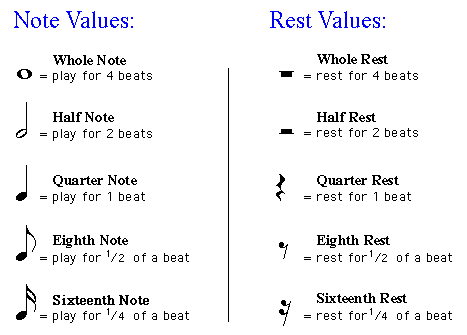 Adam’s next service would be to remove the solid inner core of the note and signal that I had slowed down from one beat to two. This would make my tattoo a half note. And after that, he would take off the stem and the tattoo would be a whole note, lasting the entire four beats of the measure.
 is immediately obvious that I could begin in the same direction by interspersing notes and rests as any composer, not just composers of puns, does. I could, for instance, have shown some measures that had only notes in them and then begin to introduce very short rests. I would probably call them naps because that is what I have called short rests all my life. [2]
 That same opposition of “profitable labor” to “sound sleep” shows up in the laments of Henry V (Act 4, scene 1) where he wishes he could have both of those, as “the wretched slave” has, knowing that being the king, he can have neither. But I, not have earned them, but having accepted them, can have both.
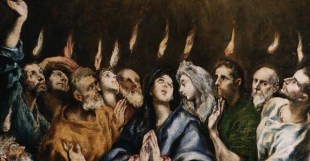 And then at Pentecost, something happens—the accounts in Acts are not consistent—the result of which is that everyone can understand what the Galileans are saying. God, in this story has devised a way to speak to men so that each can understand God’s message in his own language. The Eleven, each with a tiny flame of fire on his head, is speaking Aramaic, which is, so far as we know, the only language they knew, but everyone is hearing what they are saying in their own language.
 , “There’s been a big mistake.” The aide attaches a button to Alex’s collar and the officer says, “Welcome to Starfighter command.” You speak English?” asks the dumbfounded Alex. No,” replies the aide, “You hear English, thanks to your translator device.” Here is Alex with his pilot and navigator.
 In the middle of all this cacophony, Gus Grissom (Fred Ward) changes the agenda. “You’ve got it all wrong,” he says, “The issue here isn’t pussy. The issue is monkey.” Grissom is not presented in this film as a scintillating intellect, but what he says changes the group entirely. John Glenn (Ed Harris) has been saying that the astronauts are all public figures and should lead exemplary lives. In this situation, that means not accepting the sexual advances of the flocks of young women who are trying to make the rounds of all the astronauts. The astronauts are not of one mind about Glenn’s proposal. They have not been, to this point, of one mind about anything. And that is why they have had no voice.
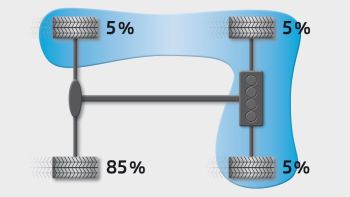 introduced all-wheel drive. I am one of the world’s worst in understanding mechanical relations and most of what I know [3] I learned from ads for cars featuring AWD, but what I get is a marvelous metaphor if traction is the problem. It doesn’t help you choose the right destination. It doesn’t help you avoid drunk drivers. But it is said to be really good when the surface you are driving on is slippery.
 Exercise is one wheel, for sure. And it’s not just the cardiovascular stress, although that’s nice. It’s also the sheer moral satisfaction. At a very deep level, I feel that exercise is “a good thing” and it makes me feel good about myself. Not to knock the cardio, but I really believe that the surplus virtue I accumulate is more important in providing the traction that makes that wheel move. And if that is the only wheel with traction, it is the one I ought to be relying on.
 am very fortunate that Bette, my wife, is one of those friends. I know it doesn’t always work that way. But there are others, some family members, some long time friends whom I can contact. Just talking to people you can afford to be candid with helps give me traction.
 People who know me as religious person are going to wonder why at least one of the wheels doesn’t refer to my own faith. The long answer is way too long for the 4WD metaphor, but the short answer is that all of them are religious. (Maybe not “cleaning out the garage.”) My own faith is a part of who I am when I have no traction at all and it is part of my choice about where to send the power. What part of my life—again, maybe the garage—is not part of my commitment to hear what God has to say to me and to respond to it as wholeheartedly as I can? That’s why there isn’t a wheel I call “faith.”
 On the other hand, faith can be considered not as “a work,” but as a personal and wholehearted commitment to receive the gift that God offers. That still violates the higher standard that Barth offers in this passage—faith that proceeds from the self is as sinful as everything else that proceeds from the self—but it does surpass the lower standard. It does not treat faith as if it were “a work” and thus “deserving” of salvation. It treats faith as a response to grace. That seems perfectly reasonable to me.
 but the people I am calling ergophobes are not driven by their judgment that it is a good idea; they are driven by their fear that attributing some part of the transaction to the human partner will constitute “credit-claiming” and thereby undo the grace of God. In their fear, they are giving up too much.
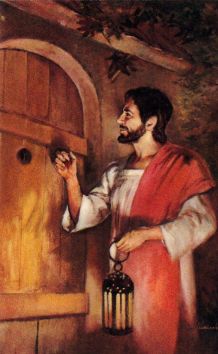 In the Barthian sense above, opening the door is a sinful act which we hope will be forgiven. That seems “too far” to me. Fearing “credit-claiming” that much (too much) is what makes me search around for words like ergophobe.
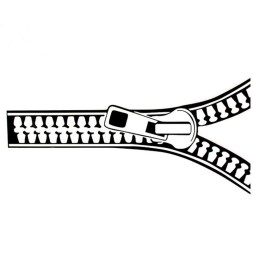 after she first passed one in the U.S. One of the ideas she came across in the German experience is “the Zipper.” If you can picture one line of cars approaching a single lane of highway from the highway and another from an access ramp (Einfahrt), you have the two elements that need to be “zipped together.” The fundamental principle can be put simply as “take turns,” but that neglects the point I am trying to make here, which is that the order of precedence is not controlled by the preferences of the drivers.
 I think of that example frequently. Daily, to tell you the truth. The part of Portland I live in commonly has trash on the streets and sidewalks and in the public parks. And particularly, for some reason, in the bus shelters. There is a lot of McDonalds trash. There are coffee cups. Sometimes a shoe and a sock. Newspapers and magazines. Orange peels and apple cores. And when I see that, mostly on my way back from Starbucks, which is why I see it so often, Mother’s question comes to me: “Who do you think is going to pick that up?” Obviously, no one.
 I watched incredulously from the corner as I waited for the walk sign to come on and the street person noticed me. I don’t know what attitude he attributed to me but he decided that he owed me an explanation of how he was managing to do what he was doing. Or he may have thought of it as a tutorial. “Just smile and wave,” he called to me. I think he was answering the question, “How would I go about doing that myself? It seems to be working really well for you and your friend.”
 But what if you get tired of seeing that particular show? Well, in a live theater production, you get up and leave. If you are watching a movie in a theater, you get up and leave. If you are watching a movie at home, you just turn it off. If you are watching a TV channel, you shift over to another channel. And that works.
 phrased in on the low and tacky side of the possible descriptions. If it were a classy sort of production, you could come out at intermission and buy wine and nuts or coffee and a cookie or something. Below are some much jazzier possibilities at the Met in New York City.
 In serving, as I am considering it here, you don’t just sell the product and take the money, you assess who is buying the product and where possible, you meet the person who is separated from you only by the mechanics of the transaction. And “serving” in that sense isn’t all that different from teaching, where you need to know who you are teaching and how each person learns and what will distract or defeat them. And you do what you can to reach through those difficulties and reach to the person and nurture their interest. And “serving” in that sense isn’t all that different from serving patients if you are a talented and caring doctor who understands that he or she is not just “curing diseases” but “treating persons.”
 Jean, the oldest (center), has been out of touch with the family for ten years. Letters and phone calls have not worked. Juliet and Jeremie have been living in the same area, but have had no meaningful contact with each other. They are like a circuit that cannot be completed without Jean and Jean is in Australia, growing his own grapes.
 Roulot as the setting and we see an entire season of grapes from nearly ready to pick in Year 1 to nearly ready to pick in Year 2. The movie is set in the Côte de Beaune section (yellow on the map). Director Cedric Klapisch spends a good deal of time on the mechanics of caring for the vines, possibly because he spent some time in the fields working the vines himself in preparation for the movie. We see the decision about when to pick (twice) and how much of the harvest to de-stem. [2] We see every step. And when the second round begins with the instructions to the harvesters, we hear some of the same lines used and it feels familiar.
 The third subplot is about the decision itself: what shall be done with the domain, given that all three must agree? The law does not require three whole people to make this decision, but the narrative does. Juliette is going to have to find a way to claim authority for her own vision for the domain. Jérémie is going to have to resist his girlfriend’s father and move out from under the parents’ constant surveillance. Jean is going to have to settle things with his girlfriend and commit himself to several choices, none of them easy. Burgundy, with his siblings, or Australia with his girlfriend and their son. How can the finances be worked so that the domain stays in the family, but he still has enough to service his own mortgage in Australia.
 might not be good for the threatener, for one thing, and, speaking on behalf of the English language, it is not a good practice for people who proclaim themselves purveyors of “good news.”
 To set the stage for thinking about this, I’d like to pass along a story or two. [2] In 1983, Arlie Russell Hochschild wrote a book called The Managed Heart. It was originally going to be a book about people who had to seem nice no matter how they were feeling and people who had to seem menacing no matter how they were feeling. Of that second emphasis, only one chapter actually made it into the book (Chapter 7 on the emotional systems of bill collectors) but the presupposition that puts “seeming” here and “feeling” there is the same for each one.
 How would we present our faith? I think that Heaven and Hell are a pair in the same sense that the carrot and the stick are a pair. Would we say, “Accept Jesus Christ as your personal Lord and Savior” [5] and when they said, “What if we don’t?” would we say, “Oh….nothing. It’s just Heaven.”?
 That sounds like the way you would buy a car or a pair of shoes. If it is true about faith that “from the outside looking in, you can’t understand it. And from the inside looking out, you can’t explain it” [7] then instrumental logic isn’t going to get you there. Anyone who thinks he is choosing Heaven because it will be advantageous to him is not making a religious decision at all. Preaching that adopting our faith and the obligations that go naturally with it will somehow “make things better” cheapens the faith. Taking Hell away, which, as I argue above, would mean taking Heaven away, would deal with that instrumentalization.
 People who are inclined to think that the two men who were asked to leave were asked because they were black and further, that Starbucks followup action, which involved calling the police, was also taken because the men were black. This view imagines that if the two men had been white, they would not have been asked to leave and also that the police would not have been called.
 want to argue that their race was a part of that treatment, you will be called a social liberal, whether you think of yourself that way or not. You, too, have chosen to bring one of the three pictures to the fore, to argue that “this is the real issue.” [2] One of the aspects of this situation is clearly based on race, you will say, and that is the important one.
 But all these responses are “make it better” responses. They are not responses that transfer each of these elements into the social war zone and declare each of them to be fundamental. The war zone has warriors like “property rights” and “black lives matter” and “police brutality.” They are all there on the field and they are all there to make war. In fact there is a disparaging name radicals use for what I am calling “make it better” responses; they call it “simple meliorism” and say that it only postpones the revolution.
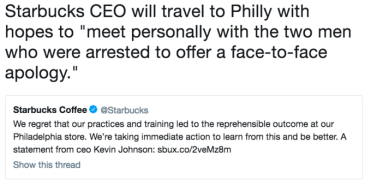 as owners of the commercial space, they have a carefully cultivated image to maintain. “The episode,” says New York Times writer Christine Hauser, “goes to the heart of how the company has modeled itself, with campaigns that address racial and social issues and promote its image as a community meeting place for customers to linger.” That’s the image Starbucks is trying to protect.
 The Dilettante's Dilemma