Making Moral Distinctions


In an editorial the new House Speaker Mike Johnson wrote in the Shreveport times in 2005, he concluded with this line: “We must always remember,” Johnson concluded, “that it is not bigotry to make moral distinctions.”


That is the line I would like to think about today. First, it is hard not to admire the rhetorical advantages of a line like that. “Bigotry” is bad and “moral distinctions” are good. And if they aren’t good, they are at least inevitable. Try to imagine objecting to “moral distinctions.” The set of examples you would get to test your objection would certainly include traitors, rapists, and murderers and you would be invited to “make no moral distinctions” about the people in those categories.


Johnson, having established that “making moral distinctions” is good is then free to make whatever distinctions seem good to him. There is no end to the cultural issues the Republican party is pursuing that can pass a “distinctions.” Anything on gender identity will work. A lot of things on race and ethnicity will work. The “right kind of family” will work. Abortion as murder, obviously.


All these pass as moral distinctions. But what Johnson really has his eye on is the charge by Democrats—and by majorities of Americans—that these positions are bigotry. The power of his distinction, then, is that it reassures Republicans that it is not bigotry. Notice that it doesn’t support any particular moral distinction. It doesn’t even say that making moral distinctions is a good idea. It only says that it isn’t bigotry.


It actually says so little, but I suspect we will be hearing it as a Republican shield for quite a while now. Provided that it works.

It is really no different than Barry Goldwater’s famous line: “Extremism in the defense of liberty is no vice. And moderation in the pursuit of justice is no virtue. Moderation in the protection of liberty is no virtue; extremism in the defense of freedom is no vice.”

Posted in Uncategorized | 1 Comment

Under a Spell No One Has Cast

C. S. Lewis poses a nasty dilemma for the Narnian children in his book, The Silver Chair. Jill Pole (a newcomer to Narnia) and Eustace Scrubb (from The Voyage of the Dawn Treader) come across the prince just before the hour when, every day, he is released from his enchantment. During that hour of freedom, he is able to tell the truth.

In the fictional setting Lewis has provided, we can say that Rilian is his true self (I*)during this brief time. He tells the children that he is under an enchantment and that all the things he has told them before are false. Furthermore, all the things he will tell them when this hour has passed are also false. Only during this time can he be believed.

Keeping the dilemma in mind and changing settings, let’s look at a person’s right to specify what medical procedures will and will not be performed on him as he nears death. The Prince Rilian scenario has three time periods. He has before (when he is enchanted) during (when he is free to tell the truth) and after (when he is, again enchanted.) The patient I have in mind is suffering a progressive dementia. The more severe depths of the dementia are his “enchantment.” But there is a time, before the enchantment, when he is free to assess his preferences and to say clearly what he wants.

The reduction of the three periods Prince Rilian has to the two of the demented patient makes all kinds of trouble for us. For the impaired patient, there is only NOW and LATER. Now, I know who I am and what I* want. Then, I will still want something, but it will not be connected to who I* am right now; to the continuing self who has lived a life and has reflected on it.

OK, I cheated a little bit. I invented the I* (with the asterisk) to mean the continuing person, the essential person. In dementia, that is what goes away or, more exactly, I* don’t have unimpaired access to that person’s mind. Functionally, I* is Prince Rilian during the hour he is freed from the spell and is free to be himself. And “I” (without the asterisk) is Prince Rilian under the spell. In the example, it is the person who is under the “spell” of dementia.

I have heard of a court ruling—I haven’t bothered to find out if it actually occurred—in which the court accepted the decision of a patient at an earlier time to be binding on the patient at a later time. The decision and intention of the I* patient is accepted over the later statements of the person who no longer has regular access to the I* person. This later, impaired, person has “intentions,” but they are momentary and they have no relationship to all the other things that make up his life.

I like that distinction. It is, of course, clearer in the case of Prince Rilian. Once we accept the premise—he is under an enchantment except for this one hour—we know to accept the words of Rilian during this hour and to resist what “Prince Rilian” says during the other times. It is clear because there is a will behind the enchantment and it is an evil will. We know that when “Prince Rilian” speaks when he is under the enchantment he is expressing the views of the evil witch who cast the spell.

The patient is “under the spell” of distorted brain function. We know that the patient does not have access to the I* as he once did. We reject the idea that the spell he is under has been “cast” by anyone, but that does not mean it is not there and functioning. It means only that it has not been “cast.”

This brings us to the cusp of a dilemma and that is where I want to leave us for today. Dementia offers us a kind of Prince Rilian situation in which I am Prince Rilian and I want to be believed sometimes and not other times. I need to say ahead of time when the “accepted times”—I am right on the edge of calling them “canonical times”—will be. Then I need to empower others to refuse to accept what I say (the I without the asterisk) at other times, no matter what it is.

Do I really want that? Yes, I think I do.

Posted in Uncategorized | 1 Comment

Balanced on the Edge of the Blade

I’m teaching a Bible study this “term” [1] that I have called “Doing It Wrong.” I knew, in the most general terms, what I had in mind. If you survey the biblical material for the different kinds of ways—and by that, I mean categories of ways—that are formally objected to in some part of the Bible, you will have an interesting kind of dilemma before you. As a teacher, I like dilemmas. After a year or so, my students seems to develop a taste for dilemmas, too, so I have had hopes.

This particular group is set up to study the Bible from a secular and scholarly standpoint. That is not always easy. God does things, especially in some of the Old Testament stories, that we find offensive and we want to object. But if you are going to object in a scholarly way, you will first need to lay out the criteria on which the criticism is based and to show that they are criteria appropriate to the case to be judged.

That is hard. You find that you can’t quite get rid of the desire to criticize, nor can you demonstrate that the standards you propose are appropriate to God, as God is described in the text we are using. Today, if all goes well, we will consider the case of Uzzah, the man of good intentions. According to the story in 1 Chronicles 13 and 2 Samuel 6, Uzzah was helping to transport the Ark of the Covenant, which was being drawn on its journey by two oxen. One of the oxen stumbled and there was an immediate danger that the Ark would be dumped beside the road. Uzzah put out his hand to steady the Ark and for doing that God killed him.

My Bible study group is studying “holiness” as a category. This week, the existence of the category makes many things right and wrong. The painstaking cultic purity of Aaron, which he undergoes before sending the scapegoat out to meet his fate, is “right.” Step by step, profanation is avoided; dedicated materials and sacrifices are used. [2] Uzzah (and the sons of Aaron) did it wrong and died.

That doesn’t feel right. Particularly the fate of Uzzah, who seems to be a good guy. My class’s problem will be the one I described above. They know there is no scholarly way to criticize God’s actions so they should not voice their criticisms as part of the class. On the other hand, if their experience is like mine, it is also hard to just let go of it. I want to found a Friends of Uzzah chapter or something.

Now we will be moving on, not looking at the Law of Moses, but at what it means to have a law to follow. The people of Israel, as we have followed the story are now a People of the Covenant. That sounds lofty because right away the mind is drawn to Who It Is you have a Covenant with. But the Covenant itself does not include the intentions you might have for following it; it is the rules and regulations themselves.

And what happens when you have a system held together by rules? Two things—two categories of things— I will argue. The first is that some people will try to game the system. They follow the letter of the Law, but care nothing for its intention,. The second is that if “law-following” is meritorious, some people will pursue all the merit and acquire all the social status that merit earns them and flaunt their “righteousness” before everyone.

I am hoping that the class well help me deal seriously with that, but the fact is that if there are rules, they need to be adequately specified. How far is “a Sabbath day’s journey” exactly? If you specify it exactly, there are ways to get around it. If you don’t specify them adequately, everyone makes up their own mind about how much is enough and what God must have had in mind. In that way, you cease to be a “people” at all; bound by a common Covenant.

That’s the edge of the knife. If the rules are clear enough for everyone to know what is right and what is not, then they are clear enough for evasion and for status games. What to do?

[1] Since I am the one who proposed this particular gathering, I have taken the liberty to define what a “term” is. It is nine weeks.
[2] Two of Aaron’s sons did it wrong and were killed for it. They used “unauthorized fire,” as described in Leviticus 16. I hope the U. S. Forest Service doesn’t hear about that.

Posted in Uncategorized | Leave a comment

“Your Supreme Court”

If you remember 1968 at all, you will remember that it was a time of political turbulence. Consider only these four: Martin Luther King Jr. and Robert F. Kennedy were both assassinated; there were riots of a distinctly racial character in Washington D. C. and the widespread protest against the war in Vietnam began to turn really nasty.

In the middle of that, I was out in the streets of Canton, Ohio one night. I think I was in the vicinity of an anti-war protest, but I don’t remember for sure. The conversation that calls that night back to my mind was with a black man. He was saying that not only the society, but also the Constitution were thoroughly racist. Without working on a definitions of terms, I was OK with that. Then he began to substantiate his point by citing the Supreme Court’s comfort with all that racism and he cited cases that did not say what he thought they said.

So I contradicted him. I had no idea at that point what kind of conversation it was. “They didn’t do that,” I said. “The Supreme Court said that was a violation of the Constitution.”

“YOUR Supreme Court,” he said. That’s all I remember. I might have said that it was his Supreme Court too. He might have said that it didn’t look like it from where he was standing. I’m not really sure. My best hearing stopped at YOUR.

The Constitution and the Will of the People

Being a constitutional democracy has always been a little bit of a stretch. If a “democracy” [1] is a form of government in which “the people” (voters) always have the last word, how is it that there is an authoritative document that tells them what they can and cannot do? Arguments have been made that the two are really compatible—the people “consent” to having such a final document—but that only works when the people are close enough to being satisfied with the system that they don’t feel that they have to choose.

If they do feel that they have to choose, choosing the political, in which they have a role, may very well seem more attractive than the judicial, in which they know they do not have a role. In “identity politics,” which appears to be where we are headed, “one us us” is good and “one of them” is bad. You can imagine what that orientation does in a courtroom where a judge or a jury is supposed by be persuaded (or not) by evidence. Everyone in attendance knows who is telling the truth (our guys) and who is lying (their guys). Or, more concretely, US or THEM.

Politics can survive US and THEM for quite long periods. The interaction of politics and constitutionalism cannot survive it at all.

Ross Douthat

Douthat is a columnist for the New York Times. He is the semi-unofficial house conservative and, in my judgment, plays that role really well. On August 18, his column contained this argument.

“If the legal challenges against Trump have the power to shape the democratic politics of 2024, the shaping power also works the other way. As extraordinary judicial proceedings alter democratic politics, the legal arena is inevitably politicized as well, undermining its claim to standing some distance outside and above democratic realities.”


The courts must claim to stand outside of democratic realities—not to be judged by the same standards that apply inside. The courts must claim to be above—superior to, more fundamental than—democratic realities. And when, as Douthat says, there are extraordinary judicial proceedings (as in the multiple charges against Trump), the judiciary is politicized. It is no longer consensually outside nor is it consensually above.

As nightmarish as that sounds, I think Douthat is right. Americans must be spared the crisis of having to choose one or the other, or, if that cannot be done, Americans must choose judicial impartiality. Even the illusion of judicial impartiality would serve for a time.

This is hard to see in politics sometimes because politics is so contentious. Other kinds of illustrations make it clearer. People could decide that when then use the subjunctive mood, it does not necessarily refer to a hypothetical situation. Sometimes it does and sometimes it doesn’t; it can refer to an actual situation and I know when that is. If I enforce that because I have the power to do so, the subjunctive mood is no longer reliably available, even to me, and it is not available to you at all. All I wanted to do was to control the argument, and I wound up destroying one of the three grammatical moods.

In basketball, when two players collide, the refs may make no call; they may call the offensive player for charging; they may call the defensive player for blocking. If I watch the game in an US v. THEM mode, then I know that when one of your guys runs into one of my guys, it is charging. I don’t need to see the tape.

The famous phone call to Georgia’s Secretary of State saying “I need 11,780 votes,” followed by “Find me 11,780 votes” does not raise the question of how many votes were actually cast and for whom. It is the perfect analog to who ran into whom and how hard. It is determined entirely not by what was done, but by who did it. It is “identity politics” or “the politics of belonging.” It is not democracy. It is not compatible with democracy.

It was Douthat’s argument that brought back my conversation with the black guy in Canton. It seemed back then to be about race. In the present context, it just seems to be an early form of US v. THEM.

Are we nervous yet?

[1] We need to remember how the Framers hated that word. In their time, rule (-cratos) by the people (demos) simply meant “mob rule.” They were quite explicit that they had not designed a democracy, but a republic.


Posted in Uncategorized | 1 Comment

It is your memorial too


Kwame Anthony Appiah writes a column called “The Ethicist” for the New York Times. In the August 20 edition, he published his reply to a question from a man who was considering attending the memorial service of his father—a man who, by his account, treated him shamefully nearly all his life.[1]


On one hand, I appreciate the man’s dilemma. Both attending and not attending are fraught. On the other hand, I myself am committed to the idea that some good thing ought to happen as a result of my attending, something that would not happen if I did not. Furthermore, I need for “good thing” in that sentence to mean something I, myself, would regard as a good thing, not something abstractly worthy, like “fulfilling a duty” for instance.

Among the first few sentences of Appiah’s response are these:


“You can’t mend your relationships with the rest of your father’s family while they treat your anger, rather than his abuse, as the problem. This will have to be addressed if you want decent relationships with them. But I doubt you’ll be able to set that right at the memorial.”


I want to come back to Appiah’s advice. He eventually and guardedly recommends attending “if you can bear to.” It is not that recommendation alone, but the reasoning underlying it that I liked. His first point in the paragraph I quoted is that so long as the family treats your alienation and anger as the problem, there is really nothing you can say. I agree. If you are the problem, your remarks, what you think of as “your truth” or even as “the truth,” will never be accepted and may very well do further damage.

The second point in Appiah’s paragraph is that if relationships with the other members of your family are ever to become “decent,” what happened to you will have to be addressed. I agree. “Addressed” does not mean that the family is going to come around to seeing your common history in the way you see it, but it does mean that you and they will need to hear and to know how that history is understood by each family member and that will need to be the basis on which that family member is part of the discussion.


That may sound like I think they should “agree to disagree.” I think the stakes are too high to simply park “these events” on the sideline. I would be prepared to see the relationships continue even at some cost to the participants provided that the discussions that sustain those relationships continue within a common frame of reference—a common core of events and a common core of values. Otherwise, I see more harm being done than healing.

The third point in Appiah’s paragraph is, “… I doubt you’ll be able to set that right at the memorial.” The man’s history with his father and with his siblings has been long and difficult. It is not hard to appreciate that he would like for “the truth to be told” or even for “relationships to be mended.” Still, is the memorial service the right place for that? It is hard to think so.


The one thing he could be assured of accomplishing is to take the experience of the memorial—the consideration of the life of the man as your siblings witnessed it—away from them and to substitute for that “the truth” of his own experience. That I think he could do just by being willing to export the costs. But if he could do only that, how would he justify it?


I said I was a fan of achieving good things. There are a few good things available. Honoring whatever fragment of the father’s life you are able to honor would be a good thing. Coming as close as you can to appreciating that life as the siblings experienced it would be a good thing. It would be a costly gift, certainly, but generosity like that might have an effect on the siblings. Indeed, it is hard to think that something less costly would have such an effect.


Finally, using the memorial service as a way to refocus yourself on the kind of life you want to live would be a good thing. To focus on your own life in the light of its ending and its celebration, would require you to set aside all kinds of false comparisons. You are not living your life so as to be as different from your father’s life as you possibly can. That is just another form of bondage. Instead, you are summoning up from within yourself the image of the life you want to have lived. You are making that notion of your life available to your own family, certainly, and to the extent possible, to the family of your deceased father.


You are transcending that old life. You are proposing a life of another kind entirely, one that will cost you every burden you cannot carry for the distance and that will gain you the full expression of every good you can find within yourself.


That last point might require a little practice. It would not be too early to start now.

[1] Appiah has written a book with the title The Lies That Bind, which makes me think he knows something I should pay attention to.

Posted in Uncategorized | Leave a comment

Seeing the Victim

I know that title doesn’t send you to any clear destination. I intend to contrast it with being the victim.

I am not thinking of victimhood as requiring victimizers. I am perfectly capable, on a bad day, of feeling that I am the victim of historical circumstances, of demographic trends, or of medical routines. As well , of course, of the shortsightedness and misandry of the neighbors.

The common element of victimhood, as I have constructed it and as I occasionally feel it, is that bad things are happening to me and there is nothing I can do about it. And the experience of victimhood is enveloping. “Victim” ceases to be a role into which I am cast at the moment and becomes an identity. It is “who I am.”

I really don’t like that.

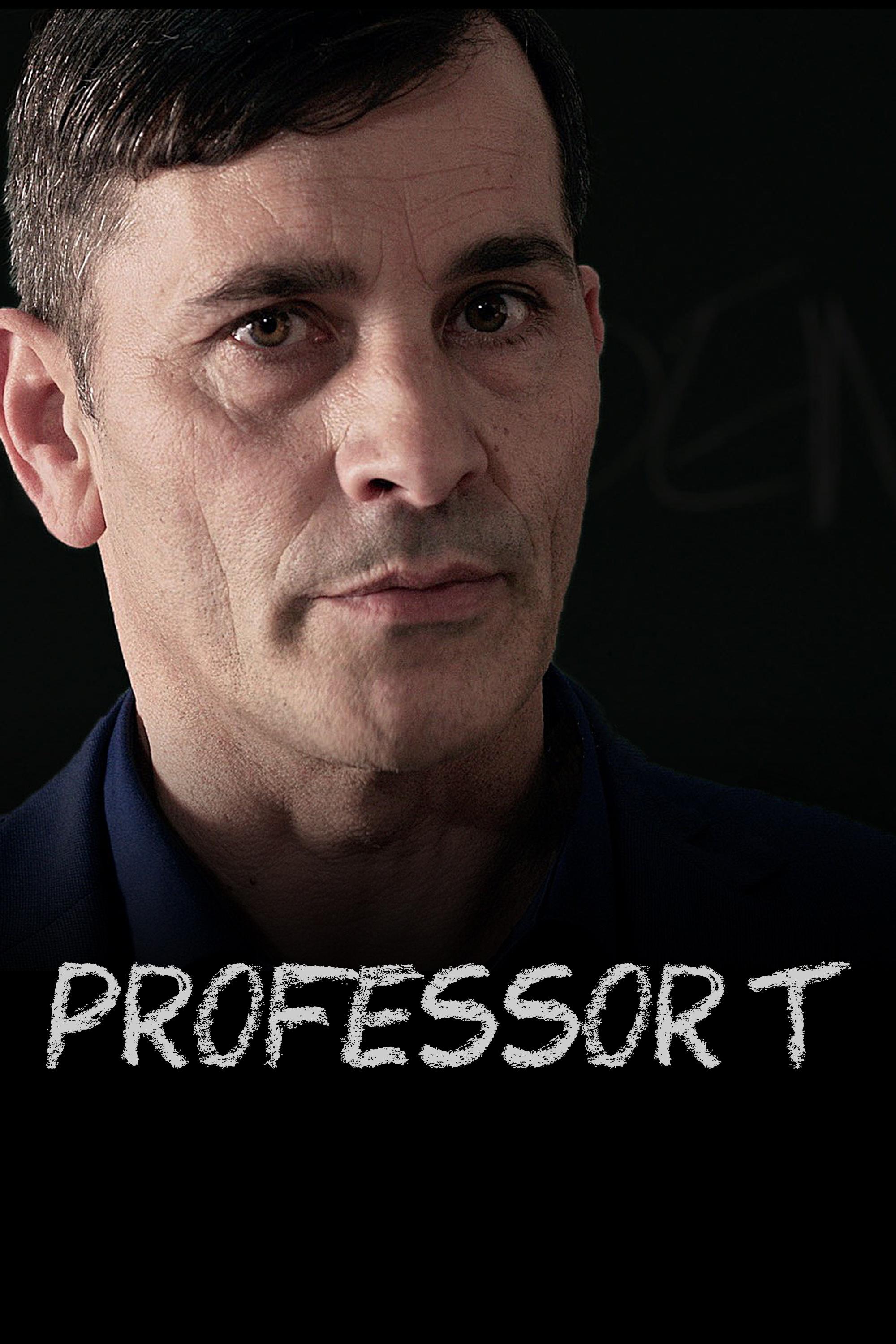
So it is not surprising that I reacted very strongly to an episode of the show, Professor T. [1] This is Season 1, Episode 1. Professor T is a really interesting kind of character and it is his character that drives the series. But this character is entirely irrelevant to the part he plays in this episode.

A young woman named Diana Thyson has been raped in a public restroom at the University of Antwerp in Belgium. She didn’t see her attacker, she says. He came up behind her with a knife; he was wearing a balaclava. Professor T sits down with Diana several days later and this happens.

“Shut your eyes, and we’ll go back to the evening it happened. But not as Diana Thyssen, you’d be going as someone else. Someone who sees Diana on her bicycle, in the city, in the dark. Can you see her?”

Diana says she can.

They show again the events, which we have already seen, but this time Diana Thyson, is not only the victim, but also the observer. She is standing by a wall at the end of the restroom and she sees Diana the Victim being seized and dragged into one of the stalls. Later, after it is all over, she sees Diana the Victim crawling out of the stall, weeping in complete distress. Diana the Observer watches her; she feel empathy for the girl, but she is not that girl. Not right now.

Professor T continues to question her and as the observer, Diana sees things that she had not seen when it was happening to her. The man has a tattoo on his hand, for instance. It is a tattoo common among men who have served prison time and this leads eventually to the arrest of the rapist.

What I like best about this episode is what I can see. I can see this happening to Diana the Victim, but she is not encompassed by those events because she is simultaneously, Diana the Observer. Under Professor T’s questioning, we can still see Diana, standing at the side, watching what is happening to the other girl.

It is very powerful visual representation of Diana refusing to become the role; she is never only the person to whom this horrible thing happened. She is also the onlooker, the collector of information; the empath who wishes things were better for that poor girl.

Somehow, seeing it helps. I have long been a fan of the Bene Gesserit litany, which has the same general purpose.

I must not fear.Fear is the mind-killer.Fear is the little-death that brings total obliteration.I will face my fear.I will permit it to pass over me and through me.And when it has gone past I will turn the inner eye to see its path.Where the fear has gone there will be nothing. Only I will remain.”


You can hear in “I will turn the inner eye to see its path” the distinction between between the person and the fear. You can hear in “Only I will remain.” the complete separation of this awful force, which has come and gone, and I, myself. It has gone. I am still here. I have watched it go.

As I say, I am a fan of the Litany Against Fear, but it is not something I can see and for some reason, watching Diana the Observer see Diana the Victim, and refusing to be that person, is more powerful to me.

[1] This is the 2015 version of the show starring Koen de Bouw, not the newer one.

Posted in Uncategorized | Leave a comment

Edgelording

It’s hard to keep up with changes in the language. In the little language village where I live most of the time, it really doesn’t change that fast, but I know that there are places where it does and every now and then I need to decide just how far behind I am willing to be. Like today.

That dilemma was presented to me this morning. David French wrote a column in the New York Times that contained a couple of sentences I want to push at a little. In the first, he quotes Aaron Sibarium who says that his advice to young conservatives is to keep a sharp eye on the line between “edgelording” and “earnest bigotry.”

You don’t see sentences very often where “bigotry”—even “earnest bigotry”—is the better of the alternatives, so the line caught my attention. And when I saw that “earnest bigotry” was the better of these options, I took a more thoughtful look at the worse of the options. Edgelording?

I understand now that edgelord, the noun, is a portmanteau word made up of “edgy” and “shitlord.” I’m pretty comfortable with “edgy,” even though it a word that is incapable of any precision. “Shitlord” is new to me, but Wikipedia says it means “a person who basks in the bitterness and misery of others.” It’s just Schadenfreude, in other words, a notion that is hard to avoid these days.

Does that make any sense of the original distinction between “earnest bigotry” and “edgelording?” It does to me because the very heart of edgelording is playing a part. An edgelord takes positions that maintain his place at or near the edge, without any reference at all to what he thinks. It is language for effect, shorn of any genuine meaning.

Having come that far, I wonder whether it isn’t easier to say they edgelording is just hypocrisy. If edgelording is playing a part, hoping to be thought more “edgy” that you actually are, then hypocrisy—play acting—is just a more general term. That makes me wonder whether “lord” is now being used the way “monger” used to be used. A monger is a trader in something—the Molly Malone of the ballad was a fishmonger—but unless the trade is in some common tangible goods, it has a negative flavor to it, as in “scandalmonger.”

But “honest bigotry” now. If you really are bigoted and you say things that allow people to infer that you are bigoted, then you are not “edgelording.” It seems odd to me that the praiseworthy light in which bigotry is being displayed by this comparison is based entirely on its genuineness. You are not, in other words, pretending to be a terrible person; you actually are a terrible person.

And that’s the good news?

Posted in Uncategorized | Leave a comment

Lincoln’s Second Inaugural as History

Analogies are funny things. They are often said to provide insight into a less familiar object or relationship by comparing it to a more familiar one. But I wonder if it might not work as well to compare a less threatening object or relationship to a more threatening one. The “less familiar” of the two is now recategorized as the more difficult of the two. There is no need to specify just how it came to be more difficult.

You will see, I believe, how relevant this is when I describe an analogy I ran across just recently. Bernhard W. Anderson, in his history of the Old Testament, [1] is making the point that the “information” we are given about Israel’s exodus from Egypt is not intended to meet modern standards of history. It is crafted—and re-crafted and re-crafted yet again—to make a point about the people Israel and their God, Yahweh.

To Anderson, that does not mean that some seminal event did not occur. It is more plausible that some event did occur than that it did not and the accounts we have were created out of whole cloth. What is does mean is that we cannot tell just what kind of an event it was by reading the re-written accounts of “what really happened.”

Of course, “what really happened” is what we really want to know. We will decide what “it” means when we know what kind of event “it” was. But the biblical material doesn’t come to us that way. The writers to whom we have access (writers of documents within the canon) have a goal for their writing and they pursue it in callous disregard of the different goals of later readers. For instance, us.

Williams says, (p.) that trying to understand “what really happened” in the event we call “the Exodus” by reading the biblical accounts is like trying to understand “what really happened” in the Civil War by reading Lincoln’s Second Inaugural Address. There is your analogy! I read that and just put the book down for a little bit.

I am completely familiar with Lincoln’s Second Inaugural and better than moderately familiar with the events of the Civil War as they have been described by historians oriented toward the Union cause and also by some oriented toward the Confederate cause. I am in a very good place, in other words to feel the power of Anderson’s analogy. It is hard, in fact, even to try to read the Second Inaugural as if it were a historical account. I encourage you to try it for yourself. Experience the turbulence yourself. Then we should talk.

Here are a two examples.

  1. Both read the same Bible and pray to the same God and each invokes His aid against the other. It may seem strange that any men should dare to ask a just God’s assistance in wringing their bread from the sweat of other men’s faces, but let us judge not that we be not judged.

2. Yet if God wills that it continue until all the wealth piled by the bondsman’s two hundred and fifty years of unrequited toil shall be sunk and until every drop of blood drawn with the lash shall be paid by another drawn with the sword as was said three thousand years ago so still it must be said ‘the judgments of the Lord are true and righteous altogether

Example #1 isn’t that hard, at least as far as the first sentence. The rest of the point is done in the subjunctive mood, so it is hard to be too critical. But “It may seem strange” said by this person in this setting means “it IS strange” On the other hand, “Let us not judge” is a throwaway line, as the rest of the speech shows. [2]

In #2, the brutality of Southern slavery becomes the single measure against which all the bloodshed of the Civil War is to be judged. We get that from “every drop of blood drawn by the lash,..” and the conclusion is that this massive outpouring of blood by both sides is the just judgment of a righteous God.

Neither of those is “historical” in the sense that it gives us a feeling for what the war was about or how it was conducted. It is very good at saying “They brought it on themselves.” And the war was not even over at the time Lincoln delivered this. There was a lot of bloodshed for both sides still to come.

I have no wish to re-argue the Civil War or even the historical interpretations of the Civil War. I am offering only this analogy as Bernard Williams has crafted it. When you read Lincoln as a way of finding out what the war was about and how it was carried out, you are having the same experience you have when you read Exodus as a way of finding out what the escape from Egypt was about. And when it occurred. And where.

What I referred to as the “turbulence” above is as available if you invest yourself deeply in reading about the Exodus as it is when you try to read the Second Inaugural as history. It is not history. It is a powerful thematic statement of the “real meaning of the war,” that is, the meaning it has in God’s eyes.

Reading it with that in mind was a very powerful experience for me. I offer the same experience to you. And now, if you will excuse me, I must return to my study of Exodus and particularly to where the Sea of Reeds is.

[1] Bernhard W. Anderson, Understanding the Old Testament, 4th Edition, pp. 25-26
[2] Unless he had the Radical Republicans in Congress in mind as he spoke them.

Posted in Uncategorized | Leave a comment

A Good Enough Self

In grad school, I did a lot of reading about how we know what we know. I gained a great deal of wisdom from that literature—nearly all negative. If I were to begin a line of question with “How can I know for sure that…?” the answer I got would nearly always be, “You can’t.” But along with all the cautionary tales, I remember a particularly vivid metaphor. Many scientific projects, this author said, are like building a building in a swamp. The first thing you do is to sink supporting structures into the murk to support the building you will be building.

So far so good.

But then some practical person—I was the person in this case—will ask, “How deep do you need to sink them?” The answer was, “It depends on how big the building is.” Of course it does. I went two directions from that encounter, one of which will be relevant to today’s reflection. [1] It involves what Chris Wells and Lewis Friedland call, in a recent issue of the journal, Political Communication, “misrecognition.”

They cite Charles Taylor in that regard:

“First, Taylor sees emerging, with the development of modern individual identity, a myth of the “true inner self,” the notion that each of us has an authentic identity, and that an important project of the modern individual is to discover and fulfill that immanent self.”


This demand to be truly recognized runs headlong into the dogma that each of is, or has, a “true inner self.” It is easy to be skeptical about a dogma like that. How would I know what my “true inner self” was like? How would I know whether you were correctly recognizing it and honoring it appropriately? To that, I respond with the answer I got to the question of knowing for sure that I have provided enough support in the swamp: “You can’t.”

But remember that the swamp example countered with another question, which was “How big is the building?” And if we are considering the “one true self,” we might ask, “What do you want it for?”

And finally, we come to what I think is the right question. I have no trouble believing that I “have” a self. Some say “am a self.” This self has intentions that I experience as “my intentions.” When they are frustrated or when they fail, I experience that failure as “my failure.”

But those are very crude measures and they are all action-oriented measures. The notion that Charles Taylor is referring to in the quote is a “true inner self.” If I had one of those, how would I know what it was. If it has qualities, are those qualities shared with all others? With some others? Are they unique?

Are the things I call my “self” traits, so that they are predictable from one time to another, as when people say, “I am uncomfortable among strangers.”? Are they episodic reactions I make from one time to another with nothing connecting them except the rationalizations I produce? I don’t know.

But that does bring me to the question—the building in the swamp question—which is, “What do you want it for?” In this way, I skip over what this self IS and move on to the question of whether this notion of the self will do for me what I want/need to have done. If it will, then I may know about it all I need to know.

Like everyone else, I want to accomplish things of interest to me, to have a circle of friends I can count on, and to be at ease with the sense of who I am that I have crafted over all these years. I need enough of a self to do those things. That’s not really very much of a self, but I think it will do everything I need for it to do. I call it “good enough.”

[1] The other one became a very practical device for formulating limitations and which became the core of my dissertation. It involved keeping some notes on things you were trying to do (or thought you were) and failing to accomplish (by some measures).

Posted in Uncategorized | 1 Comment

Intentionality

“Every talented and qualified student deserves an opportunity to attend the college of their choice. Affirmative Action existed to support that notion. Legacy admissions exists  to undermine it.” 

So says NAACP President Derrick Johnson, pictured below. I don’t think he meant that. I think what he meant to say is that the outcomes of practices like “legacy admissions” are at odds with the outcomes of practices like Affirmative Action. The effects of one principle go this way; the effects of the other, go that way.

So, if that is what he meant, why did he say what he said? I have two explanations, both drawn from my own treasure chest of types of explanations. The first is that he got trapped in the sentence and either didn’t notice what he was saying or wasn’t willing to give it up.

I have done both of those.

Look at the parallelism of “exists to support that notion” and “exists to undermine it.” And if I could just export some of my own vulnerabilities onto President Johnson, I suspect that that line came from a speech—probably a speech given many times. It’s nice in written form, but it’s really powerful in a speech. You can almost hear the oral cadence in the words.

I don’t give a lot of speeches, but I have given a lot of lectures and I can tell you that a line that “worked” last semester comes back to my tongue when we get to federalism or civil rights or whatever in this semester. It waves its hand. “Use me again,” it calls. “Remember how well I worked last time.” I’d call it “seductive” except that the whole transaction is almost entirely unconscious.

I took this quotation from Vox Sentences, where it was featured. Someone thought it was clickable. They were right in my case, of course, but I think that parallelism probably did it’s work at Vox Sentences just as it attracted me and all those people in President Johnson’s previous audiences who responded noticeably to it.

So the first explanation I offer is that either he was in thrall to the parallelism of the sentence and couldn’t bring himself to give it up or—more likely—just didn’t notice that he had said that the purpose of legacy admissions as a policy was to undermine Affirmative Action. Legacy admissions is an ancient practice. Affirmative Action is an innovation. Really?

The second explanation I offer is that the notion of effects on the one hand and intention on the other, has gotten blurry. Let me offer a recent illustration.

The alder helps to improve poor wet ground for the benefit of other plants.

That is the first sentence on a sign at an abbey we visited in Ireland recently. It was part of a family trip [1] When I saw the sign, I took a picture of it and began looking for a chance to have a conversation with the grandson. I wasn’t looking for a fight, but I was looking for a discussion in which he could plausibly take one side and I the other and both feel good about it. It was an ideal topic for that kind of argument. Who cares that much about alder trees? Who cares that much about inadvertent attributions of intention? Beside me, that is.

It worked just as I had hoped. I showed him the sentence. I explained why I didn’t like it. I argued that it wasn’t exactly wrong as it was, but that it didn’t draw a big bright line, as I would prefer, between the intentions of the alders and their effect.

I will argue momentarily that we have gotten accustomed to just ignoring the difference and that shows up in sentences like the one the NAACP president used. I don’t care all that much about legacy admissions and even less about alder trees but inadvertent allegations of intentionality drive me nuts.

I offered my grandson an alternate phrasing. “Let’s change it,” I said, “to
‘The alder helps to improve poor wet ground TO the benefit of other plants’.” That makes it clear that improving the soil may be the effect of the alder trees, but it is not their intent. He didn’t immediately see the difference between between “to” and “for” in that sentence, and when he did, he said he preferred “for.” I pushed a little. I made sure that he understood that using “for” allowed the interpretation that “improving poor wet ground” was the intention of these alder trees. He said it was a risk he was willing to take.

A lot of people are willing to take that risk and in consequence, the difference between “to” and “for” has become nearly invisible. And that is my second explanation for how the NAACP President managed to put his stirring charge in the language he did. What was once a bright line—effect v. intention—has become a dim shadow and in the bright light of composition, even a careful user of language can ride right across it and never know.

It is not, of course, that great civilizations rise and fall on such matters, but it makes a difference to me and my status as a dilettante needs a little buffing from time to time. This should do it.

[1] The grandson who is the occasion for this part of the story is the son of one of my many step-daughters. When he reads this he will call and I will say, “You know who you are.”

Posted in Uncategorized | 1 Comment