The Value of Glory, Part II

Rebecca got the better of the contest last time.  She had a better first half, as we often say about a football team.  But there are two halves, even in the time of Chivalry and the Crusades, and Ivanhoe does better in the second half.

In the first half, Rebecca went on the offensive, taking apart what I have been calling “the glory machine” piece by piece.  She doesn’t deny that there is a machine.  She argues, that it is only temporary and is, besides, rude and tacky.  “Glory” is not worth the price Ivanhoe is paying for it.  Here is his first response.

“By the soul of Hereward! ” [1] replied the knight, impatiently,“thou speakest, maiden, of thou knowest not what. Thou wouldst quench the pure light of chivalry, which alone dis­tinguishes the noble from the base, the gentle knight from the churl and the savage; which rates our life far, far beneath the pitch of our honor, raises us victorious over pain, toil, and suffering, and teaches us to fear no evil but disgrace. 

Ivanhoe here begins to rebuild the value of glory, starting with social distinctions.  It is chivalry—alone!—that distinguishes what is noble from what is base.  It distinguishes the knight from the churl [2].  A churl is a man of low degree, but he is part of the ordered society in which the novel takes place.  The next distinction, however leaves even that.  Glory—only glory!— distinguishes the knight from the savage.

And glory establishes a kind of character in the knight as well.  It ranks the life a knight well below his honor.  The commitment to glory overcomes challenges that would in other circumstances be daunting.  Ivanhoe names explicitly, pain, toil, and suffering.

At this point there are distinctions Ivanhoe makes not only between the sex of Rebecca but also her faith.  I want to come back to that after we finish the glory games.

Ivanhoe here begins to take some of Rebecca’s criticism into account.

Chivalry! Why, maiden, she is the nurse of pure and high affection, the stay of the oppressed, the redresser of grievances, the curb of the power of the tyrant. Nobility were but an empty name without her, and liberty finds the best protection in her lance and her sword.”

Here Ivanhoe begins to address questions that Rebecca has not brought up and very likely has never considered.  She does touch on the topics Ivanhoe raises but only as they bear on the nation, Israel, and only in a very long context of history.  That is not what Ivanhoe has in mind at all.

Chivalry is the backbone of three important transactions, but they can be summed up, as Ivanhoe does at the end, as “liberty.”  Very likely he means liberty for the nobility—that is how it developed in English history—but liberty is the core value he chooses.  We’ ll look here at three elements of that treasured notion.

The first is that chivalry is “the stay of the oppressed.”  Very likely, he has in mind here that a noble class that is being stressed, like the Saxons under Norman rule, can count on chivalry to hold off that oppression.  He doesn’t say that exactly, but it is a good guess that is what he means.  He certainly is not referring to the people whom the Saxon nobles oppress.  He has already distinguished the noble knight from the churl.  No need to go back to that question.  

The second is that chivalry is a redresser of grievances.  Note that in this role for chivalry, the grievances have already taken place.  Chivalry as the stay of the oppressed might mean that the oppression is prevented; chivalry as the source of a redress of grievances grants that there are grievances.

Finally, chivalry is a curb on the power of the tyrant.  A “curb” tells the tyrant that he can come this far and no farther.  It is a limitation.  The tyrant is still there and very likely Ivanhoe is thinking principally of Richard’s brother John, who is pretending the be the king of England as long as his brother cannot be found.

So chivalry, which Rebecca demeaned by her remarks about second rate tombs and third rate ballads, is defended on political as well as personal grounds.

That is really all the argument that deserves to be grasped by its rhetorical elements, but there is one more transaction that I think ought to be touched on before we let this conversation go.  This one has to do with ethnicity—they would have called it “race”—and religion.  Here Ivanhoe has the opening shot.

Thou art no Christian, Rebecca ; and to thee are unknown those high feelings which swell the bosom of a noble maiden when her lover hath done some deed of emprize [3] which sanctions his flame.

Ivanhoe has in mind, although he doesn’t say it, the beautiful Saxon maiden, Rowena.  The match between Ivanhoe and Rowena is the highest hope of Cedric the Saxon, but things are not looking good right now.  I mention that because Rebecca will close with it.

Rebecca is no Christian and therefore she cannot know the feelings which swell the bosom of a noble maiden (he is thinking of Rowena) when her lover (he is thinking of himself) has done “a deed of chivalrous endeavor.”  It is her feelings that “sanction” his flame.  Earlier, Ivanhoe as the champion of the tournament, won the right to officially honor a “Queen of Love and Beauty,” who was watching from the stands.  He chose Rowena.

But Ivanhoe’s idea is that a noble Christian (like a Saxon or a Norman) can understand these feelings and that a Jewess cannot.  She is a lower form of being.  Not a “churl,” as above, but not “superior” as a Christian would be. [4]

Rebecca’s response is noteworthy.  I will give you two pieces of it: the one she speaks aloud; the other she murmurs to herself.  Here is the public one.

“I am, indeed,” said Rebecca, “ sprung from a race whose courage was distinguished in the defense of their own land, but who warred not, even while yet a nation, save at the command of the Deity, or in defending their country from oppression. The sound of the trumpet wakes Judah no longer, and her despised children are now but the unresisting victims of hostile and military oppression. Well hast thou spoken. Sir Knight: until the God of Jacob shall raise up for His chosen people a second Gideon, or a new Maccabeus, it ill beseemeth the Jewish damsel to speak of battle or of war.”

The race that produced Rebecca showed its courage in defending its own land but attacked no one else “save at the command of the Deity.”  She grants that Ivanhoe’s criticism is plausible, but only until “the God of Jacob shall raise up a national hero.”  Until then it is unseemly for a Jewish woman to speak of war.  But then…she allows the next stage to linger on…maybe it will no longer be unseemly.

That was the public response.  Here is the private one.

“How little he knows this bosom,” she said, “ to imagine that cowardice or meanness of soul must needs be its guests, because I have censured the fantastic chivalry of the Nazarenes! Would to Heaven that the shedding of mine own blood, drop by drop, could redeem the captivity of Judah ! Nay, would to God it could avail to set free my father, and this his benefactor, from the chains of the oppressor ! The proud Christian should then see whether the daughter of God’s chosen people dared not to die as bravely as the vainest Nazarene maiden, that boasts her descent from some petty chieftain of the rude and frozen north! ”

He thinks I am cowardly, Rebecca says, because of what I have opposed in him.  She refers to it as “the fantastic chivalry of the Nazarenes (Christians).” She means “fantastic” is a form of “fantasy,” i.e. of self-delusion.  She promises to herself that she would gladly close the shedding of her own blood drop by drop if it could free her father and also Ivanhoe.  

Question: How bravely could she die?

Answer: As bravely as the vainest Nazarene maiden (slap #1) who boasts her descent from some petty chieftain (slap #2) from the rude and frozen north (slap #3).  

It is probably a good thing she spoke these last thoughts only to herself because the vain Nazarene maiden she has in mind is almost certainly Rowena.t

I began by celebrating the kinds of things you can turn up by reading well-written books over and over.  I rest my case.

[1]. Hereward is a major figure in English lore, representing both resistance against the Normans and also the moral commitments underlying chivalry.

[2] A word modern English knows only from churlish, but it carried the connotations of low is standing and unworthy.

[3]. From about 1300, the term has referred to “deeds of chivalrous endeavor.”

[4]. It is probably worth a note that “Christian” in Ivanhoe’s lexicon is a racial and social category, not a religious one.  In has nothing to do with personal religious faith.  Rebecca’s embrace of Judaism is a good deal more authentic.
Posted in Uncategorized | Tagged , , | Leave a comment

The Worth of Glory

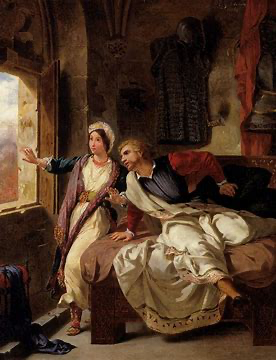
One of the things I like about reading a good book many times is that unexpectedly, on the manyeth time, something really good jumps out at you and you wonder how you could have missed it on all the other times.  This is an exchange—it isn’t an argument because they are never talking about the same thing—between two of the principal characters in Sir Walter Scott’s historical novel, Ivanhoe.

Ivanhoe has just been wounded in the tournament and has lost a lot of blood.  Rebecca—often “Rebecca

the Jewess”—knows a lot about healing and has been tending to his wound.  At the moment, they are both in a castle under siege and Ivanhoe, from his bed, is asking Rebecca to tell him what she can see from the window.  She sees one very large and overpowering knight whom no one seems to be able to oppose successfully.  It is to that person Ivanhoe is referring when he says, “that good knight” in his first remarks below.

In the conflict I am looking at here, it is the conflict between two starting points and two kinds of logic–not between two persons–that is the focus. I know I will be losing a good deal of the power of the engagement, but it is the way each speaker supports the case that caught my eye this time and that I what I want to follow.

Ivanhoe, immediately after saying he would follow anywhere the knight Rebecca has described, justifies his desire as a kind of compulsion.  Here is the sequence.

“ Rebecca,” he replied, “ thou knowest not how impossible it is for one trained to actions of chivalry to remain passive as a priest, or a woman, when they are acting deeds of honor around him. The love of battle is the food upon which we live —the dust of the mêlée is the breath of our nostrils. We live not—we wish not to live—longer than while we are victorious and renowned. Such, maiden, are the laws of chivalry to which we are sworn, and to which we offer all that we hold dear.”

Notice how he moves from “one trained to the actions of chivalry”—he means warfare—to remaining passive.  It is a compulsion only at this point.  Then he says clearly that it is love of battle is the food of the soul and the breath of the body.  Finally he says that he has no wish to live longer than he is victorious and renowned.  And not only that, but such as he are also sworn to uphold the laws of chivalry.

But Rebecca’s response to this impassioned defense also moves through several stages and in none of them does she challenge what Ivanhoe has said is the most powerful reason why he is who he is.  Here is the first step.

“Alas” said the fair Jewess, “and what is it, valiant knight, save an offering of sacrifice to a demon of vain glory, and a passing through the fire to Moloch? What remains to you as the prize of all the blood you have spilled, of all the travail and pain you have endured, of all the tears which your deeds have caused, when death hath broken the strong man’s spear, and overtaken the speed of his war-horse? ”

First, she redefines what he has said.  Not the rationale, but the action.  And she does it is a very Jewish way.  The reader wonders whether Ivanhoe understands more than the general argument she is making, but the reader does.  She redefines his “deeds of chivalry” first as “a sacrifice to a demon,” then, more specifically, as a passing through the fire to Moloch.

Ivanhoe may or may not know that Moloch was a Canaanite deity, condemned by the Israelites as demanding the burning of babies as the required sacrifice.  Moloch is the “demon” Rebecca has in mind that the “deeds of chivalry” Ivanhoe has described are truly no more than that.  Note her language: “What is it…save a passing through the fire to Moloch?”

Furthermore, Rebecca’s argument moves on to collateral damage.  The burned babies are the focus of the sacrifice, but Rebecca now brings in “all the blood you have spilled” and “all the tears which your deeds have caused.”

All Ivanhoe’s case has to do with his own commitments and the glory that comes from being true to them.  That is not what Rebecca is talking about.

Ivanhoe is a direct response to Rebecca’s last point (What remains after all this?) says it is the glory that remains: “Glory that guilds our sepulchre and embalms our name.”

That response is poetic and beautiful, but Rebecca swats it away as if it were a fly.

“Glory!” continued Rebecca; “alas! is the rusted mail which hangs as a hatchment over the champion’s dim and mouldering tomb, is the defaced sculpture of the inscription which the ignorant monk can hardly read to the inquiring pil­grim—are these sufficient rewards for the sacrifice of every kindly affection, for a life spent miserably that ye may make others miserable? Or is there such virtue in the rude rhymes of a wandering bard, that domestic love, kindly affection, peace and happiness, are so wildly bartered, to become the hero of those ballads which vagabond minstrels sing to drunken churls over their evening ale?”

There is real rhetorical art here, I think, and none of it is aimed at the value of glory.  It is aimed at the guided sepulchre.  Watch the sequence.  First, glory is the rusted mail which hangs as a hatchment [a coat of arms complete with its Latin motto]  over the champion’s dim and mouldering tomb.”  Find the “glory” in the “mouldering tomb.”

Read that and then return to “the glory that guilds our sepulchre.”  Rebecca says “Glory is…” and then begins a series of descriptions that are not horrible so much as tacky.  “The glory that guilds our sepulchre” requires a good deal from the people who will keep the glory machine running.  It is on those people that Rebecca centers her attack.

She has done the “rusted mail,” but Ivanhoe still has his coat of arms (that is the “hatchment”) in mind.  About that, Rebecca says that it misread by an ignorant monk to an inquiring pilgrim.  The ignorant monk is no part of what I am calling “the glory machine” as Ivanhoe envisioned it.  But it gets worse.

The next step is the “rude rhymes” of a wandering bard.  It is through these rhymes that Ivanhoe and other heroes of glory and chivalry become heroes, instead, of those ballads with vagabond minstrels (slap in the face #1) sing to drunken churls (slap #2) over “their evening ale (slap #3).

You might doubt me about slap #3, but Ivanhoe has in mind a death of glory forever cherished.  It is the routine of “evening ale” that is the enemy of Ivanhoe’s “glory.”  Not to mention the disrepair of the glory machine represented by the ignorant monk, the vagabond minstrels, and the drunken churls—and, of course, the setting of a rural village pub.

It would be a shame, too, in taking apart the glory machine, to pass over what Rebecca says Ivanhoe is ignoring in his quest for glory. She names them as “domestic love, kindly affection, peace, and happiness.”  Ivanhoe, given the opportunity, could fight her on the last two, but I think even he would have to grant that in his pursuit of glory—even a successful pursuit—he is bypassing the first two.

Ivanhoe does mount a kind of rebuttal, however, and we will look at that in the next post.

Posted in Uncategorized | Tagged , , , | Leave a comment

The Last Fair Election

According to Heather Cox Richardson’s column today, 

MAGA loyalist Steve Bannon recently said: “They’re petrified over at MSNBC and CNN that, hey, since we’re taking control of the cities, there’s going to be ICE officers near polling places. You’re damn right.”

People like me—I am on the left edge of democratic liberalism and a career-long political scientist—instinctively react with horror to Bannon’s remarks.  I look at my own attachment to free and fair elections and the clear threat to them Bannon promises and it makes me angry.

Lately, however, I have begun trying to separate the clear meaning of statements like these from the feelings they convey.  How could the emotional tone of Bannon’s remarks be received, leaving the content of the remarks aside?

“They” are described in the classic way to clearly say “not us” and to imply “bad guys.”  The bad guys are further specified as MSNBC and CNN.  That will have clear and particular meaning for people who regularly watch Fox News and who hear President Trump casually and routinely refer to everyone but Fox as “fake news.”

Add to that the broadly established finding that a substantial part of the Trump base is already angry [1] and you have a public that is ready to celebrate both the defiance and clarity of the remark.

Imagine for a moment that Churchill routinely made extravagant and negative remarks about Hitler.  Now imagine a committee for “Fairness in the Press” publishing after each such speech, analyses that correct and rein in Churchill’s remarks.  This is at a time when the war is raging and the prospects are dark.  What I am inviting you to imagine is the emotional reaction of most Britons to Churchill and then to the Committee for Fairness.

All you have to do is to put this group of pro-Trump voters in the position of the people of Briton in 1940 and you can see how the response would be more to the tone of Churchill’s remarks than to the specific proposals.

Bannon is clearly implying that there will be coordinated federal intimidation of any voters who are likely to vote for Democrats.  But he isn’t saying that.  He is saying two things.  One, “the bad guys are afraid.”  Two, ‘You’re damn right!”

I genuinely hate the plan Bannon is talking about and also the language he is using to convey that plan.  But I try not also to be foolish about the things I hate and I think that disguising from ourselves how satisfying Bannon’s plan and his emotional appeal are—is just that: foolish.

So what does that mean in terms of electoral advantage?  Does it mean that more Democrats ought to learn to talk like that?  Does it mean that the people, generally, are going to see that language like that is associated with catastrophic outcomes for them? [2]

At this point, I think it could go either way.  Governor Pritzker’s rebuke to President Trump is a good model for Democratic language, but you have to wonder how many Democrats have that tool in their toolkits.  The alternative is to wait for the 2026 elections to see if the voice of sober moderation—what we have been trying for some time now—will work better as the crisis becomes more vivid.

[1]. Arlie Russell Hochschild’s superb book Stolen Pride is very good at conveying both the realities and the emotional reactions to those realities.

[2]. I am not thinking of economic outcomes.  I don’t think that will move enough voters, particularly since they have already been likened to “the necessary pain that follows a crucially important surgery.”  It will have to be culturally catastrophic and there will have to be an alternative other than armed revolt.

Posted in Uncategorized | Tagged , | Leave a comment

Or Else…what?

It should not be too hard to grasp the idea that you can’t give ultimatums to people who have alternatives.  The classic formulation of this occurred in a memorable episode of the West Wing in which Leo McGarry, the President’s Chief of Staff cranks up the heat on the President.  It is clear to Leo that there is an action that only the President can take and that it is urgent that he take it immediately.  He leans over the President’s desk and says something to the effect of “You HAVE TO do this!.”  Finally, President Bartlett looks up and says, “Or else….what?” 

A foreign policy governed by ultimatum is a very tricky thing at best.  For one thing, it changes theOr Else….What?

It should not be too hard to grasp the idea that you can’t give ultimatums to people who have alternatives.  The classic formulation of this occurred in a memorable episode of the West Wing in which Leo McGarry, the President’s Chief of Staff cranks up the heat on the President.  It is clear to Leo that there is an action that only the President can take and that it is urgent that he take it immediately.  He leans over the President’s desk and says something to the effect of “You HAVE TO do this!.”  Finally, President Bartlett looks up and says, “Or else….what?” 

A foreign policy governed by ultimatum is a very tricky thing at best.  For one thing, it changes theOr Else….What?

It should not be too hard to grasp the idea that you can’t give ultimatums to people who have alternatives.  The classic formulation of this occurred in a memorable episode of the West Wing in which Leo McGarry, the President’s Chief of Staff cranks up the heat on the President.  It is clear to Leo that there is an action that only the President can take and that it is urgent that he take it immediately.  He leans over the President’s desk and says something to the effect of “You HAVE TO do this!.”  Finally, President Bartlett looks up and says, “Or else….what?” 

A foreign policy governed by ultimatum is a very tricky thing at best.  For one thing, it changes the traditional idea of U. S. foreign policy.  In the shadow cast by the present chaos, it is easy to idealize the recent—post 1945—conduct of American foreign policy, but this at least can be said.  The centerpiece of American foreign policy has been the construction and maintenance of alliances that will accomplish the goals of the members.  The policy of Containment—if the Soviet Union can be kept from expanding, it will eventually implode—may not be our finest hour, but the goals were clear, cooperation was widespread, and it was successful.

The U.S. served as the nation to formulate the idea, to specify what part other nations would need to play in this strategy, and to support them in those efforts.  So long as the threat was clear and imminent, holding the coalition together was manageable.  But under all circumstances, the policy choices involved the practices of the alliance.

One of the very early effects of President Trump bargaining practices is to fracture alliances into sets of two-party dealmaking.  Driving hard bargains with a trading partner—or even with a military partner—is a tricky proposition.  I want to consider in just a moment some of the things that make it tricky, but it is worth noting in passing that the alliance is gone when we do that.  The politics of managing an alliance to achieve common purposes is, of course, difficult, but it is simply incompatible with splitting the alliance up into bargaining units and dealing with each so as to maximize U. S. advantage.  So when we move from the one mode of foreign policy practices to the other—from an alliance-based to a deal-based mode—we lose all the advantages of the alliance.  We can hope—clearly President Trump DOES hope that the deals we will be able to make will be so good for America that the loss of the alliance partners will be compensated for.  The nations who were the alliance partners do not go away, of course.  France, Germany, and Britain are still where they were; but the common purpose that made them alliance partners has been lost in the rush to make one on one deals.

That’s the major problem, as I see it, in shifting to dealmaking among allies.  It is, briefly, that they are no longer allies.  But what happens to nations who were, until recently, being courted?

Everyone knows that depending on the question being asked, there are our guys, their guys, and those who have not make up their minds on the question being asked.  The U. S got in the habit, during the Cold War, of thinking about those groupings in very broad and stable categories.  We called “our guys” the First World, “their guys” the Second World, and those who were not playing the game or had not yet chosen sides, “the Third World.”  That seemed appropriate for issues as broad as “freedom under U. S leadership” v. domination under “Communism.”

But when we change to one on one bargaining, the categories lose their power and the question comes up of just how far you can push an antagonist in bargaining.  If he has no option but to comply—in another setting, we might quibble about whether that is really “bargaining” at all—then the U. S can push their demands quite far.  Always keeping an eye on that line that separates “continuing the conversation” from “opting out entirely.”

A good example of a nation in this dilemma is India, the most populous country in the world and an economic powerhouse.  The Trump administration has been bringing a good deal of pressure to bear on India, beginning with tariffs, as usual, to comply with U. S economic demands.  The level of pressure seems to presume that India has no alternative but to continue the conversation and try not to lose more than they can afford.

Briefly, the question we ask India by pushing them to the wall is, ‘Or what..”  

India has begun to answer that question by opening discussions with Russia, China, and North Korea.  We bargained with them—“tariffed at them”—as if they had no alternatives, but it might turn out that they do.

The loss of India as a partner in Asia would be a catastrophic loss, but it is a solid answer to the dangling question, “Or else…what?”traditional idea of U. S. foreign policy.  In the shadow cast by the present chaos, it is easy to idealize the recent—post 1945—conduct of American foreign policy, but this at least can be said.  The centerpiece of American foreign policy has been the construction and maintenance of alliances that will accomplish the goals of the members.  The policy of Containment—if the Soviet Union can be kept from expanding, it will eventually implode—may not be our finest hour, but the goals were clear, cooperation was widespread, and it was successful.

The U.S. served as the nation to formulate the idea, to specify what part other nations would need to play in this strategy, and to support them in those efforts.  So long as the threat was clear and imminent, holding the coalition together was manageable.  But under all circumstances, the policy choices involved the practices of the alliance.

One of the very early effects of President Trump bargaining practices is to fracture alliances into sets of two-party dealmaking.  Driving hard bargains with a trading partner—or even with a military partner—is a tricky proposition.  I want to consider in just a moment some of the things that make it tricky, but it is worth noting in passing that the alliance is gone when we do that.  The politics of managing an alliance to achieve common purposes is, of course, difficult, but it is simply incompatible with splitting the alliance up into bargaining units and dealing with each so as to maximize U. S. advantage.  So when we move from the one mode of foreign policy practices to the other—from an alliance-based to a deal-based mode—we lose all the advantages of the alliance.  We can hope—clearly President Trump DOES hope that the deals we will be able to make will be so good for America that the loss of the alliance partners will be compensated for.  The nations who were the alliance partners do not go away, of course.  France, Germany, and Britain are still where they were; but the common purpose that made them alliance partners has been lost in the rush to make one on one deals.

That’s the major problem, as I see it, in shifting to dealmaking among allies.  It is, briefly, that they are no longer allies.  But what happens to nations who were, until recently, being courted?

Everyone knows that depending on the question being asked, there are our guys, their guys, and those who have not make up their minds on the question being asked.  The U. S got in the habit, during the Cold War, of thinking about those groupings in very broad and stable categories.  We called “our guys” the First World, “their guys” the Second World, and those who were not playing the game or had not yet chosen sides, “the Third World.”  That seemed appropriate for issues as broad as “freedom under U. S leadership” v. domination under “Communism.”

But when we change to one on one bargaining, the categories lose their power and the question comes up of just how far you can push an antagonist in bargaining.  If he has no option but to comply—in another setting, we might quibble about whether that is really “bargaining” at all—then the U. S can push their demands quite far.  Always keeping an eye on that line that separates “continuing the conversation” from “opting out entirely.”

A good example of a nation in this dilemma is India, the most populous country in the world and an economic powerhouse.  The Trump administration has been bringing a good deal of pressure to bear on India, beginning with tariffs, as usual, to comply with U. S economic demands.  The level of pressure seems to presume that India has no alternative but to continue the conversation and try not to lose more than they can afford.

Briefly, the question we ask India by pushing them to the wall is, ‘Or what..”  

India has begun to answer that question by opening discussions with Russia, China, and North Korea.  We bargained with them—“tariffed at them”—as if they had no alternatives, but it might turn out that they do.

The loss of India as a partner in Asia would be a catastrophic loss, but it is a solid answer to the dangling question, “Or else…what?”

Posted in Uncategorized | Tagged , , , | Leave a comment

The “Inmost” Self

Sherry Turkle is one of the most articulate and knowledgeable critics of AI as a source of friendship and support.  Her book, Reclaiming Conversation is a wakeup call and a tightly reasoned argument. I agree with her concerns, but I am worried about the rationale.  I would really like a stronger one and I am not sure there is one.

She says that chatbots do not “have” empathy; they “perform” empathy.  That seems right to me, but is

it a criticism worth making?  Human society, as I experience it and as generations of sociologists have understood it, is a web of performances.  We greet each other with a courtesy we may not feel at the time, but we “perform it” because it is expected.  We ask after each other’s health, each other’s children, whether the vacation was all our friends had hoped.  We may sometimes experience the feelings from which these questions would naturally arise, but they will arise anyway because they are necessary.

They are performed interest, at the very least, and are done so as to suggest “empathy”. So what kind of criticism are we making when we say that the chatbots only “perform” empathy?  The only solid criticism I can think of is that than can not feel the feelings we feel—cannot by definition, “have” empathy.

That means that we can take for granted that the performance of an emotion by a chatbot is “insincere.”  It is “inauthentic.”  On the other hand, the performance is very good, and if that is what matters to us most, it may be something we will come to prefer.

Certainly we are saying that chatbots so not have the same feelings we have.  That would be empathy.  But are we saying that matters if the performance is good?  Turkle is worried that we may not continue to choose actual humans.  I am too, but I wonder what strong rationale there is for continuing to choose the variable performance of humans over the reliably competent vacuity of chatbots.

Here is Turkle’s reflection about a visit from psychologist Erik Erikson.

“I was a young faculty member at MIT in the late 1970s when the psychoanalyst Erik Erikson visited to talk about engineering education. After his presentation, he asked me what I was doing as a humanist at an engineering school. I told him I was studying how computers change people’s ideas about themselves, and he made this comment: ‘Engineers, they’re not convinced that people have an interior. It’s not necessary for their purposes.” 

And Turkle summarizes, “They see the complexity of inner life not as a feature but as a bug.”

According to Turkle, we need to continue to choose interactions with humans not because empathy is guaranteed, but because it is possible.  With the bots, it is not possible by definition.  Some argue that the illusion of human feelings—compassion, anxiety, pleasure—is good enough.  Here is Turkle’s argument that it is not good enough

“I argued for this assertion of agency in 2015, and now I argue ever more fervently. There is more than a threat to empathy at stake; there is a threat to our sense of what it means to be human. The performance of pretend emotion does not make machines more human. But it challenges what we think makes people special. Our human identity is something we need to reclaim for ourselves.”

She uses powerful words to sketch in what is at stake.  She says that “what it means to be human” is at stake.  OK, what does it mean to be human?  We know what it has meant, but is that what it fundamentally means?  How would we know?

She says it challenges “what we think makes people special.”  Are we right in thinking that the exchange of authentic emotions is “what makes people special?”  In the superficial sense, of course, it does.  If the bots cannot, even in principle, experience empathy, they human beings are “special” by definition.  But surely Turkle means more than that.

Turkle never talks about souls.  And there is no reason why she should.  I don’t talk about them either and I suspect it is for the same reason. [1]. But I do think that is where her logic will lead her.  If the superficial features of humans and bots are similar, then humans and bots will have to be distinguished by the authenticity of the superficial expressions.  Do they, in other words, express genuine feelings.  I think she and I would both say that bots don’t have “genuine feelings” no matter how effectively they perform them.

But if we cannot reliably say, based on our own experiences, which expressions are authentic and which are not, then we will have to continue on into the interior to make our case.  And what else is there?  Will we have to argue that humans are “better” because we have souls and the bots to not?

That is where I see the argument heading.  If we want to continue to prefer humans to bots and if we can no longer—or not much longer—distinguish the performance of emotion from the expression of an inner feeling, then what is left?  Souls are the next entity; that is, they are even more elusive than “authenticity.”  We have built our societies on the performance of empathy, requiring authenticity only of our most intimate relationships.  Is the next step to grant “authenticity” to the bots and if it is, what is left that they cannot have but that we can?

I think it is souls.  I am not happy about that.

Turkle’s actual program is unobjectionable.  In fact, I think it is crucially important. She says that we need to pay attention to what we are doing.  We need to consistently prefer humans, even when the immediate experience is not as pleasant as the reliable “camaraderie” of socially competent bots.  I think she is right.  Nothing but daring to prefer what only humans friends can give us, will keep us from morphing slowly into the bots most reliable accessory.

[1] My reason is that I would not know what I was talking about if I claimed some particular virtue for a “soul.”

Posted in Uncategorized | Tagged , , , | Leave a comment

The Price of They/Them

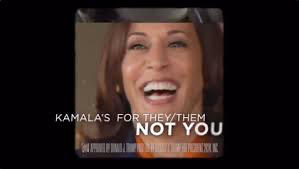
I read in the last week the there was a distinct Democratic downturn that showed up when this political ad (in all its forms) began to be shown. When I looked it up online, they gave the full text as “Kamala’s for They/Them. President Trump’s for You.”

I missed it when it came out because I was mostly hiding from the campaign, so it all feels new to me.

The power in this superbly conceived ad is the meaning of “Them.” All the ad says on the surface is that Kamala is expressing her preference for one way of using personal pronouns over another way. Who would have thought that such a small grammatical preference would carry such a payload.

But, of course, there is more to the ad than the surface meaning. This is aimed at people who have said “him” or “her” to someone and who have been corrected when the person asked to be referred to as “they.” Those people—the people who have been corrected—are the “You” that shows up at the end of the ad.

And like the first part, which seems to be only about a choice of pronouns, this part, which seems also to be only about pronouns, is in fact a powerful statement of advocacy by the Trump campaign. Had the ad said only “President Trump is for You” it would have been feeble and pointless. But this ad points out the alternatives. Kamala is the candidate of the people who look down on you and correct your grammar. Trump thinks your grammar is just fine.

And, in fact, your grammar WAS just fine. Yesterday. But things keep changing and you are supposed to assent to the changes no matter how bizarre they are and to conform to them because you will be “corrected” if you don’t.

And once we change from the correction that is being demanded to the people who are doing the demanding, the range expands very quickly. The same people who find themselves simply unwilling to address another person as “they” are also called racist, sexist, ageist, and whatever other -ists are currently being deplored. And the power of this ad is that it shifts the emotional grievance from the usage to the critics.

Here is how it comes out. Whatever bizarre claims are being made for a new kind of society—different work norms, gender norms, relationship norms, language norms—Kamala is for them and for the people who want all those new things, no matter how ridiculous they might be. And those are the people who look down on you and call you names. So, briefly, they are the “them” of They/Them. Why would you vote for someone who supports Them?

President Trump is against “Them” and he is for “You.” Clearly, “them” is a grammatical usage, but ‘you” refers to real people; people you know. Trump is us. Kamala is them.

So that’s the politics as I see it. That is the stream of public controversy that this usage taps. Down below all that, down among people who are engaged in the gender wars personally and daily, the question is only, “What do I want to be called?” The “they/them” choosers not only reject him and her as inadequate; they also reject the high priority that has always been put on him or her. The people who have been causing them trouble are people for whom: a) him and her are the only two options and b) which one you are determines how you are to be treated.

They/them is a protest against both of those. If I knew and liked someone who preferred to be referred to as “them,” I would make every effort to remember to use the term, despite a lifetime of understanding that it is wrong. But even for this person I liked, it would not take many times of being corrected for me to turn that favor I was doing for my friend into an unwilling obedience to their quirkiness. I would also be turned off by whoever among my friends thinks I ought to be more careful to use the preferred pronoun of the person I had just offended. And I would resent being turned off by people who think I should knuckle under to unreasonable demands.

And when that happens and I see a billboard that says I get to choose between someone who is for They/Them and someone who is for Me, the emotional force is all in one direction. It is Trumpish.

Finally, I, personally, despise Trump and everything Trumpish. I don’t like they/them either. It’s not a “personal preference” if everybody needs to use it. I am blessed with enough verbal fluency that I can manage to stay out of sentences that require me to use or to prominently avoid that pronoun. But I don’t like to have to be that careful all the time.

Posted in Uncategorized | Tagged , , | 1 Comment

“Don’t worry about it, ma’am.”

I want to start this line of thought with a comment by Margaret Talev in Thomas Edsall’s New York Times column this week. She said, “Voters want to belong. If you want someone’s vote, you should ask for it. When it came to men, Trump did.”

It still seems odd to me to see an unqualified reference to “men,” but there is a meaning here that is clear enough that the reference is justified. She doesn’t mean “men” as a statistical category; she means “men” thinking of them in gendered terms. Men as males.

And Trump did ask for their vote, where Harris did not.

I was still thinking about Gov. Abbot when I ran across Heather Cox Richardson’s post. She cites an exchange that undoubtedly begins with a reporter asking who is to blame for the deaths caused by the flood in central Texas. Here’s what he said.

“‘[W]ho’s to blame?’” Texas governor Greg Abbott repeated back to a reporter. “That’s the word choice of losers.” “Every football team makes mistakes,” he continued, referring to Texas’s popular sport. “The losing teams are the ones that try to point out who’s to blame. The championship teams are the ones that say, ‘Don’t worry about it, ma’am, we’ve got this.’”


Abbot dismisses the question of responsibility as a “word choice.” It is only losers who wonder whose fault an unfavorable outcome was. Then he doubles back to make his argument impenetrable. The word that does it for Gov. Abbot is “ma’am.”

This is not a reference to the reporter who asked the question. This is the language of legend. It is the women who are told not to worry and they are told this by the men. By the “real men,” presumably, like Gov. Abbot.

The gulf between the question of who is responsible for Texas’s inexcusable unpreparedness, on the one hand, and a woman “worrying about it” is a huge gulf. And in the context of that news conference, I would think that trying to cross that gulf would be hazardous in the extreme. A reporter who tried to do that would have to fight the charge that he is or represents the perspective of losers; that he is not making a charge about public accountability; and that he is not a (mere) woman, indulging herself in “worrying.”

That is the size of the gulf. It is a situation of great hazard. For the reporter. On the other hand, to return to Margaret Talev’s remark about belonging, Gov. Abbot offers a place to belong. You can be one of the real men who take it on themselves to reassure the worrying women. Or if you are a woman, you can take seriously the reassurance by this man that you are only worrying and things and well in hand. The next election, for instance.

It is hard not to focus on the blatant culpability of the governments involved, but I think the more important question here is whether Gov. Abbot is offering voters a place to belong and whether they want that more than anything.

Posted in Uncategorized | Tagged , , | Leave a comment

Not a Slam Dunk

I’d like to put two facts in opposition to each other. The first is that in Trump’s “budget” bill, which passed the Senate today, thanks to Vice President Vance’s vote, will have devastating effects on Trump’s core constituency.

Jacob Hacker, a political scientist at J. D. Vance’s alma mater [1] put it this way,“Districts represented by Republican members of Congress — as well as counties that supported Trump in the last election — are poorer, more rural, less dense, have fewer college graduates and are more likely to be in areas scarred by deindustrialization.”

It is hard to imagine that the Trump coalition will hold together through such a massive betrayal. Still, as Drew Altman, the president and chief executive of KFF (formerly the Kaiser Family Foundation) put it. “It looks like Republicans are handing Democrats their golden issue, but it’s not a slam dunk.
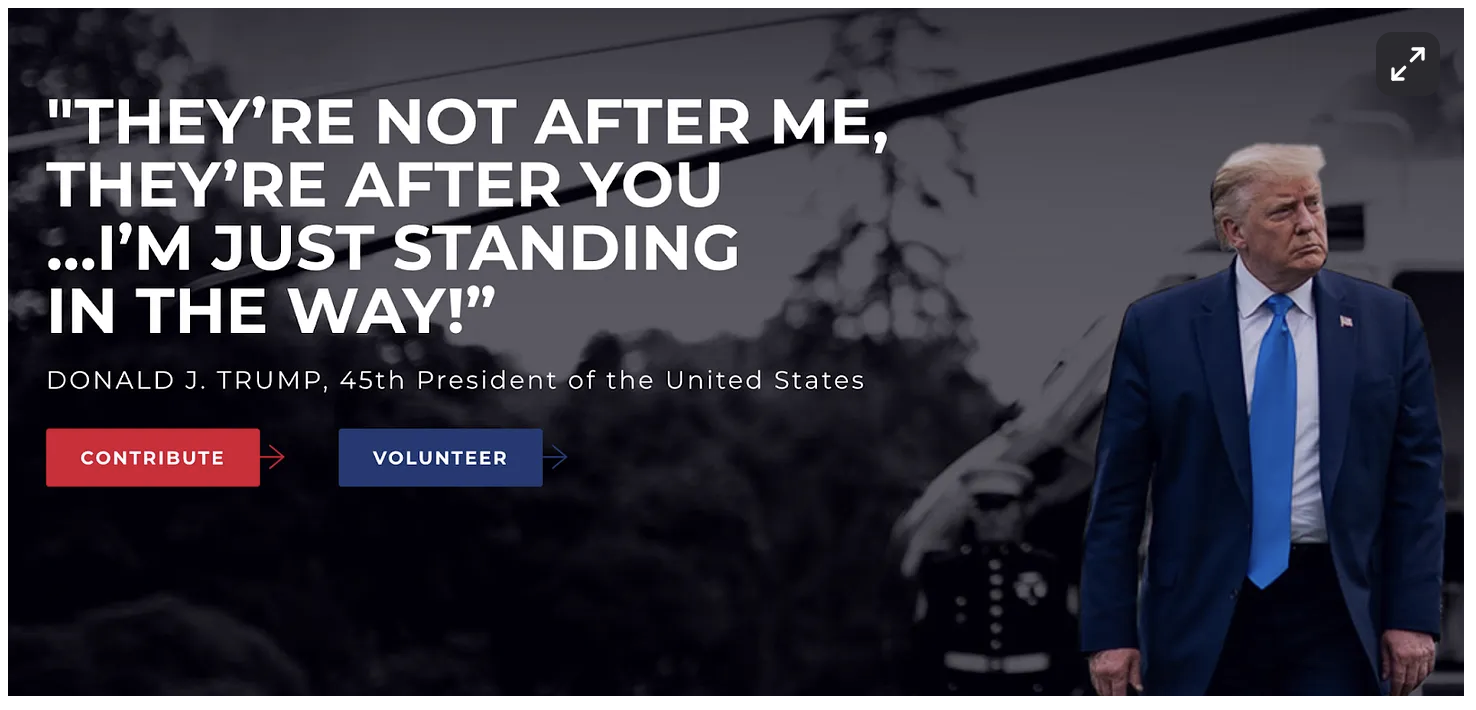
Why is it not a slam dunk? Against all the financial losses that will be suffered by the states most loyal to Trump, I put the sentiment in this picture.

You see that it is a Trump campaign poster. You can recognize him even in the blue tie. Think for a minute about who “They” is in this admonition. It isn’t just the Democrats. It is the nebulous evil organization he sometimes refers to as the “deep state.” It is the swamp he promised to drain. “They” are swamp demons.

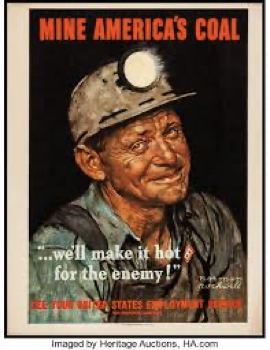
And they are “after you.” There is an implacable resentment between “them” and you and this resentment is flavored with a casual dismissal of all the work you have done for them, In Kentucky’s District #5, Arlie Russell Hochschild ran into a sentiment that was expressed like this. [2]“They” are people who don’t honor the sacrifice that won World War II as the sign clearly says.


And I am “standing in the way”. I am going to take the vindictiveness of the people who disrespect you and turn it against them. I am the one you can turn to as a way to express your courage and your defiance.

That’s the way I read that sign. And that’s why it’s not a slam dunk. A lot depends, a Drew Altman puts it, on “whether Democrats succeed in holding the Republicans responsible.”


The case is there to be made. Altman, of KFF cited polling “showing that many voters are unaware of the effects of the Trump legislation. When they are told of the consequences, the already weak support drops precipitously.’ That is why the case is there to be made. Among these voters—the ones Altman is talking about—the support is weak and it goes into a nosedive when the practical consequences of the Trump budget are revealed.


Some say this nosedive occurs when people experience the concrete consequences. That will be some time. Altman’s experience with polling is that the nosedive occurs when the people are told about what they can clearly see is likely. That is the job of the Democrats.


And they have one more job. They need to find a way to be the ones that offer a way forward. Showing how bad Trump is will not do the job. The Democrats need to offer a candidate people can believe in. They don’t need to do that to win back the House and the Senate, but they do to win back the presidency.

[1]. If law schools have alma maters.
[2] Her recent book on this issue is called
Stolen Virtue—surely one of the best titled books in recent years.

Posted in Uncategorized | Tagged , | Leave a comment

Plenty left on the rack

Some years ago I taught with a sociologist friend who taught me a song he called “the mini mart Song.” And that’s what we called it when we asked him to sing it for us. He was a conservative man, all things being considered, and part of the fun of listening to him sing the old Jimmy Buffet lyrics was the contrast between what he seemed to be advocating and who he was.

For example.

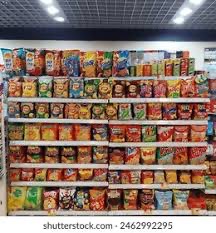
There is a rationale embedded in the chorus. Here are the words: “We never took more than we could eat/There was plenty left on the rack”. And here is the rationale. Our theft was limited to our immediate needs. The fact that food was the need makes it seem somehow justified. Further, the theft was insignificant because there was so much—“plenty,” the song says—left on the rack. [1]

And not only that, there is at the end of the chorus a very respectable oath. “We all swore if we ever got rich/We would pay the mini mart back.” Of course, this “oath” is not quite so respectable if you sing it with a grin and a wink, which is the only way I have ever seen it performed and it is the way my friend always sang it.

I don’t want to go back to those days which seem–from the perspective of my present in Portland, Oregon–to be innocent and to dump on the song, much less on my friend who sang it many times at our request. On the other hand, a lot of retail stores in Portland are closing because they can’t control shoplifting. People go into these stores and take what they need or what they want or what they think they can sell. The stores can’t make up the loss and, at those levels of loss, can’t afford either the insurance or the extra enforcement (private security guards) that would be required.

So what happened? The people who are represented in the song are stealing the food in order to survive. That is what the lyrics say. But the the performance of the song is not a celebration of survival. It is a celebration of what amounts to a prank, with all the limitations the song places on the theft. You don’t take more than your immediate need requires; you leave a lot on the rack for legitimate sale to later customers; you have every intention of repaying the value of what you took. Those limitations.

But those “limitations” justify everything that is going on in Portland today. They don’t seem carefree anymore, looking at the wave of closures. The language, taken at face value, doesn’t justify any more today than it did back in 1973, when the song was popular. Is it that only a few people did it back then—starving artist types—and now it is very nearly a mainstream activity? Is that the difference?

Is it that back when the values that would have been inculcated by a family precluded all but the most desperate thefts, and now that such behavior has escaped the family and become part of the general urban culture, there are no more limits on it? Is that the difference?

No one imagines that back in the old days, you knew the guy who owned the mini mart and so limited your theft, but now they are all anonymous chains and so there is no reason to limit it. This was never a local grocery run by that nice couple who lived just down the street from your parents. So that’s not it.

Jimmy Buffet locates this kind of activity back in his “hard luck days.” Stealing for resale isn’t any part of anybody’s hard luck days. It’s a business model and it is predatory. I’d like to go on singing the song because I think it’s funny, but it isn’t as funny as it used to be.

[1]. More likely it was a shelf the food was left on, but we really need a word that is going to rhyme with “back.”

Posted in Uncategorized | Tagged , | 1 Comment

Writing in my civilian name

A few years ago, I jotted a quick note to my son, Doug, and in my haste, signed it Dale instead of Dad. I considered that an egregious breach—more on that later—and wrote him another note the next day, as soon as I discovered it. He wrote back in a tone of consolation. “That’s alright, Dad. I’ve always known your civilian name.”

I had not been all that worried about it and when I got his note, I shut down even the little worry I had been carrying. But I have kept it in my “Don’t Throw This Away” file because I had a feeling that something in it mattered. The way my mind works, there is a phenomenon that is hard to describe. I sometimes say it is like a very small light going on somewhere in my peripheral awareness and when this light goes on, it means “This means something.” [1]

I have learned to trust the significance of that little light and eventually I come up with a guess—never more than haphazard, but nearly always valuable—of what it meant. That is what happened this time.

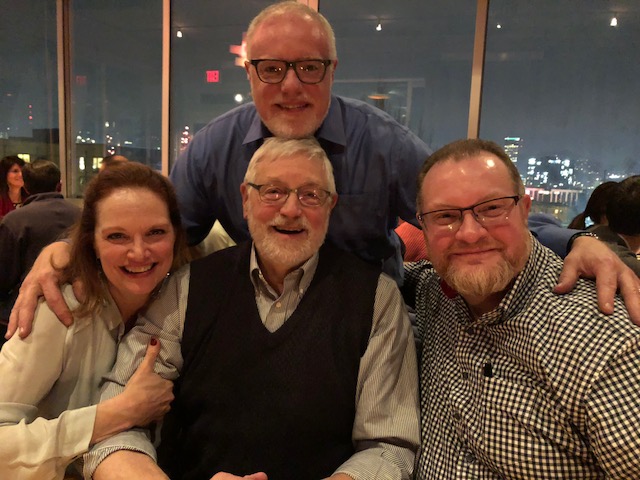
In raising my three children, seen here celebrating my 80th birthday, I have gone through all the stages a father can go through, including Authority, Supporter, Critic, Listener, and finally, Friend. Of those, I value what unites the first three in combination with what unites the last two. The first three can be collected under “Dad,” the name I was so eager to use with Doug. The last two can be collected under the name Dale, which is, as Doug put it, “my civilian name.”

I may have done more thinking about relationships, very likely, than the average octogenarian because I was forced to dip my toe into the dating pool some time after my wife, Marilyn died in 2003. I was 68 at the time and had not given serious thought to “dating” since I was 18. I was dating trying any dating at all because my son, Dan, whose advice I am inclined to take seriously, called one day and said, “Dad, I know you won’t want to hear this, but you really need to date a lot of women.” That was followed by a rationale that was tailored specifically to me and that was psychologically acute. It was offered by someone who knew my civilian name.

In my quest to find a woman to marry, I formulated an idea of the kind of relationship I was looking for. I understood that it was the kind that would have to be built over years of relationship by a husband and wife who were committed to the model. I was just looking for a woman who, when I said what kind of relationship I wanted, said, “That sounds really good. I would like to be in a relationship like that.”

The relationship has a collegial face and an intimate face. Those are the names I eventually settled on, although the distinction itself came from C. S. Lewis’s book, The Four Loves. I wanted, that is to say, a task partner, someone who would value me, and I her, for what each of us contributed to our common project. And, on beyond collegiality, I wanted an intimate friend, a face to face friend, to whom I could say, “I know who you are and I love you.” And who could say the same to me.

I raise this now obscure part of my biography today because I am pretty sure those two ways of being in relationship track the Dad/Dale distinction that Doug named as a throwaway line. I sit here, on the morning of Father’s Day in a hallway just outside our apartment. When we moved in here [2], I saw immediately that it could serve us as an extra room. Having no sense at all about names and functions, I called it a “parlor,” meaning that it would be a good place to talk. Parlor vous? I was describing this to my daughter, Dawne, who does not have her father’s problem with names and functions and who, in addition, lives in New Jersey. “Pop, that’s not a parlor,” she said with some vehemence. “That’s a front porch.” They know, in her part of New Jersey, what front porches are for and as I sit here, writing this and saying hello to the neighbors who pass by, I know she was right. It is my front porch.

I think the Dad/Dale division functions in the same way the Colleague/Intimate distinction does. It marks, for my kids, a part of who we have been but we are not that any longer. The authority element is long gone, which is good for a father whose kids are all in their 60s, but it has not been replaced by the friendship element. It has been complemented by the friendship element.

I am a friend in a way I could never be had I not been an authority once. That part of the relationship has long been transcended, of course, but it still sits in our common background and provides a color and a contrast to our present. Not a one of the three thinks, even now, that I was a perfect father, but they have been for quite a while now, inclined to celebrate the whole package of who we were for each other—redeeming in their minds the bad parts and celebrating the good parts.

I take great pleasure in that. I like it that they do it on purpose. I know that the reason they do it is that they love me in a really complicated way. It would have to be, surely, to take such discrepant elements into account and make an integrated whole. They have done that and we, the four of us, have done that, as well.

And if that doesn’t make Father’s Day worth celebrating, I am going to sell off all my Hallmark stock shares.

[1]. Or as Roy Neary put it, referring immediately to the mound of mashed potatoes he had just scraped onto his place and ultimately to the site in Wyoming where we would first encounter sentient aliens, “This means something. This is important.”
[2]. Holladay Park Plaza, a senior center in Portland, Oregon. It’s what feels like home to Bette and me.

Posted in Uncategorized | Tagged , , , , | Leave a comment