
For many years, in my teaching courses in political psychology, I needed to distinguish how an issue could be described in one way or another. Very often, the sense of what ought to be done about it would vary with the description. A question I relied on so often that later in the term it could be referred to by a word or a gesture was this: “Is the water too high or is the bridge too low?”
That was a really good question because it pretended to offer “alternatives” in a setting where it was obvious that both were true. Should the bridge have been built higher than the water ever got? Ever? Should the water level be controlled so as to keep the bridge safe? How? Both legitimate questions, but pointing in different directions.
I like very much the pharmacy we use. Good people; good service. But, like everyone else, they are gravitating toward an online presence, pre-recorded messages, and phone trees. So, for example, when I call to renew a prescription, I run into a recorded message that explains that “we are experiencing unusually high call volumes.” Really? Do you want to put that on a recorded message and play it over and over, no matter what day or what time of day the call comes in?
Still, given my experience with the water levels and the bridge, it is easy—unavoidable, really—for me to hear the message as a matter of call volume on one side and of phone staffing on the other. “Inadequate staffing” is the other side of “unusually high call volumes” in exactly the same way that the water is too high or the bridge too low.
If I put more people to work minding the phone calls, the “volume” would not be too high. Much less would it be “unusually high.” If there were fewer phone calls, I would not have to put so many people on phone duty.
This is not a matter of business practices to me. I have no advice to give to the pharmacy. This is a language matter for me. I am sure that if the phone service is bad enough for long enough, customers will find a pharmacy that does that job better. Or, more likely, if all the pharmacies shift to call backs or to online”chats,” we will give up the old idea of “calling the pharmacy” and “talking to someone.”
I got to thinking about this this morning when, in a conversation with my brothers, we referred to “a device” that more recent cars have that “help you” to “keep in your lane.” The social ramifications of that language are so rich that it will take a deliberate effort to bypass them, but I will. Just for today.
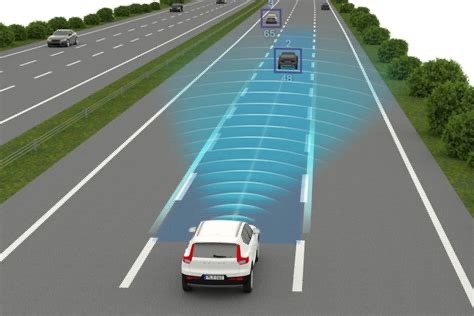
The name all three of us failed to come up during the call is LKA—“lane keeping assistance.” That seems to be the general term. But within that category there are several kinds and as I was reading through them, I got interested in how “they”—each of them—define the problem to be solved.
For most of them, it seems, the issue to be dealt with is that the driver is unaware that the car is moving (has moved?) out of the assigned lane. The unawareness of the driver is the problem in the same sense that the high water is “the problem.” The LKA starts beeping and that serves as the notification to the driver and the driver responds in the appropriate way, steering the car back into “the center of the lane.”
Now why on earth is that expression in quotes? Well, we all know how much wider the lane is than the car. So you could define the problem, positively as “driving in the center of the lane” or negatively as not driving over the lines on either side. So long as you are not “over the line” you have met the criterion the system uses, whether or not you are “in the center.”
That came to my mind because several of the LKA devices take action on their own. This means that they have formulated the problem differently. Their job is not to notify the driver that the road boundaries have been violated. The problem now has nothing to do with the driver. The problem is that the vehicle is not “centered” and the solution is for the device to “center” it.
The site I consulted offered two examples. One called “Lane-Keep Assist” does something, according to the description: it “recognizes when the vehicle is too close to a lane marker and gently steers it back toward the center.” IT does the steering. “Gently,” it says in the description.
The other is called “Lane-Centering Assist” is “a more advanced form” of LKA. It takes a more active role in keeping your vehicle centered in its lane. I note that “it” keeps “your vehicle” centered. Note again the positive criterion rather than the negative criterion the other systems use. LCA is so active that the description doesn’t even use the word “gently.” Maybe if you intervene so early in the process that the driver has no sense that the car is being steered at all, there is no need to say that it is being steered “gently.”
Again, the problem in the first instance is that the car has violated the lane markers and the solution is to inform the driver. The problem in the second instance is that the car in not in the center—I think of expressions like “exact center” in cases like these—and the solution is for IT (the LCA) to steer it back where it (the vehicle) belongs.
Not to allow my paranoia to run free, but I am getting so used to being surveilled that I imagine that the next generation of LKA will monitor the quality of my attention to the road and nudge me in some way or other if my attention is wandering even before my wandering attention allows the car to wander across the lines. I am reasonably certain that there is a pattern of eye movement that is reliably associated with focused attention and that the new modes of surveillance can tell whether my attention is focused where it ought to be if I am the driver.
The only reason I can think of that such a system would not be next is if it cost the provider too much. After all, the quality of attention I am paying is a pretty soft target. How much the device costs is a pretty hard target. So far.

 The Dilettante's Dilemma