
Since I first learned the etymology of the word “seduction,” I have been fascinated by what it says and what it doesn’t say. I am going to try to come at the new cars’ Lane Deviation Warning devices (LDW) from the standpoint that “seduction” offers. We’ll see how it goes.
The two elements of “seduction” we need for this purpose are the Latin verb duco, “to lead,” and the prefix se-, meaning, in this case, “away.” We like to say “astray” rather than “away” when we are committed to the direction in which we are being led, but that is just our own preference heaped on a simple etymology. The great value of “away,” it seems to me, is that it establishes that there is a way we should be going. No other understanding gives “away” the meaning it has.
We are “seduced,” by this understanding of the word, if there is a way we should go and we are being led elsewhere. There is no necessary connection with anything erotic. There is not even a necessary connection with morality, despite the “should” in “the way we should go.”
I want to talk about what LDW means to me as a teacher. The classes I am talking about are Bible studies. By the common assent of the students in each of the two classes, these courses are: a) secular, b) scholarly, and c) congenial. Experiencing a class session marked by those characteristics is what we all agreed to pursue together. Contributions that violate the secular standard (as when explicitly religious comments are made) or that violate the scholarly standard (as when the contributions of the academic masters of the subject are set aside because they don’t feel right) or that violate the congeniality standard (as when needlessly abrasive comments are made) take us out of the Lane (hereafter, capitalized to mean this this).
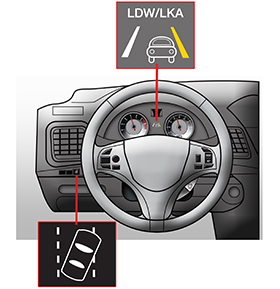
There are so many ways to attack this idea. If I surveyed them, I would not have a chance to return to LDW in the context of my Bible classes, but let me take just three quick ones.
The introduction of “seduction” as a word that requires the existence of “a way we should go” may sound authoritarian. It cues up “Who says we should go that way?” [1] Of all the answers (God says, the state says, the church says, the common conventions of civil society say) my classes require only, “Because this is what we decided to do.” It is our intention. That intention functions as lane markers.
Similarly, it can sound deeply moral. It’s that “should” that does it But “should” can also mean that something naturally follows. If you keep going north from here you should eventually come to Seattle. But no morality other than doing what we committed ourselves to do is required. It’s more a matter of reliability and ultimately of the culture of the group that leads it to conform to some abstract and external standard.
Finally, when I say that I am talking about a class, about a number of persons collectively, there is the question of just what counts as a violation. Some hyperindividualist could say, “Well, that might be a violation for you, but it is not for me.” But that’s not the practical form of the problem. The practical form is that we do not all have—and cannot all have—common understandings of what words like “secular, scholarly,” and “congenial” mean. It is hard to say cogently even what they mean to me. It is impossible to say what they mean to us, if “us” means each individual assembled around the table.
So we learn together by trial and error. I say something that doesn’t violate my understanding of the scholarship dimension, but it turns everything around. The student sees that and understands the “the group’s understanding of scholarship” has in some way been challenged. The LDW light goes on. Some member of the group challenges the interpretation of another member and heads all around the table nod, agreeing with the assessment and not distracted by the challenge. The LDW light does not go on because there has been no violation of the congeniality norm. We learn that that kind of thing is OK. And so on.
The Lane
Eventually “the Lane” is defined. It is the way we have chosen to go. The group is the vehicle that is taking us there. At that point, and not before, we can begin to think about Lane Deviation Warning (LDW) devices. It can’t be the teacher, who, as much as he might like to embody the sense of the group on those three dimensions, cannot. He can, and if he is smart, he will, elicit the cues that will assure everyone else that the group still feels that we are in the Lane. The early discomfort of a member of the group can be picked up and amplified by such a teacher or any member of the group as a LDW. Then we can look at it and decide if it is.
For a group that does not know itself well, the LDW will function erratically. For a group that does not trust each other deeply (not “fully”) the LDW will function erratically. But a good group, a group that has come to know and to trust itself, will notice when the LDW comes on and will find out why.
But first, you have to be in a Lane where you want to be—there is, after all, traffic coming the other way so it does matter—and the sides have to be defined by the informed consensus of all. Then we can count on the LDW.
[1] My kids were raised with a bumper sticker that said “Question Authority.” Some understanding of that maxim, not necessarily the one I was hoping for, is lodged deep in their brains. A few years ago, Doug, my youngest bought me a sweatshirt (black) that says is crude letters (white), “Who are YOU to tell Me to question authority.” Isn’t that just sweet?

 The Dilettante's Dilemma